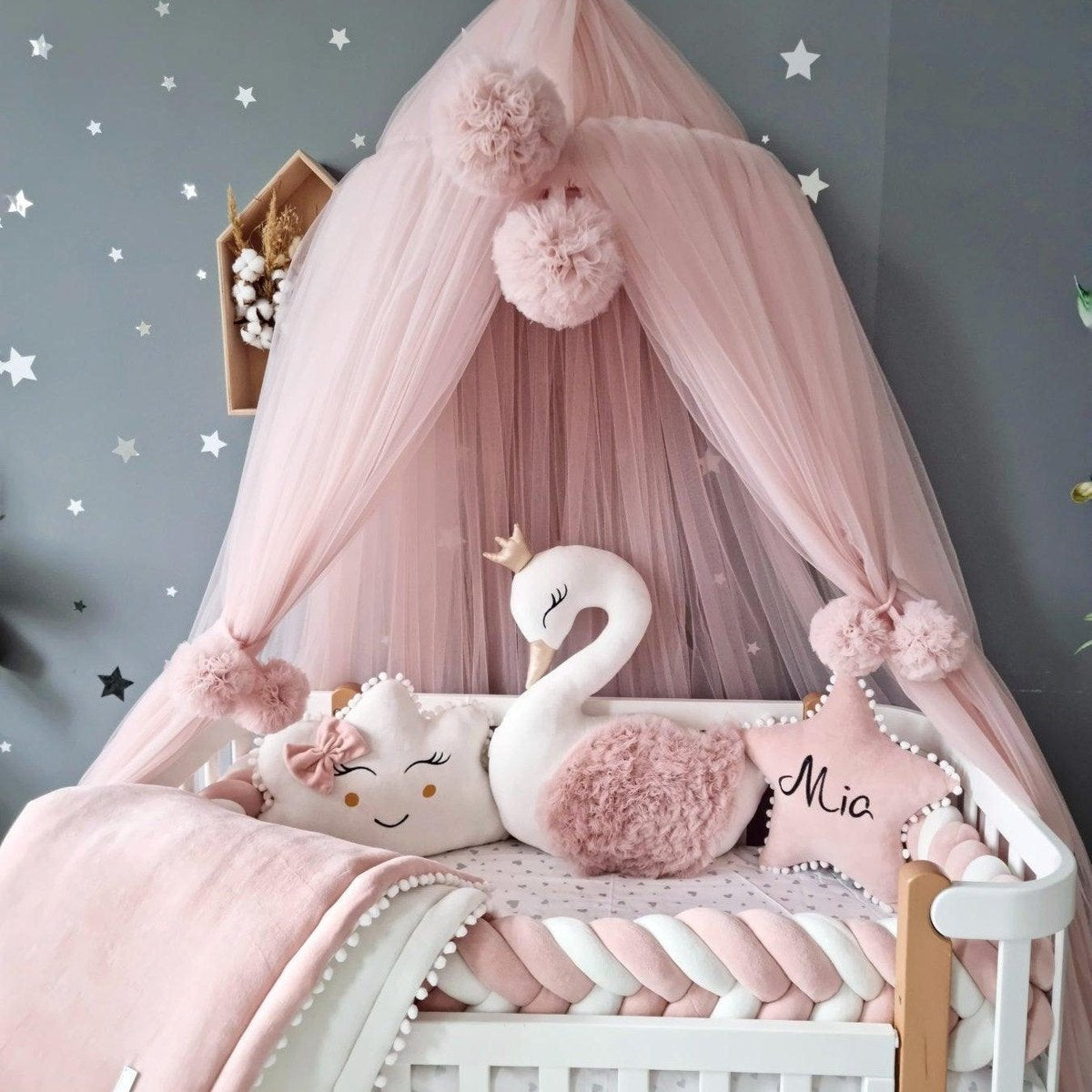
Muchos padres creen erróneamente que los protectores de cuna (bumpers) son un artículo esencial y seguro para proteger a su bebé. Sin embargo, los protectores de cuna están prohibidos por la ley federal debido a los graves riesgos de asfixia y estrangulamiento. Las faldas de cuna, por otro lado, ofrecen una forma segura de decorar la habitación de su bebé sin comprometer su seguridad. Esta guía explica las diferencias críticas, los datos de seguridad y las opciones de estilo para crear una habitación hermosa y conforme a las normas en 2026.
👉 Guía de seguridad sobre protectores de cuna
Tabla de contenidos
- ¿Qué son las faldas de cuna y los protectores de cuna?
- Preocupaciones de seguridad con los protectores de cuna
- Faldas de cuna: detalles de decoración seguros y elegantes
- Alternativas seguras y mejores prácticas para la ropa de cama en 2026
- Explore juegos de ropa de cama para bebés seguros y elegantes en Kari Studio
Puntos clave
| Punto | Detalles |
|---|---|
| Los protectores de cuna suponen graves riesgos | La ley federal prohíbe los protectores de cuna debido a peligros de asfixia, estrangulamiento y atrapamiento. |
| Las faldas de cuna son decoración segura | Estos paneles decorativos cuelgan debajo del colchón fuera de la cuna, sin representar ningún riesgo para su bebé. |
| Las cunas modernas eliminan la necesidad de protectores | El espaciado adecuado de los barrotes en las cunas actuales hace que los protectores sean innecesarios y peligrosos. |
| El sueño seguro significa una cuna vacía | Las guías de la AAP recomiendan colchones firmes sin ropa de cama blanda, almohadas ni juguetes. |
| Las alternativas transpirables requieren precaución | Los protectores de malla ofrecen mejor flujo de aire, pero siguen estando regulados y conllevan ciertos riesgos. |
¿Qué son las faldas de cuna y los protectores de cuna?
Las faldas de cuna y los protectores sirven para propósitos completamente diferentes, pero los padres a menudo confunden ambos al planificar la decoración de la habitación. Comprender estas distinciones le ayudará a tomar decisiones informadas y seguras para el entorno de sueño de su bebé.
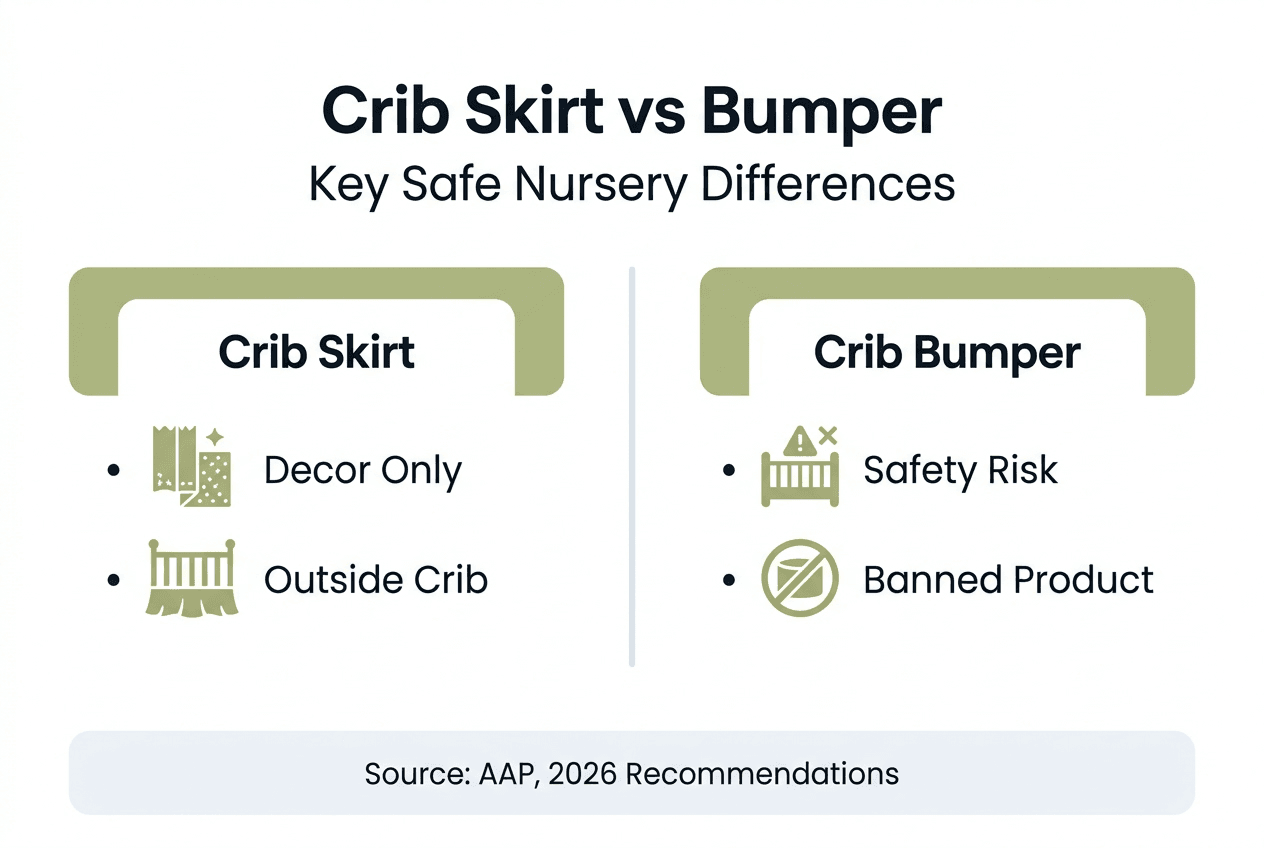
Las faldas de cuna son paneles de tela decorativos que se sujetan debajo del colchón de la cuna y caen hasta el suelo. Ocultan la estructura de la cuna y cualquier caja de almacenamiento que guarde debajo, creando un aspecto pulido y acabado. Dado que las faldas de cuna cuelgan completamente fuera del área de descanso, no presentan ninguna preocupación de seguridad.
Los protectores de cuna (bumpers) son barreras de tela acolchada diseñadas para revestir las paredes interiores de la cuna. Originalmente, los fabricantes los comercializaban para evitar que las extremidades de los bebés se deslizaran entre los barrotes o para amortiguar los golpes contra superficies duras. Sin embargo, las cunas modernas están diseñadas con el espaciado adecuado entre barrotes, eliminando el propósito original de los protectores.
La diferencia fundamental radica en la colocación y la función:
- Las faldas de cuna decoran la base exterior de la cuna
- Los protectores de cuna se colocan dentro de la cuna, cerca del bebé
- Las faldas tienen únicamente propósitos estéticos
- Los protectores tenían funciones protectoras que ahora se consideran peligrosas
- Las faldas son completamente seguras cuando se instalan correctamente
- Los protectores presentan riesgos de seguridad graves y documentados
Entender lo que realmente hacen los protectores frente a lo que proporcionan las faldas de cuna le ayuda a evitar productos peligrosos mientras logra el estilo de habitación que desea. La conclusión clave es sencilla: cualquier objeto dentro de la cuna con su bebé aumenta el riesgo, mientras que las decoraciones externas, como las faldas, siguen siendo perfectamente seguras.
Preocupaciones de seguridad con los protectores de cuna
La evidencia contra los protectores de cuna es abrumadora y ha llevado a tomar medidas federales. En 2023, la Ley de Sueño Seguro para Bebés prohibió la venta y fabricación de protectores de cuna acolchados a nivel nacional.

Los protectores de cuna crean tres peligros principales para los bebés. Primero, pueden obstruir la respiración si la cara del bebé presiona contra la superficie acolchada. Segundo, presentan riesgos de estrangulamiento debido a las cintas o lazos utilizados para asegurarlos. Tercero, los bebés pueden quedar atrapados entre el protector y el colchón, lo que puede provocar asfixia posicional.
La Academia Americana de Pediatría aconseja encarecidamente no utilizar protectores de cuna para bebés menores de un año. Su postura oficial refleja décadas de investigación que vinculan los protectores con muertes infantiles prevenibles.
Las retiradas recientes subrayan los peligros continuos. En diciembre de 2025, Little Pea Shop retiró dos estilos de protectores que violaban los estándares federales de seguridad. Los padres que compraron estos productos recibieron instrucciones urgentes de destruirlos inmediatamente, no solo de dejar de usarlos.
La realidad es clara:
“Los protectores de cuna aumentan significativamente el riesgo de asfixia y estrangulamiento. No existe una forma segura de usar protectores acolchados tradicionales en una cuna. La cuna más segura es una cuna vacía, solo con un colchón firme y una sábana bajera ajustable”.
Las prácticas de sueño seguro se centran en un principio: mantener el entorno de la cuna completamente despejado. Esto significa sin protectores, sin almohadas, sin mantas, sin peluches y sin dispositivos de posicionamiento. Cada objeto que añade a la cuna aumenta el riesgo sin ofrecer beneficios probados.
Muchos padres temen que su bebé se lastime con los barrotes de la cuna, pero este temor es infundado. Los estándares modernos de seguridad requieren un espaciado específico entre barrotes que evita lesiones y permite una ventilación adecuada. Su bebé puede golpearse ocasionalmente la cabeza o quedar atrapado brevemente una extremidad, pero estos incidentes menores representan un peligro mucho menor que la asfixia por ropa de cama blanda.
Para obtener orientación completa sobre cómo mantener a su bebé a salvo, revise estos consejos de seguridad sobre protectores de cuna antes de realizar compras para la habitación. La prohibición federal existe para proteger a su hijo, y seguir estas regulaciones asegura que cree el entorno de sueño más seguro posible.
Faldas de cuna: detalles de decoración seguros y elegantes
Las faldas de cuna ofrecen la solución perfecta para los padres que desean una decoración hermosa sin comprometer la seguridad. Dado que se sujetan debajo del colchón y cuelgan fuera de la estructura de la cuna, no suponen absolutamente ningún riesgo para su bebé mientras duerme.
Estos accesorios versátiles mejoran la apariencia de la habitación de varias formas. Ocultan la estructura de la cuna (que suele verse utilitaria) y cualquier caja o contenedor de almacenamiento que mantenga debajo. Añaden un toque final que unifica el esquema de color y el tema de diseño. Crean un equilibrio visual al añadir textura de tela para complementar otros textiles como cortinas o alfombras.
Las faldas de cuna vienen en una variedad impresionante de opciones:
- Estilos clásicos plisados o fruncidos para habitaciones tradicionales
- Paneles modernos a medida para espacios contemporáneos
- Diseños con volantes o niveles para habitaciones románticas y femeninas
- Linos y algodones neutros que combinan con cualquier tema
- Patrones o colores llamativos para hacer una declaración de diseño
- Largos personalizados para adaptarse a diferentes alturas de cuna
La belleza de las faldas de cuna reside en su perfil de seguridad total. A diferencia de los protectores u otros accesorios interiores, las faldas permanecen completamente separadas del espacio donde duerme el bebé. Puede elegir estilos elaborados y decorativos sin preocupaciones de seguridad porque la tela nunca entra en la cuna.
Consejo profesional: Mida desde la parte superior del marco de su cuna hasta el suelo antes de comprar una falda de cuna. La mayoría de las cunas estándar funcionan con faldas de 14 a 16 pulgadas (35-40 cm), pero las cunas ajustables o convertibles pueden necesitar medidas personalizadas para un ajuste perfecto.
Cuando desee ir más allá del mobiliario básico sin añadir riesgos, las faldas de cuna aportan estilo y funcionalidad. Le permiten expresar sus preferencias de diseño y crear un espacio cohesivo y hermoso mientras mantiene el entorno de cuna vacía que recomiendan los pediatras.
Para los padres que exploran opciones seguras, comprender cuándo son seguros los protectores de cuna (básicamente nunca para bebés menores de un año) aclara por qué las decoraciones externas como las faldas son mejores opciones. Puede lograr una habitación digna de Pinterest sin introducir peligros de asfixia o atrapamiento.
Alternativas seguras y mejores prácticas para la ropa de cama en 2026
Crear un entorno de sueño seguro significa comprender las regulaciones actuales y las recomendaciones de los expertos. En 2026, los padres tienen más recursos que nunca para tomar decisiones informadas sobre la ropa de cama y los accesorios.
Los protectores de cuna de malla transpirable ofrecen una alternativa más segura a los protectores tradicionales al mejorar el flujo de aire y la visibilidad, al tiempo que reducen los riesgos de atrapamiento. Estos productos cuentan con tela de malla fina que permite el paso libre del aire, a diferencia de los protectores sólidos y acolchados. Sin embargo, siguen requiriendo una consideración cuidadosa y están sujetos a estándares federales de seguridad. No todos los pediatras recomiendan incluso los protectores de malla, así que consulte su situación específica con el médico de su hijo.
La Academia Americana de Pediatría recomienda un enfoque integral de sueño seguro que incluye la posición boca arriba, colchones firmes, compartir la habitación sin compartir la cama y evitar por completo la ropa de cama blanda. Estas pautas basadas en evidencia reducen drásticamente el riesgo del síndrome de muerte súbita del lactante y otras fatalidades relacionadas con el sueño.
| Característica | Protectores tradicionales | Protectores de malla | Cuna vacía (Recomendación AAP) |
|---|---|---|---|
| Flujo de aire | Bloqueado | Mejorado | Óptimo |
| Riesgo de asfixia | Alto | Menor, pero presente | Mínimo |
| Estatus legal 2026 | Prohibidos | Regulados | Recomendado |
| Riesgo de atrapamiento | Significativo | Reducido | Ninguno |
| Aval de expertos | Ninguno | Mixto | Universal |
Siga estas prácticas esenciales de sueño seguro:
- Coloque a su bebé sobre su espalda para cada sueño, incluidas las siestas
- Utilice únicamente un colchón firme y plano con una sábana bajera ajustada
- Mantenga la cuna completamente libre de mantas, almohadas, juguetes y protectores
- Mantenga una temperatura ambiente confortable para evitar el sobrecalentamiento
- Comparta la habitación con su bebé durante al menos los primeros seis meses
- Evite las cunas inclinadas, los columpios o las sillas de auto para el sueño rutinario
- Considere un saco de dormir en lugar de mantas sueltas para el calor
Consejo profesional: Vista a su bebé con una capa adicional más de lo que usted usaría para mantener una temperatura cómoda sin mantas. Un saco de dormir sobre el pijama suele proporcionar el calor adecuado en la mayoría de los climas.
Evite productos comercializados como alternativas seguras sin la certificación adecuada. Las cunas inclinadas y los columpios infantiles plantean riesgos graves de asfixia y nunca deben usarse para el sueño rutinario o sin supervisión. Los estándares de seguridad para productos de sueño infantil introducidos en los últimos años abordan específicamente estos productos peligrosos.
Para comparaciones detalladas de productos aprobados, explore estas alternativas seguras a los protectores de cuna que cumplen con las regulaciones actuales. Entender la seguridad de los protectores de malla le ayudará a evaluar si estos productos se ajustan a las necesidades de su familia y a las recomendaciones de su pediatra.
Las recomendaciones integrales de sueño seguro de los expertos pediátricos proporcionan la base para cada decisión sobre la cuna. Seguir estas pautas durante el primer año de vida de su bebé reduce significativamente las muertes evitables relacionadas con el sueño, permitiendo al mismo tiempo un diseño de habitación hermoso y personalizado a través de accesorios seguros como faldas de cuna, arte mural y decoración externa.
Explore juegos de ropa de cama para bebés seguros y elegantes en Kari Studio
Ahora que comprende las diferencias críticas entre la decoración segura para la habitación y los productos peligrosos, puede equipar la habitación de su bebé con confianza. Kari Studio se especializa en artículos esenciales para la habitación hechos a mano que priorizan tanto la seguridad como el estilo, ofreciéndole lo mejor de ambos mundos.
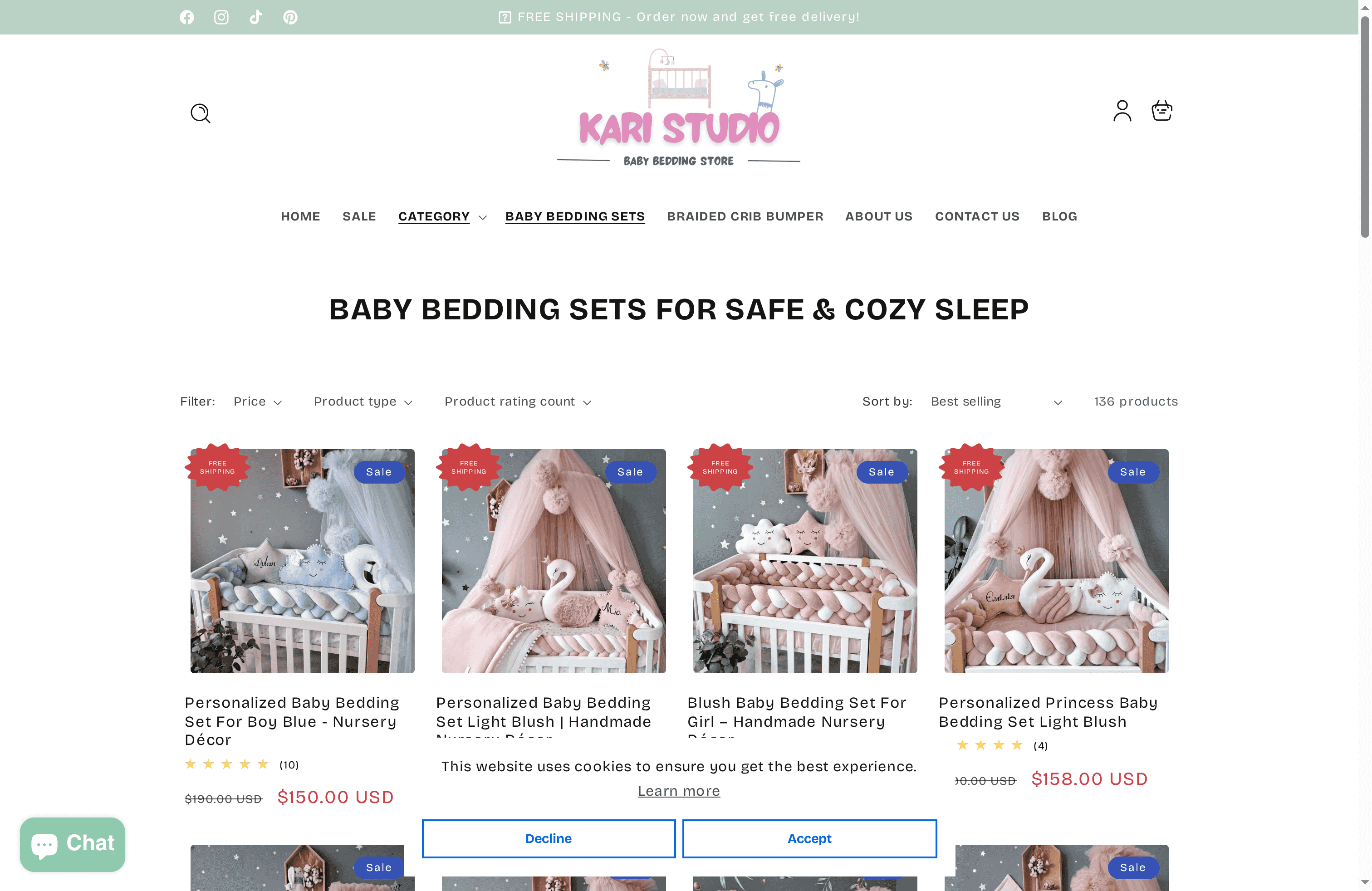
Nuestra marca familiar crea ropa de cama para bebés de alta calidad a partir de telas suaves e hipoalergénicas que cumplen con rigurosos estándares de seguridad. Cada pieza está elaborada con amor y atención al detalle, asegurando que la habitación de su bebé luzca hermosa mientras lo mantiene a salvo. Ofrecemos envíos internacionales y opciones de personalización, incluido bordado personalizado con el nombre de su bebé.
Explore nuestras colecciones seleccionadas diseñadas para padres modernos que se niegan a comprometerse. Nuestros sets de estilo neutro para la habitación combinan elegancia atemporal con principios de sueño seguro. Navegue por nuestra selección completa de juegos de ropa de cama orgánica para bebés con materiales naturales y diseños transpirables. Consulte nuestra sección de ofertas en juegos de ropa de cama para opciones económicas sin sacrificar la calidad ni la seguridad.
Preguntas frecuentes
¿Son seguros los protectores de cuna?
No, los protectores de cuna no son seguros y están prohibidos federalmente en los Estados Unidos desde 2023. Aumentan significativamente los riesgos de asfixia, estrangulamiento y atrapamiento para los bebés. El sueño seguro requiere una cuna completamente vacía, solo con un colchón firme y una sábana bajera ajustada.
¿Cuál es la diferencia entre una falda de cuna y un protector de cuna?
Las faldas de cuna son paneles decorativos de tela que cuelgan debajo del colchón en el exterior de la cuna, ocultando la estructura y el almacenamiento debajo. Los protectores de cuna son barreras acolchadas que se sujetan dentro de la cuna alrededor del área de dormir. Las faldas son completamente seguras, mientras que los protectores representan graves riesgos de seguridad y ahora son ilegales.
¿Son los protectores de malla transpirable una alternativa segura?
Los protectores de cuna de malla transpirable ofrecen un mejor flujo de aire que los protectores tradicionales y pueden reducir algunos riesgos, pero aún requieren precaución. Estos productos están regulados por estándares federales de seguridad y no son recomendados universalmente por los pediatras. Consulte al médico de su hijo y explore alternativas seguras antes de tomar una decisión.
¿Cuáles son las prácticas más seguras para los entornos de sueño infantil?
La Academia Americana de Pediatría recomienda colocar a los bebés boca arriba sobre colchones firmes y planos, en cunas libres de protectores, almohadas, juguetes y ropa de cama suelta. Comparta la habitación, pero no la cama, con su bebé y mantenga temperaturas cómodas para evitar el sobrecalentamiento. Seguir estos consejos de seguridad durante el primer año reduce drásticamente el riesgo de SMSL.
¿Puedo usar artículos decorativos en la habitación de mi bebé?
Sí, puede decorar la habitación de su bebé de forma segura con artículos que permanezcan fuera del área donde duerme. Las faldas de cuna, el arte mural, los móviles montados de forma segura fuera de su alcance y las decoraciones de suelo añaden estilo sin problemas de seguridad. Reserve el interior de la cuna exclusivamente para su bebé, un colchón firme y una sábana bajera durante el primer año.