TL;DR:
- Parents often assume stored cribs are automatically safe, but precise measurements are essential to avoid entrapment risks. Choosing the correct crib size and ensuring a snug mattress fit according to safety standards is crucial for baby’s safe sleep, as even small gaps can be hazardous. Regularly perform the two-finger test and verify compatibility to create a secure nursery environment that promotes long-term use and safety.
Most parents assume that any crib sold in a reputable store is automatically safe. That assumption can be dangerous. A gap as small as two fingers between the mattress and the crib frame is enough to pose a serious entrapment risk for your baby. The difference between a safe nursery and a hazardous one often comes down to precise measurements, not brand names or price tags. This guide walks you through everything you need to know about crib sizes, from exact dimensions and regulatory standards to mattress fit testing and long-term nursery planning, so you can set up your baby’s sleep space with real confidence.
Table of Contents
- Understanding crib dimensions: Standard vs. mini cribs
- Why mattress fit matters: Safe sleep explained
- Beyond size: Factors affecting crib longevity and usability
- International crib sizing and important safety nuances
- The overlooked truth: Why small sizing details matter most
- Find the perfect crib bedding for safe and cozy sleep
- Frequently asked questions
Key Takeaways
| Point | Details |
|---|---|
| Standard vs. mini size | Standard cribs fit 28 x 52-inch mattresses, mini cribs use 24 x 38-inch ones. |
| Mattress gap safety | Never allow a gap wider than two fingers between mattress and crib side. |
| Longevity and futureproofing | Standard cribs double as toddler beds so they last longer than mini cribs. |
| International sizing caution | Mixing US and EU cribs or mattresses leads to critical fit and safety problems. |
| Regulatory compliance | Choose cribs meeting CPSC standards from 2011 onward for safest results. |
Understanding crib dimensions: Standard vs. mini cribs
With safety concerns in mind, it helps to start with the basics: knowing exactly what sizes are available and what those dimensions mean for your specific space.
There are two main crib categories you will encounter: standard full-size cribs and mini cribs. Each has its place depending on your room layout, budget, and how long you plan to use the crib.
Standard full-size cribs are the most common option. According to CPSC federal regulations, the interior dimensions for a full-size crib are 28 inches (plus or minus 3/4 inch) wide by 52 3/8 inches (plus or minus 3/4 inch) long. The standard crib mattress measures 28 inches wide by 52 inches long, with a CPSC-accepted minimum of 27 1/4 inches wide by 51 5/8 inches long. These regulated tolerances exist for a reason: even slight variations outside these ranges create gaps that become safety hazards.
Mini cribs are significantly smaller. Mini crib mattresses are typically 24 inches wide by 38 inches long. That is a substantial size difference, and it matters when choosing a crib for a smaller room, a shared bedroom, or travel purposes.
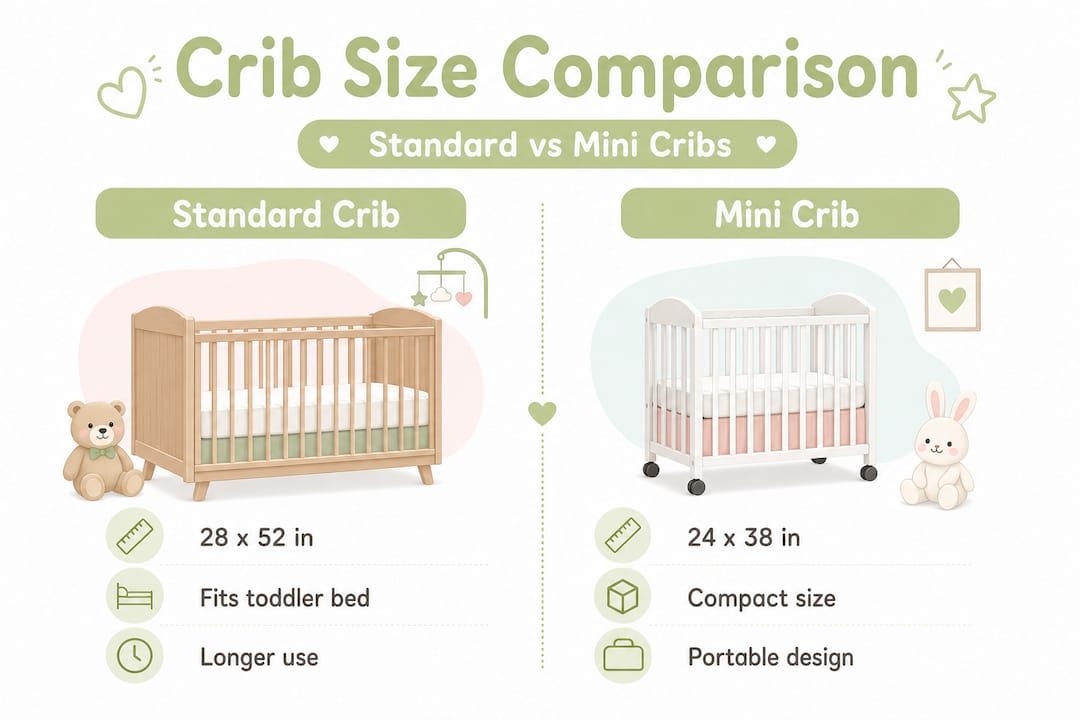
Here is a quick side-by-side comparison to help you decide:
| Feature | Standard full-size crib | Mini crib |
|---|---|---|
| Interior mattress area | ~28" x 52" | ~24" x 38" |
| Room space required | More | Less |
| Lifespan | Up to 3-4 years | Up to ~3 years |
| Converts to toddler bed | Yes (most models) | Rarely |
| Best for | Long-term primary nursery | Small spaces, travel, secondary room |
| Mattress cost | Moderate | Generally lower |
You can also reference a detailed crib mattress size chart for a more visual breakdown of how these measurements compare across different crib models.
Choosing between standard and mini often comes down to three practical factors:
- Room size. A standard crib typically requires a room with at least 6 by 6 feet of open space around it for safe access and airflow. Mini cribs work well in smaller nurseries or shared spaces.
- How long you plan to use it. Standard cribs, especially convertible models, can grow with your child into the toddler years. Mini cribs have a shorter useful lifespan.
- Secondary use. If you need a crib in a grandparent’s home or for travel, a mini crib is more portable and practical.
One critical point: never mix crib types with mismatched mattresses. A standard mattress placed in a mini crib or vice versa creates exactly the kind of gap that puts your baby at risk. Always match the mattress specifically to the crib model.
Why mattress fit matters: Safe sleep explained
Once you know which crib size suits your needs, the next step is understanding how mattress fit directly affects your baby’s safety during sleep.
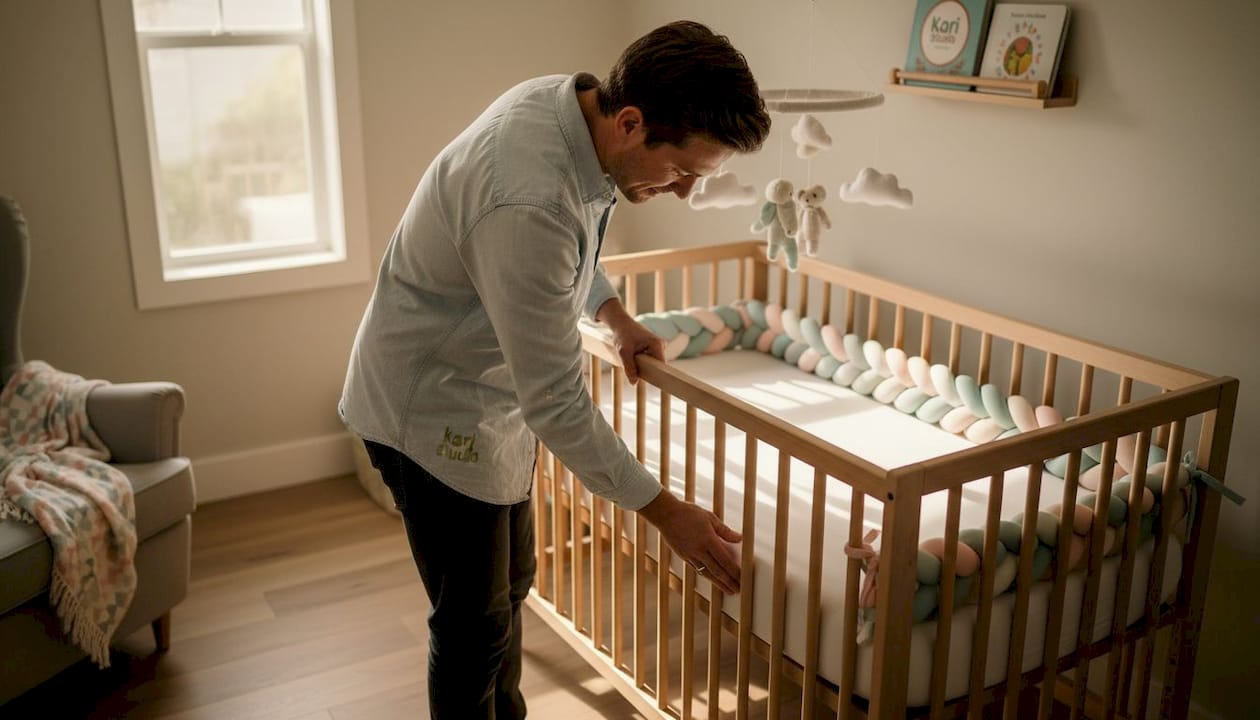
The core principle is simple: a snug fit prevents entrapment. When there is too much space between the mattress edge and the crib frame, a baby’s head, arm, or leg can slip into the gap. This is not a rare edge case. It is one of the most common hazards reported in crib-related incidents.
Here are the key safety requirements you need to check for, as outlined by Consumer Reports:
- Gap between mattress and crib frame: No more than 3.15 inches (80 mm) at any corner or side. Two fingers placed side by side should not fit into this gap.
- Slat spacing: Crib slats must be no more than 2 3/8 inches apart. Anything wider can trap a baby’s head.
- Crib side height: The top of the crib rail must be at least 26 inches above the mattress when it is set to the lowest position. This prevents climbing falls as your baby grows.
The two-finger rule is easy to perform yourself. Place two adult fingers side by side between the mattress edge and the crib frame. If both fingers fit with room to spare, the mattress is too small or the crib is too large for it. This is a quick check every parent should do before the baby sleeps in the crib for the first time.
“Prioritize CPSC-compliant cribs made after 2011. Perform the two-finger gap test for mattress fit to avoid entrapment. This is a critical step no parent should skip.”
You can also review crib mattress safety basics for a thorough breakdown of what CPSC compliance looks like in practice, or check out common crib setup mistakes that parents often overlook even when buying brand-new cribs.
Pro Tip: Before purchasing a mattress online, check the brand’s return policy and visit a store to physically place the mattress in your crib frame. What looks correct on a spec sheet does not always translate to a perfect fit in real life. A five-minute in-store test can prevent a serious safety problem at home.
It is also worth noting that crib mattress thickness matters. Thicker mattresses (over 6 inches) can reduce the effective height of the crib rail, potentially making it easier for an older baby to climb out. Most safety experts recommend mattresses between 4 and 6 inches thick for optimal balance between comfort and safety.
Beyond size: Factors affecting crib longevity and usability
Now that mattress fit is secured, consider how your crib choice affects nursery function for the coming years, not just the first few months.
A standard crib mattress is the same size as a toddler bed mattress. This means that when your child transitions out of the crib at around 2 to 3 years old, the same mattress can move right into the toddler bed frame with no additional purchase. This extended usability makes standard cribs a cost-effective long-term investment compared to mini cribs, which typically serve babies only up to about 3 years versus a standard crib’s 3 to 4 year lifespan.
Here is a practical breakdown of lifespan and usage by crib type:
| Crib type | Typical use period | Weight limit | Converts to toddler bed | Best transition path |
|---|---|---|---|---|
| Standard full-size | Birth to ~3-4 years | Usually up to 35 lbs | Yes (most models) | Crib to toddler bed to twin |
| Mini crib | Birth to ~2-3 years | Usually up to 25-30 lbs | Rarely | Crib directly to toddler bed |
Key points to keep in mind when planning for the long term:
- Convertible cribs offer the most value. They transition from crib to toddler bed, and some models even convert to a full-size bed with additional hardware. This can save you hundreds of dollars over several years.
- Weight limits matter. Always check the manufacturer’s weight limit for the crib, not just the age recommendation. Some larger toddlers may exceed the crib’s weight capacity before they are developmentally ready for a big-kid bed.
- Storage and resale. Standard crib parts and mattresses are easy to resell or donate because replacement parts are widely available. Mini crib parts are less standardized.
A helpful resource for working through all these factors together is our guide on choosing a crib, which covers both safety standards and practical nursery planning in one place.
Pro Tip: If you are buying a crib for a first child and plan to have more children, a convertible standard crib is almost always the better investment. The mattress alone pays for itself across two children by eliminating the need to buy separate toddler bed bedding.
International crib sizing and important safety nuances
As you finalize your crib and mattress choice, it is also important to be aware of overlooked pitfalls, especially when shopping internationally or setting up nursery extras that seem harmless.
One of the most common and serious mistakes parents make is mixing US and European crib and mattress sizes. US and EU sizing standards are not the same. A European crib mattress will not fit a US crib frame properly, and vice versa. This mismatch creates the exact kind of dangerous gap that safety regulations work to prevent. If you purchase a crib while traveling abroad or order online from an international retailer, verify the sizing standard before buying.
The AAP (American Academy of Pediatrics) outlines several key safe sleep practices that go beyond just mattress fit:
- Use a firm, flat mattress only. Soft mattresses increase the risk of suffocation.
- Use a tight-fitting, properly sized fitted sheet and nothing else in the crib. No pillows, blankets, or positioners.
- Practice room-sharing for at least 6 months, and ideally up to 12 months. This reduces the risk of sudden infant death syndrome (SIDS) without bed-sharing.
- Keep the crib free of bumpers, toys, and soft objects during sleep. Even padded bumpers that appear soft and safe have been linked to infant suffocation and entrapment.
- Never use a recalled crib or mattress. The CPSC maintains an up-to-date recall database you can check for free.
You can learn more about what is and is not appropriate to include in a crib through our detailed guides on crib bedding safety standards, crib sheet fitting tips, and our complete crib sheet size guide.
Another commonly overlooked hazard: placing the crib near a window with blind cords, near heating vents, or against a wall with wall-mounted decorations that could fall. Safety is not just about the crib itself. It is about everything within arm’s reach of your baby.
The overlooked truth: Why small sizing details matter most
Here is something most crib guides do not tell you directly: buying a certified, name-brand crib does not guarantee a safe sleep environment. Regulatory compliance is the floor, not the ceiling.
CPSC standards set a minimum. They tell manufacturers the smallest acceptable dimensions, the widest allowable slat spacing, and the minimum crib rail height. What they cannot regulate is how you set the crib up, which mattress you pair with it, or whether a well-meaning relative slips a soft bumper into the crib while babysitting.
We have seen parents spend weeks researching crib aesthetics, wood finish, and price points, then purchase a perfectly fine crib and immediately undermine its safety by using a mattress from a different size category, or by adding soft accessories that create new hazards. The safety certifications on a product mean that the product was tested under controlled conditions. They do not account for human error in setup.
The parents who feel most confident about their nursery setup are not the ones who spent the most. They are the ones who took fifteen minutes to measure twice, perform the two-finger test, read the weight limits, and verify their fitted sheet stays snug overnight. Small details, applied consistently, are what actually keep babies safe. That is not a sales pitch. It is the most practical safety advice we can offer.
Find the perfect crib bedding for safe and cozy sleep
Ready to complete your nursery setup with bedding that actually fits the way it should? At Kari Studio, we design nursery essentials with both safety and comfort in mind.
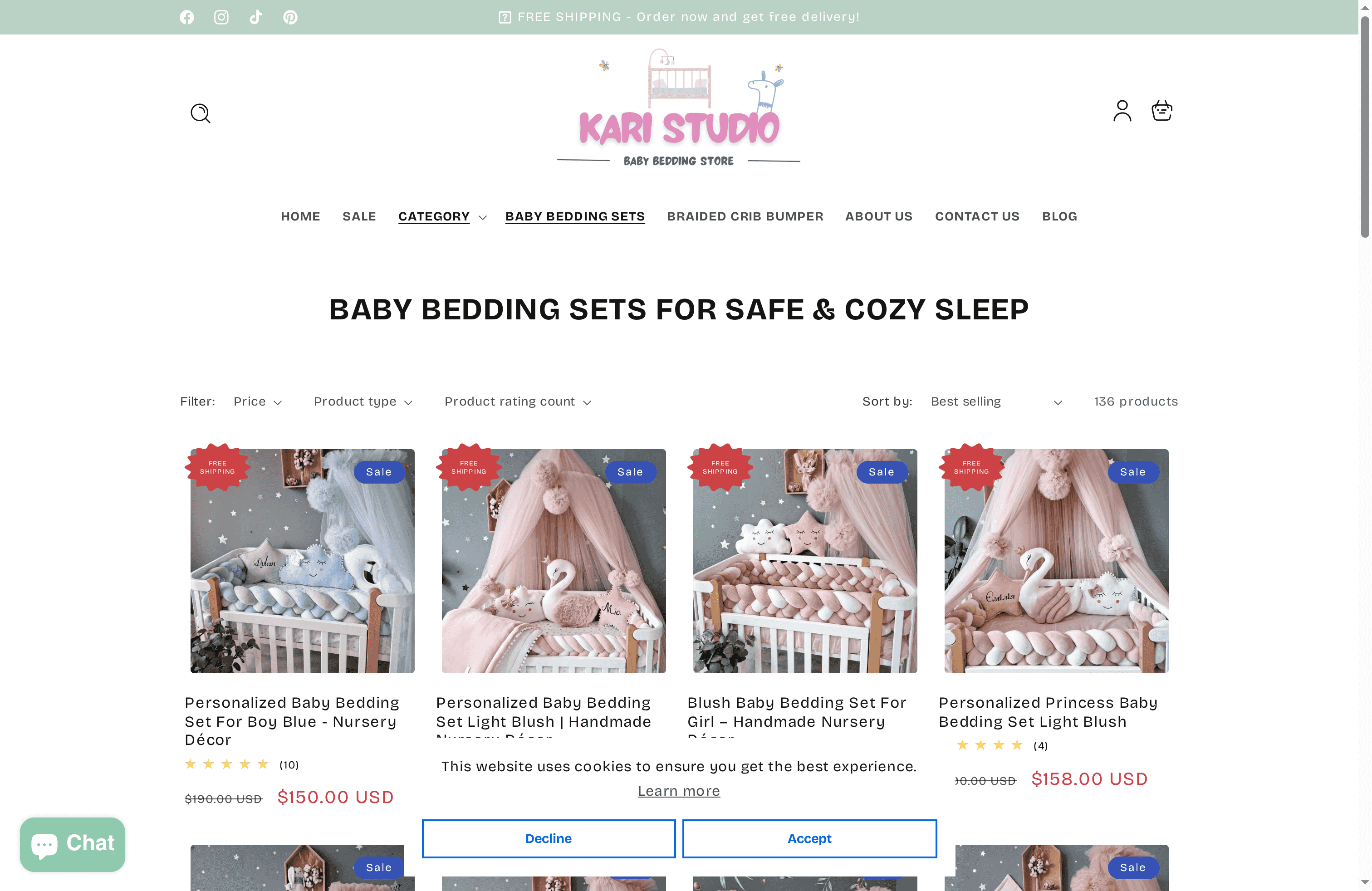
Every piece in our collection is made from hypoallergenic, soft fabrics and sized to fit standard cribs properly. Whether you are looking for a complete organic crib bedding set or browsing our current crib bedding sale, you will find options that pair perfectly with a safe, well-sized crib setup. We also offer personalization with your baby’s name, so your nursery is as unique as your little one. International shipping is available, and every product is made with the same care you put into choosing the right crib.
Frequently asked questions
How do I measure if a crib mattress is the right fit?
Place the mattress in the crib and check that no more than two fingers fit between the mattress edge and the crib frame. This two-finger gap test is the simplest and most reliable way to confirm a safe fit at home.
Can I use a mini crib mattress in a standard crib?
No. Mini crib mattresses measure approximately 24 inches by 38 inches and are far too small for a standard crib frame, creating gaps that are dangerous for an infant.
Do all standard cribs fit all standard crib mattresses?
Most do, because standard crib mattresses follow consistent CPSC size guidelines, but you should always perform the two-finger test before use to confirm the specific fit in your crib model.
What is the biggest crib safety mistake parents make?
Overlooking a snug mattress fit. The two-finger gap test is often skipped, leaving dangerous entrapment risks that could easily be caught with a quick check before the first use.
Is it safe to use older cribs or mattresses?
Only use cribs manufactured after the 2011 CPSC update that banned drop-side models, and always verify mattress fit with the two-finger test. Avoid any crib or mattress that has been recalled or shows signs of wear.