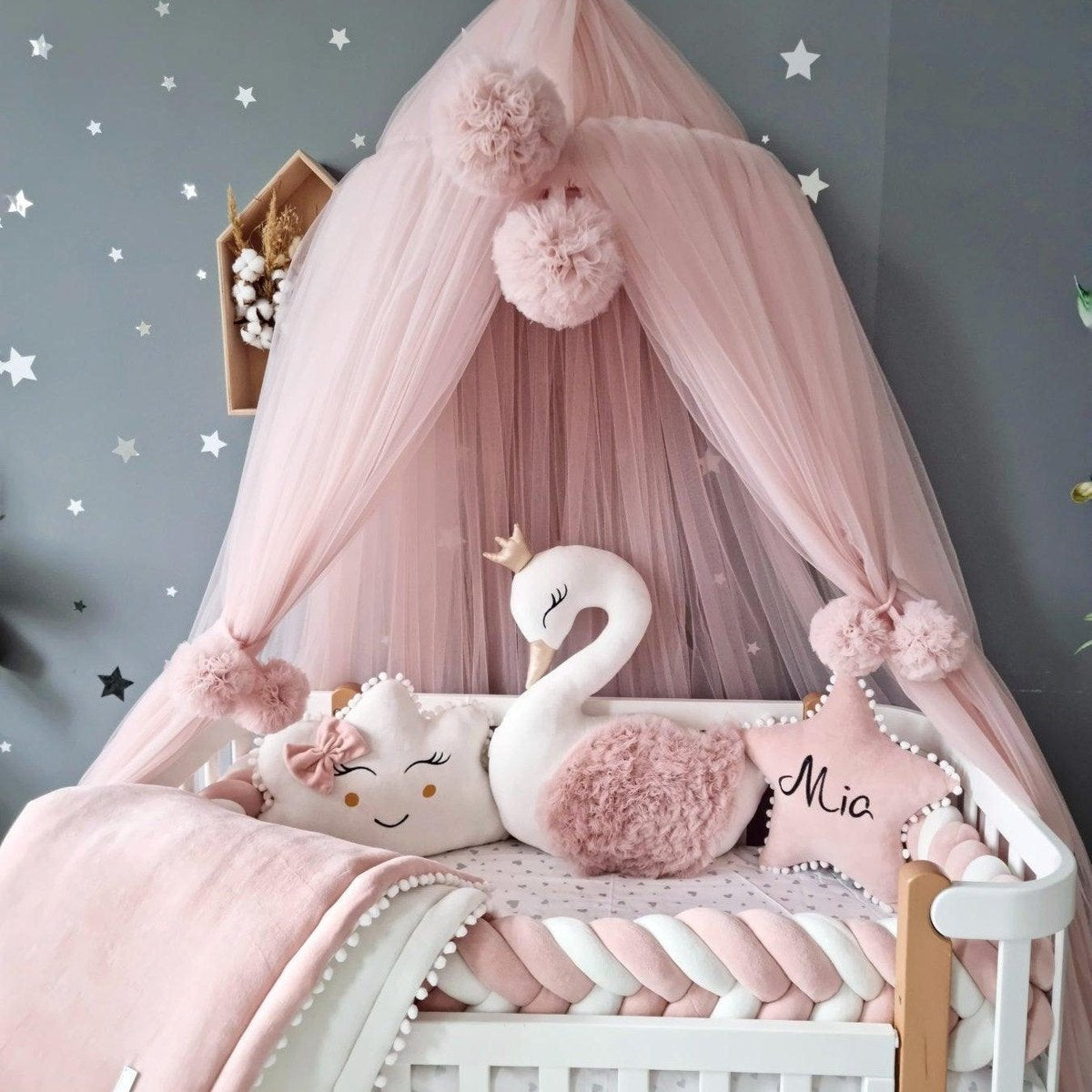
Finding the perfect crib mattress feels overwhelming when safety is your top priority and every baby product seems different. For first-time American parents, even minor gaps around a mattress can pose real risks, making a proper mattress fit crucial in any nursery. This guide breaks down standard, mini, and custom crib mattress sizes, showing how a simple chart removes guesswork and helps you create a snug, comfortable sleeping space for your newborn.
Table of Contents
- What Is A Crib Mattress Size Chart?
- Understanding Standard And Mini Crib Sizes
- Official Safety Standards And Fit Requirements
- Custom And Specialty Crib Mattress Options
- Common Sizing Errors And How To Avoid Them
Key Takeaways
| Point | Details |
|---|---|
| Understanding Mattress Fit | Ensure your crib mattress fits snugly to avoid safety risks, with no gaps larger than 0.75 inches. |
| Know Your Crib Type | Different types of cribs, like standard and mini, require specific mattress sizes; measure accurately before purchasing. |
| Prioritize Safety Standards | Always check that mattresses comply with CPSC safety standards, ensuring they meet firmness and material requirements. |
| Consider Specialty Options | For unique or portable cribs, seek custom mattresses that fit snugly and adhere to safety regulations. |
What Is a Crib Mattress Size Chart?
A crib mattress size chart is a reference tool that shows the standard dimensions required for different types of cribs so you can select a mattress that fits your baby’s sleeping space properly. This chart serves as your guide when shopping for a crib mattress, ensuring you understand the measurements and specifications needed for safe mattress placement. The chart typically lists dimensions in inches or centimeters and includes specifications for standard cribs, mini cribs, and portable play yards, helping you avoid purchasing an incorrectly sized mattress that could create safety hazards in your nursery.
Why does this matter? A proper mattress fit is critical because gaps between the mattress and crib sides can trap your baby’s limbs or head, creating entrapment risks. According to safety research, the space between the mattress and crib rails should be no larger than two fingers’ width. This tight tolerance means guessing on mattress size is never an option. The chart takes the guesswork out of selection by providing exact measurements, so you know your mattress will fit snugly without any dangerous gaps that could lead to injury or suffocation hazards.
The chart also accounts for variations in crib construction. Standard full-size cribs in the United States typically require a mattress measuring 28 inches by 52.375 inches, but mini cribs, portable cribs, and play yards have different specifications entirely. Some specialty cribs or heirloom pieces might require custom dimensions. A comprehensive size chart breaks down these categories so you’re not confused about which measurement applies to your specific crib model. This is where understanding crib mattress safety becomes essential, because the right fit prevents movement that could compromise your baby’s sleep position or create gaps where soft objects could accumulate.
Beyond dimensions, many modern charts also note recommended mattress firmness and material specifications. Quality crib mattress charts from pediatric safety organizations include details about hypoallergenic materials, breathability, and certifications like Greenguard Gold, which confirms the mattress meets strict chemical and off-gassing standards. When you’re selecting bedding to complement your mattress, like fitted crib sheets or protective rail guards, having accurate size information ensures everything works together in your nursery design.
Pro tip: Measure your specific crib before shopping and cross-reference the dimensions with a chart from a pediatric sleep safety organization, then check the mattress product page again to confirm the exact dimensions listed match your crib model, since some manufacturers have slight variations.
Understanding Standard and Mini Crib Sizes
When you start shopping for a crib mattress, you’ll quickly discover that not all cribs are created equal. The two most common options are standard full-size cribs and mini cribs, and each requires a completely different mattress. Standard crib mattresses measure 52 inches long by 28 inches wide, which is the size used by the vast majority of American families. Mini cribs are considerably smaller, typically measuring 38 inches long by 24 inches wide. This four-inch difference in length and width might not sound significant, but it’s critical because a standard mattress will not fit safely in a mini crib, and attempting to force one in could create dangerous gaps. The Consumer Product Safety Commission provides guidance on these dimensions to ensure proper fit and safety, emphasizing that mini cribs require mattresses specifically designed for their smaller frame.
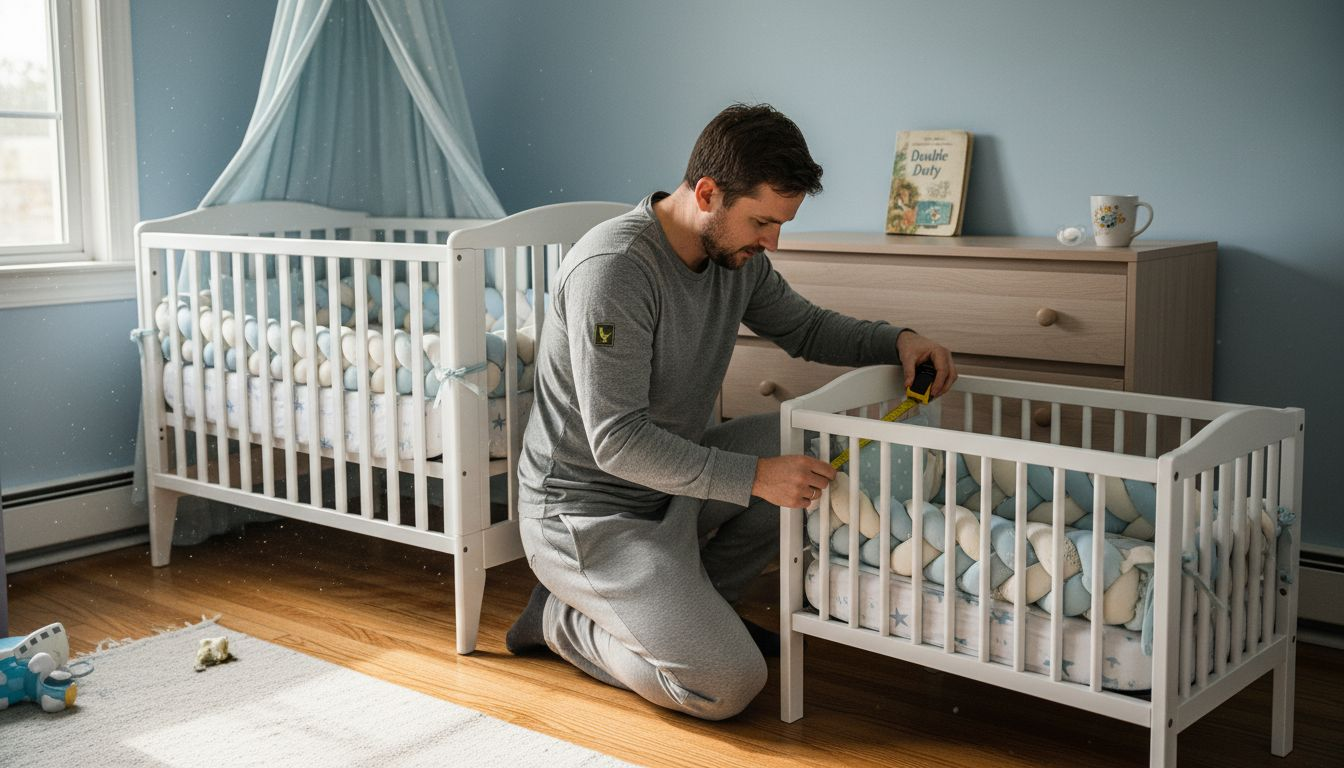
Understanding why these size differences exist helps you make better decisions for your nursery. Standard cribs became the norm because they accommodate growing infants and toddlers through the early years, offering enough length and width for a child to sleep comfortably without falling out. Mini cribs serve a different purpose, designed for families with limited space, those who travel frequently, or parents who want a secondary sleeping space in a bedroom. The smaller dimensions make mini cribs ideal for apartment living or co-sleeping setups where you need the crib positioned close to your bed. However, this compact design means you cannot simply purchase a cheaper standard mattress and try to adjust it. A standard crib mattress size must fit snugly within its corresponding crib frame, with no gaps larger than two fingers’ width to prevent entrapment hazards.
Beyond the basic measurements, you should know that variations exist within each category. Some specialty standard cribs and convertible models might have slightly different dimensions, particularly if they’re designed to transform into toddler beds or full-size beds later. Portable play yards and travel cribs add another layer of complexity, as they often have their own specific mattress requirements. When you’re selecting bedding accessories like fitted sheets, bumpers, or rail guards for your nursery, the mattress size determines compatibility. For example, fitted crib sheets designed for a standard crib won’t work on a mini crib, and mismatched bedding creates bunching that defeats the safety purpose of a properly fitting mattress.
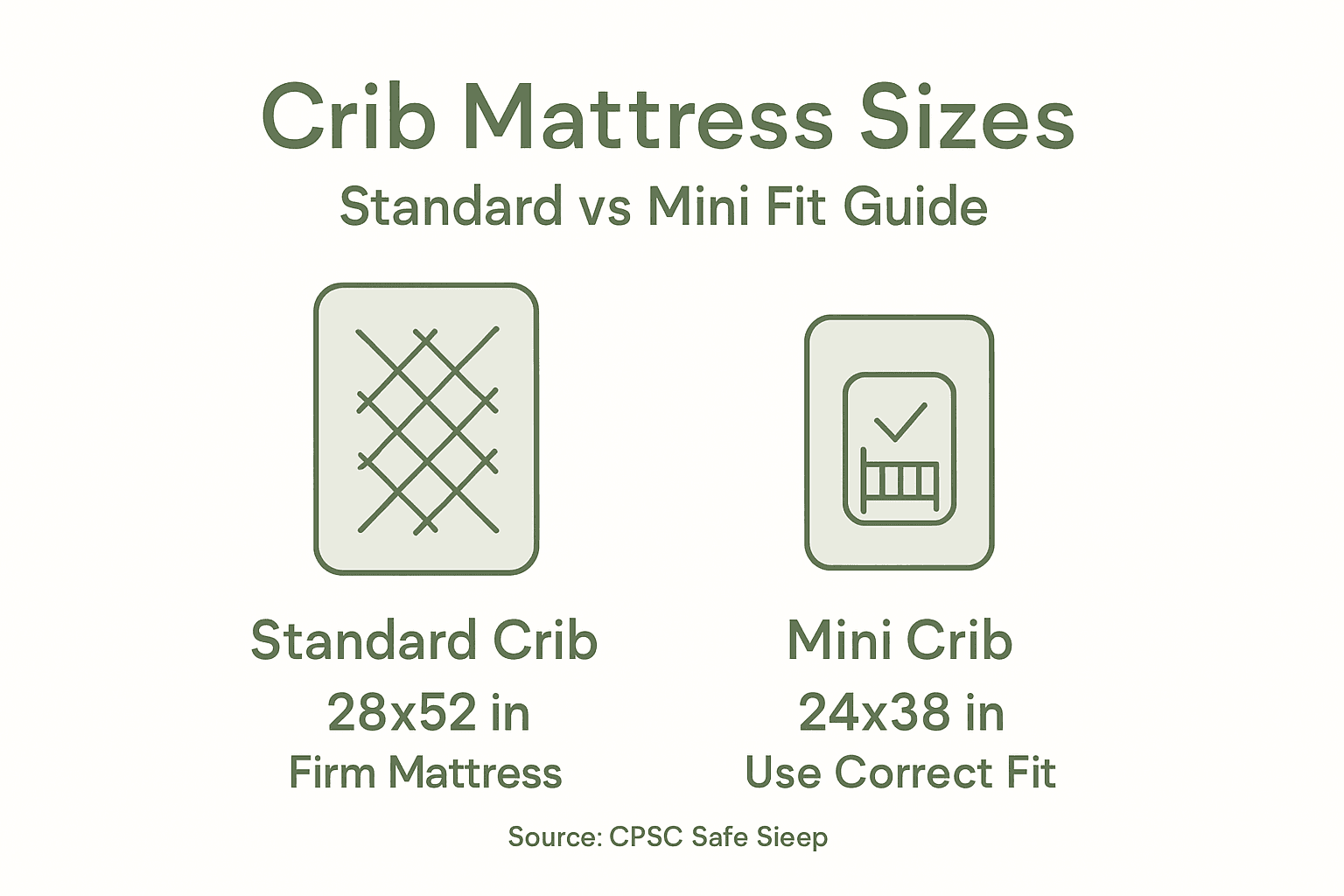
Here’s a quick comparison of standard, mini, and specialty crib mattress types:
| Crib Type | Typical Mattress Size | Common Use Case | Safety Check Needed |
|---|---|---|---|
| Standard Crib | 28 x 52.375 inches | Everyday nursery use | Measure gap with ruler |
| Mini Crib | 24 x 38 inches | Small spaces, travel | Verify size with manufacturer chart |
| Portable/Play Yard | Varies, often 24 x 38 inches | Portable or travel sleeping | Confirm with play yard manual |
| Specialty/Custom | Custom or non-rectangular | Heirloom or convertible cribs | Request specs from manufacturer |
The takeaway is simple but essential: before you purchase any mattress, confirm your exact crib dimensions and model. Some parents assume all cribs follow the standard specification and discover too late that their mattress doesn’t fit. This is where understanding crib safety standards becomes practical knowledge you can actually use. Write down your crib’s length and width, take photos of your setup, and bring this information with you when shopping or ordering online. Manufacturers typically list their mattress specifications prominently, so you can verify compatibility before the mattress arrives at your home.
Pro tip: If you’re unsure about your crib’s exact dimensions, place a measuring tape from one end to the other while your crib is fully assembled, then check the manufacturer’s documentation or call customer service with the crib model number to confirm the mattress size before purchasing.
Official Safety Standards and Fit Requirements
You might assume that crib mattress standards are fairly straightforward, but the U.S. Consumer Product Safety Commission takes mattress fit incredibly seriously because improper sizing directly impacts your baby’s safety. The CPSC enforces strict requirements that go far beyond simply making sure a mattress fits inside a crib. Mattresses must fit snugly without gaps larger than 0.75 inches, which is roughly the width of a single pencil. This tight tolerance exists because even small gaps can allow your baby’s arms, legs, or head to slip through, creating entrapment or suffocation risks during sleep. The CPSC established federal safety standards that define specific fit requirements for infant sleep products, including crib mattresses, dictating not just size conformity but also mattress firmness and other criteria aimed at reducing risks of Sudden Infant Death Syndrome and other hazards.
What makes these standards so detailed is that manufacturers must comply with multiple safety regulations simultaneously. Beyond the 0.75-inch gap requirement, mattresses must meet firmness specifications so your baby doesn’t sink into soft material that could restrict breathing. Compliance with federal safety regulations protects infants by ensuring that every mattress sold commercially has passed rigorous testing. This means when you purchase a mattress labeled as meeting CPSC standards, you’re getting a product that has been tested for safety performance, chemical content, flammability, and structural integrity. The standards also address what materials can be used, restricting harmful chemicals and off-gassing substances that could expose your baby to toxins during long hours of sleep.
Why does this matter for your purchase decision? Because not all mattresses claiming to fit your crib actually meet these federal standards. Budget options or knockoff products might technically fit inside your crib, but they may not comply with CPSC requirements for firmness, safety materials, or gap tolerance. When shopping, look for packaging that explicitly states the mattress meets CPSC safety standards or that it’s been certified by organizations like Greenguard Gold, which tests for chemical safety beyond the baseline federal requirements. This is especially important if you’re buying from smaller retailers or international sellers who might not be subject to the same oversight.
Your responsibility as a parent is to verify that any mattress you purchase is designed specifically for your crib size and explicitly states compliance with safety standards. The CPSC maintains testing and certification information that retailers should be able to reference. If a seller cannot confirm that their mattress meets federal standards or cannot provide the exact dimensions, it’s a red flag. Your baby’s sleep safety depends on this fit being precise, and the standards exist because previous cases of injury and suffocation proved that gaps, improper firmness, or non-compliant materials pose real dangers.
The table below summarizes major crib mattress safety standards and what to check before buying:
| Safety Standard | What It Means | How to Check at Home |
|---|---|---|
| Gap under 0.75 inches | No gap wider than a pencil | Test with finger or ruler |
| CPSC Certification | Product meets federal safety laws | Look for certification label |
| Firmness Requirement | Prevents baby sinking/suffocation | Press firmly; mattress should not indent easily |
| Chemical Safety | Limits on harmful emissions | Check for Greenguard Gold logo |
Pro tip: Always request the mattress specifications and CPSC compliance documentation before purchasing, and once your mattress arrives, physically test the gap tolerance by placing your finger between the mattress edge and crib rail to confirm it matches the required standard.
Custom and Specialty Crib Mattress Options
Not every crib follows the standard or mini crib dimensions, which means some parents need to explore specialty mattress options to ensure their baby has a properly fitting sleep surface. Portable cribs, travel cribs, play yards, and convertible models all fall into this category, each with unique size requirements that standard mattresses simply cannot accommodate. Some cribs, such as portable or travel cribs, require custom or specialty mattresses due to their unique dimensions, and these are typically smaller or differently shaped than standard options. Understanding what’s available helps you find the right fit without compromising safety or spending money on incompatible products.
When shopping for specialty mattresses, you’ll discover that options vary widely depending on your crib type. Portable play yards frequently use thin foam mattresses that roll up for transport, while some higher-end travel cribs offer more substantial options. Convertible cribs designed to transition from infant to toddler bed might require different mattress sizes at each stage of use. Oval or non-rectangular cribs add another layer of complexity, as manufacturers design specialized mattresses specifically for those curved shapes. The key consideration is that custom-sized crib mattresses must still meet current safety standards and fit snugly within the crib without gaps, regardless of how unique the crib design is.
Here’s where many parents make a costly mistake: they assume that because a mattress is labeled for their crib model, it automatically meets safety standards. This isn’t always true, especially with older crib models or those purchased internationally. Before buying any specialty mattress, verify three critical things: first, confirm that the mattress dimensions match your exact crib model by checking both the crib and mattress manufacturer documentation; second, verify that the mattress meets CPSC safety standards or has current safety certifications; third, physically test the fit when the mattress arrives to ensure gaps are minimal. Secondhand specialty mattresses present an additional risk because you cannot verify their history or whether they meet current regulations, making them a poor choice for your baby’s safety.
Kari Studio’s approach to nursery design includes customizable bedding solutions that can complement whatever mattress you select for your crib. When you’re working with a specialty crib size, having fitted sheets and protective rail guards that match your specific dimensions becomes even more important for maintaining a safe sleep environment. Custom bedding ensures that your entire crib setup works together without bunching, shifting, or creating additional gaps that could compromise safety. Your specialty crib might be unconventional, but your commitment to proper fit and safety should never be.
Pro tip: Contact the specialty crib manufacturer directly before purchasing a mattress and ask them to recommend approved mattress options that meet current safety standards, then verify the recommendation independently through the CPSC database or safety certification websites to double-check compliance.
Common Sizing Errors and How to Avoid Them
Parents often make surprisingly simple mistakes when selecting crib mattresses, yet these errors directly impact safety. The most frequent mistake is purchasing a mattress without verifying exact dimensions against the crib interior. You might assume that all standard cribs use the same mattress size, or that online product descriptions are always accurate. Reality is messier. Some parents buy mattresses that are too small, creating gaps between the mattress and crib rails where a baby’s limbs could slip through or become trapped. Others purchase mattresses slightly oversized, hoping they’ll compress to fit, which creates a loose, shifting sleep surface that moves during the night. Both scenarios create dangerous conditions. Purchasing mattresses that are too small or too large leads to dangerous gaps or loose fit, which is why measuring your crib interior and comparing dimensions with a reliable size chart before buying is absolutely critical.
Another common error involves relying on secondhand mattresses or cribs without verification. Many parents receive hand-me-down cribs from family or purchase used models at a fraction of the retail price, thinking they’re making a smart financial decision. The problem is that secondhand mattresses and cribs often do not conform to current safety standards, which have been updated significantly over the past decade. Older mattresses may have been manufactured before stricter firmness requirements existed or before chemical restrictions were enforced. A mattress that looked fine five years ago might now be considered unsafe. Additionally, you cannot verify if a secondhand mattress has been involved in a recall or if it has been properly stored in conditions that maintained its integrity.
Here’s a practical checklist to avoid sizing errors when you’re ready to purchase. Start by measuring your crib’s interior length and width with a tape measure while the crib is fully assembled. Write these measurements down and photograph your crib from multiple angles. Check your crib’s manufacturer documentation or serial number on the crib frame to identify the exact model. Visit the manufacturer’s website to confirm the mattress size specification for your model. When shopping, verify that the mattress product page lists dimensions that match your crib exactly. Do not rely on product photos or category labels like “standard crib mattress.” Look for explicit measurements in inches. If buying online, check return policies in case the mattress does not fit as expected. Finally, when the mattress arrives, physically place it in your crib and test the gap tolerance by sliding your finger around the perimeter. You should not be able to fit more than a pencil width between the mattress edge and crib rail.
Pro tip: Create a simple spreadsheet or document with your crib model number, interior dimensions, mattress specifications, and a photo of the mattress in the crib, then reference this whenever you shop for replacement mattresses or complementary bedding like fitted sheets or protective rail guards.
Ensure Your Baby’s Safe and Snug Sleep with Perfectly Fitting Nursery Essentials
Choosing the right crib mattress size is one of the most important steps to creating a safe sleep space for your infant. Gaps between the mattress and crib can pose real dangers like entrapment or suffocation risks. Beyond mattress fit, having well-designed nursery items that complement your crib’s exact dimensions helps maintain a secure, cozy environment for your baby’s rest. At Kari Studio, we specialize in handmade nursery essentials crafted with safety and comfort in mind. Our collection includes beautiful braided crib bumpers for boys that add a gentle barrier without compromising gap safety.
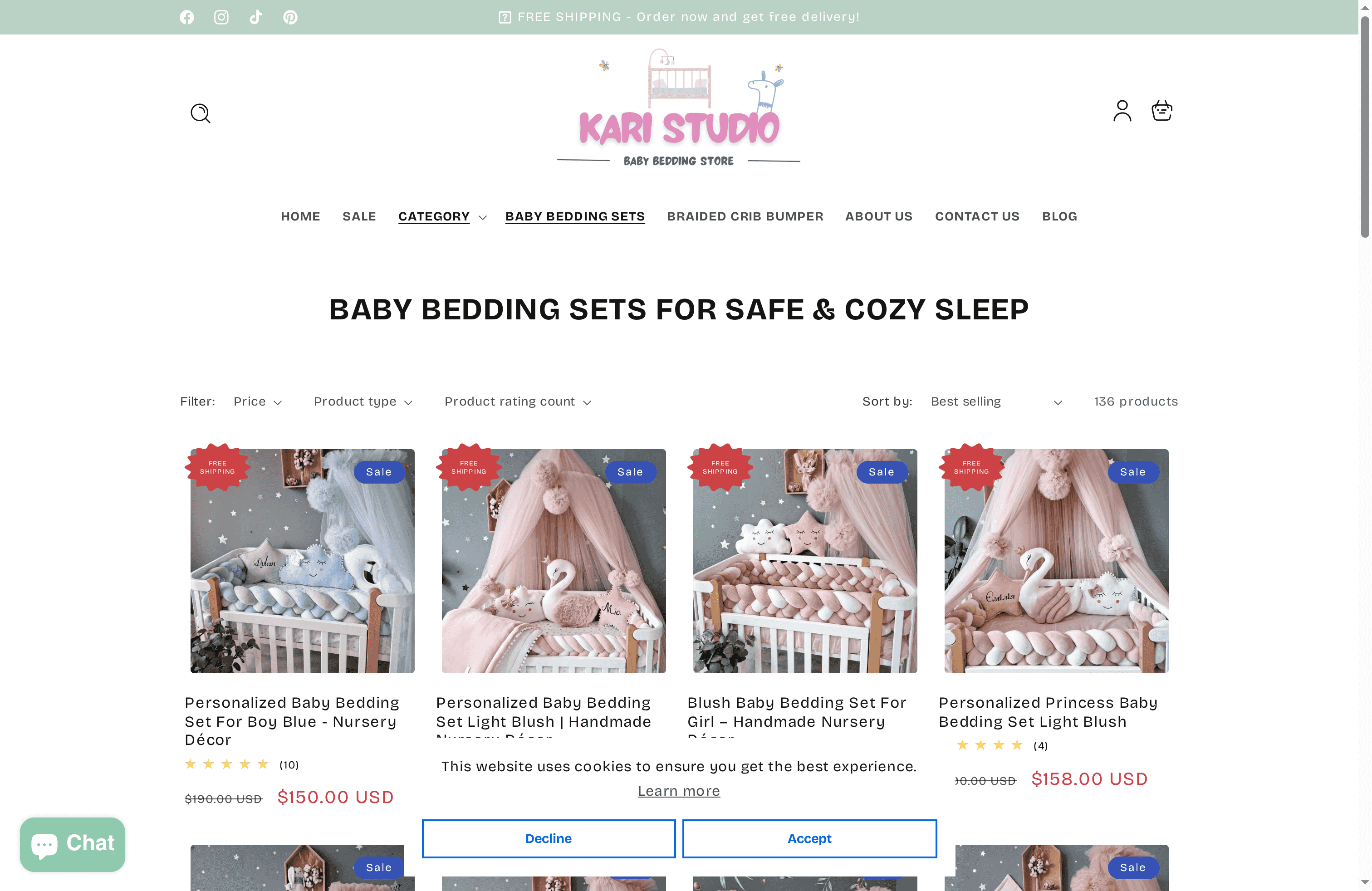
Explore our full range of premium baby bedding sets and accessories designed to fit standard, mini, and specialty cribs with precision. Each product is made from hypoallergenic, soft fabrics ensuring a gentle touch against your baby’s skin and reducing harmful chemical exposure. Don’t wait to create the safe, snug nursery your baby deserves. Visit Kari Studio baby bedding collections today for customizable options that align perfectly with current crib mattress size recommendations. For additional nursery safety, consider pairing your mattress with our handmade cot bumper sets for boys to enhance protection without sacrificing fit. Start building a nursery that supports your peace of mind and your baby’s wellbeing now.
Frequently Asked Questions
What are the standard dimensions for crib mattresses?
Standard crib mattresses typically measure 28 inches by 52.375 inches, while mini crib mattresses usually measure 24 inches by 38 inches.
Why is it important to ensure a proper fit between the crib and the mattress?
A proper fit is crucial to prevent gaps that can trap your baby’s limbs or head, which can lead to entrapment or suffocation hazards. The gaps should not exceed 0.75 inches to ensure safety.
Are there special considerations for custom or specialty crib mattresses?
Yes, custom and specialty crib mattresses may have unique dimensions and requirements. It’s important to confirm the specific size and safety standards with the manufacturer before purchasing such mattresses.
How can I measure my crib to ensure the right mattress size?
To measure your crib, use a tape measure to find the interior length and width. Document these measurements and verify them against the mattress specifications before making a purchase.