
Every American parent wants the safest sleep space for their newborn, yet more than 60 percent admit to worrying about loose crib sheets and potential hazards at night. Choosing and fitting the right crib sheet may seem simple, but it is one of the most important steps in preventing sleep-related accidents. This guide walks you through every critical detail so you can confidently create a secure and cozy haven for your baby’s first nights.
Table of Contents
- Step 1: Gather the Right Crib Sheet and Mattress
- Step 2: Prepare the Crib Mattress Surface
- Step 3: Stretch and Align the Crib Sheet Properly
- Step 4: Secure the Corners and Check for Tangles
- Step 5: Verify the Fit for Safety and Comfort
Quick Summary
| Main Insight | Key Explanation |
|---|---|
| 1. Mattress must fit snugly | Ensure no gaps larger than two fingers between the mattress and crib to prevent entrapment risks. |
| 2. Choose a very firm mattress | A firm mattress reduces the risk of suffocation and supports healthy spine development for your baby. |
| 3. Use fitted sheets designed for cribs | Select sheets with elasticized edges to prevent bunching and ensure a secure fit around the mattress. |
| 4. Regularly check the sheet fit | Conduct weekly checks to ensure sheets remain secure and undamaged, adapting as your baby becomes more active. |
| 5. Tuck corners to prevent hazards | Tightly tuck sheet corners underneath the mattress to eliminate loose fabric that could entangle your baby. |
Step 1: Gather the Right Crib Sheet and Mattress
Finding the perfect crib sheet and mattress is your first crucial step in creating a safe sleeping environment for your newborn. The goal is simple: select bedding that fits securely and provides optimal support without compromising safety.
Start by measuring your crib’s mattress carefully. You want a mattress that fits snugly within the crib walls with no gaps larger than two fingers wide. When shopping, check the mattress dimensions against your specific crib model. Most standard cribs use a 27 1/4 inch by 52 inches mattress, but confirm your exact measurements before purchasing.
Choose a firm mattress that does not sag or indent when your baby lies down. A good test is pressing your hand into the mattress surface return quickly springs back into place. Selecting a very firm mattress prevents potential safety risks and supports healthy spine development. Look for mattresses specifically designed for infants with a dense, supportive foam or innerspring construction.
When selecting fitted sheets, prioritize those explicitly made for crib mattresses. These sheets have elasticized edges that wrap securely around the mattress corners preventing dangerous bunching or loosening. Avoid using adult bedding or sheets not specifically designed for cribs.
Pro tip: Purchase two to three fitted sheets to rotate during nighttime accidents or spills, ensuring you always have a clean backup ready for immediate use.
Here’s a summary of key crib sheet and mattress safety criteria for quick reference:
| Safety Factor | Ideal Standard | Why It Matters |
|---|---|---|
| Mattress Size | No gaps over two fingers wide | Prevents entrapment risks |
| Mattress Firmness | Very firm, springs back instantly | Reduces suffocation hazard |
| Sheet Fit | Snug, tight corners | Prevents bunching, reduces hazards |
| Sheet Material | Cotton or jersey knit | Maintains stretch and stability |
| Crib Slat Distance | Max 2 3/8 inches apart | Stops limbs from slipping through |
Step 2: Prepare the Crib Mattress Surface
Preparing a safe and comfortable mattress surface is critical for your baby’s sleep environment. This step ensures your little one has a secure foundation that meets the highest safety standards.
Start by carefully examining the mattress. Verify that the fitted sheet covers the mattress completely and fits tightly, with no loose or wrinkled areas that could pose an entanglement risk. The sheet should be so snug that you cannot easily pull it away from the mattress corners. Manufacturers recommend sheets specifically designed for crib mattresses, as standard adult sheets can create dangerous slack.
Check the mattress positioning within the crib. The crib slats should be no more than 2 3/8 inches apart to prevent your baby from slipping through or getting trapped. Run your hand along the mattress edges to confirm it sits flush against all crib walls with no dangerous gaps or spaces where a tiny limb could become wedged.
Ensure the mattress is positioned at the correct height for your baby’s current developmental stage. Most cribs allow multiple mattress height settings, typically starting at the highest level for newborns and gradually lowering as your baby becomes more mobile.
Pro tip: Keep a backup fitted sheet nearby and always have a waterproof mattress protector in place to guard against unexpected spills and accidents.
Step 3: Stretch and Align the Crib Sheet Properly
Perfectly fitting a crib sheet is more than just aesthetic its a crucial safety step for your newborns sleeping environment. Your goal is to create a smooth secure surface that eliminates potential hazards.
Ensure the sheet fits snugly across the entire mattress with no loose corners or wrinkled areas. Start by holding the sheet at opposite corners and pulling it taut across the mattress. The elastic edges should grip firmly around all four sides without bunching or creating slack. When you tug at a corner the entire sheet should resist movement and remain firmly in place.
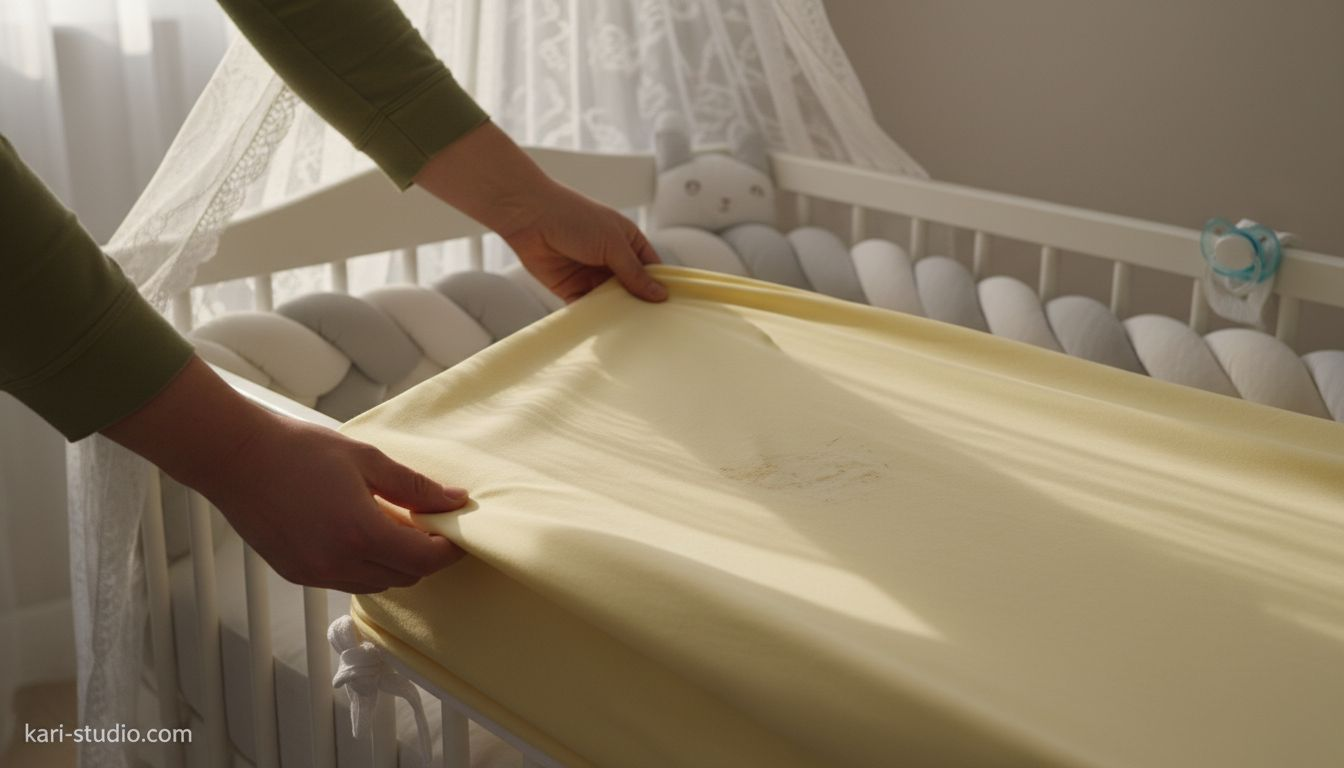
Measure and confirm that no gaps exist between the mattress edges and crib walls larger than two fingers width. A properly aligned sheet helps prevent potential entrapment risks by ensuring a tight fit. Smooth out any potential wrinkles or folds systematically working from the center outward to create a completely flat surface.
Check the sheet material quality and stretch. Cotton or jersey knit sheets with good elasticity work best for maintaining tension and preventing shifting during your babys movements. Avoid sheets made from slippery fabrics that could potentially bunch or slide around the mattress.
Pro tip: Invest in fitted sheets with deep pockets and strong elastic bands designed specifically for standard crib mattresses to guarantee the most secure and consistent fit possible.

Use this table to compare fitted crib sheets and their common features:
| Sheet Feature | Standard Fitted Sheet | Deep Pocket Sheet | Reinforced Corner Sheet |
|---|---|---|---|
| Elastic Quality | Basic elastic | Strong stretch | Heavy-duty elastic bands |
| Fit Security | Moderate | High | Very high |
| Best For | Typical crib mattresses | Thicker mattresses | Active or rolling babies |
| Durability | Average | Good | Excellent |
Step 4: Secure the Corners and Check for Tangles
Corner security is your final defense against potential sheet hazards in your babys sleeping environment. This critical step ensures the sheet remains perfectly positioned throughout your infants rest.
Carefully tuck each corner of the sheet underneath the mattress with firm tension to prevent any potential loosening. Start at one corner and work methodically around the mattress pulling the sheet taut and creating hospital style corners that will resist movement. The goal is a sheet that cannot be easily dislodged by your babys movements or pulling.
Inspect the entire mattress surface ensuring no gaps exist between the sheet and mattress edges larger than two fingers width. Run your hands across the surface feeling for any potential bunching or areas where the sheet might create a fold or wrinkle that could pose an entanglement risk. Smooth out any irregularities immediately and double check that the sheet lies completely flat and tight.
Pay special attention to the corners and edges. The sheet should create a smooth uninterrupted surface with no loose fabric that could potentially wrap around tiny fingers or limbs. Elastic edged sheets work best for maintaining consistent tension and preventing potential hazards.
Pro tip: Invest in fitted sheets with reinforced corners and deep pockets designed specifically for standard crib mattresses to minimize the risk of sheet movement during your babys sleep.
Step 5: Verify the Fit for Safety and Comfort
The final checkpoint in creating a secure sleeping environment is thoroughly verifying your crib sheet fit. This step transforms careful preparation into a genuinely safe space for your infant.
Ensure the mattress fits snugly within the crib walls with no dangerous gaps, using the two finger test as your primary safety metric. Press along each edge checking that no more than two fingers can slip between the mattress and crib frame. A proper fit prevents potential entrapment risks and provides a stable foundation for your babys sleep.
Select a mattress that remains completely firm under your babys weight. Test the mattress surface by pressing down and observing how quickly it returns to its original position. A quality crib mattress should not indent or create permanent depressions when weight is applied. This firmness is crucial for safe infant sleep and proper spinal support.
Carefully examine the entire sheet surface one final time. Run your hands across every section feeling for any potential wrinkles bunching or areas of loose fabric. The sheet should feel taut smooth and completely uniform without any raised edges or potential pinching points that could cause discomfort.
Pro tip: Perform a weekly fit check to ensure your crib sheet remains secure and undamaged as your baby grows and becomes more active in the sleeping environment.
Create a Safe and Snug Nursery with Kari Studio’s Handmade Bedding
Achieving the perfect crib sheet fit is essential for your baby’s safety and comfort. This guide highlights common challenges like securing tight corners and choosing the right mattress to prevent gaps and wrinkles. At Kari Studio, we understand these concerns and offer an exclusive range of premium, handmade baby bedding sets designed to provide the exact snug fit your nursery needs. Each product is crafted from hypoallergenic, soft fabrics to keep your little one cozy while meeting top safety standards.

Explore our personalized baby bedding sets that promise excellent fit and durability. Complement your setup with our handmade crib canopies and braided crib bumpers for boys or girls to create a complete, secure nursery. Take action now to provide a soothing and safe sleeping space that grows with your baby. Visit https://kari-studio.com/collections/baby-bedding-set to find your perfect nursery essentials today.
Frequently Asked Questions
How do I measure my crib mattress for a proper fit?
To measure your crib mattress correctly, use a tape measure to determine its dimensions. Ensure that it fits snugly within the crib with no gaps larger than two fingers, as this prevents entrapment risks.
What type of mattress is safest for my baby’s crib?
A firm mattress is the safest option for your baby’s crib. When selecting a mattress, press down on its surface to check that it springs back quickly—this indicates a supportive structure crucial for safe sleep.
How can I ensure my crib sheet fits correctly?
To ensure your crib sheet fits correctly, use sheets designed specifically for crib mattresses. Pull the sheet taut across the mattress and check that there are no loose corners or wrinkles, making sure it lies flat and smooth to reduce entanglement risks.
What should I do if I notice the crib sheet is bunching up?
If you notice your crib sheet is bunching up, immediately smooth it out and confirm that it fits snugly across the mattress. Ensure there are no gaps larger than two fingers between the sheet and the mattress edges, as this can create safety hazards for your baby.
How often should I check the fit of the crib sheet?
Check the fit of the crib sheet at least once a week, especially as your baby grows. Regular checks will help you ensure that the sheet remains secure and free from damage, maintaining a safe sleeping environment for your infant.
What materials are best for crib sheets?
Cotton or jersey knit materials are best for crib sheets due to their elasticity and breathability. Choose high-quality fabrics that maintain their stretch to prevent slipping and ensure a secure fit around the mattress.