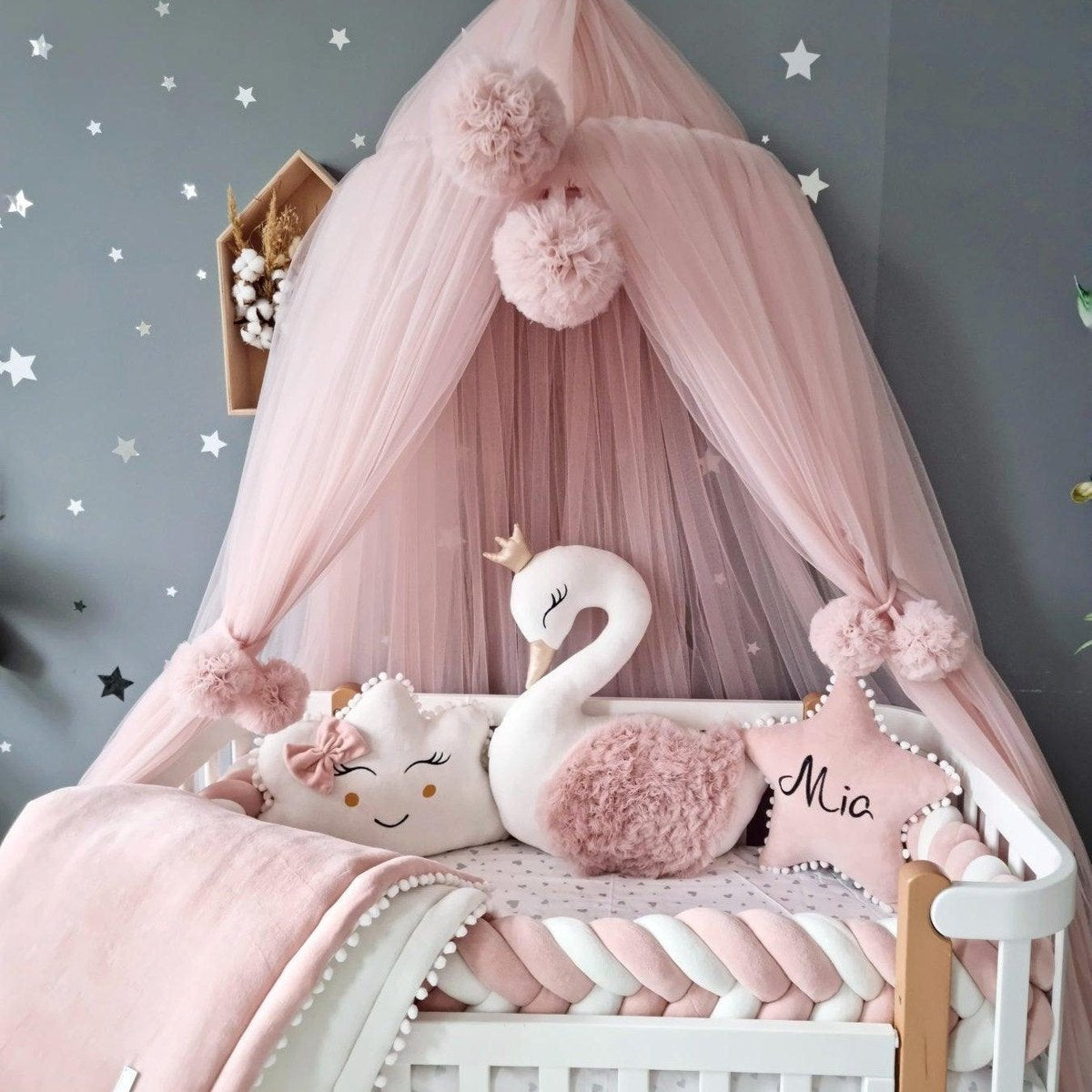
Cada padre enfrenta el desafío de equilibrar la seguridad con el estilo al crear una habitación para su bebé en los Estados Unidos. Con tantas opciones adorables, mantenerse enfocado en lo que es más importante puede resultar abrumador. Al destacar los componentes de seguridad críticos que recomiendan los expertos y compartir cómo personalizar el espacio de su bebé, esta guía revela cómo puede diseñar un entorno acogedor que sea a la vez seguro y exclusivamente suyo.
Tabla de contenidos
- Qué conforma los elementos esenciales de la ropa de cuna
- Tipos de ropa de cuna y sus funciones
- Principales normas de seguridad en los Estados Unidos
- Elección de materiales hipoalergénicos y seguros
- Opciones de personalización y estilo para la habitación del bebé
- Errores comunes al montar una cuna
Puntos clave
| Punto | Detalles |
|---|---|
| Elementos esenciales de seguridad para cunas | Utilice un colchón firme, una sábana ajustable y un protector de colchón impermeable para un entorno de sueño seguro para el bebé. |
| Evite artículos peligrosos | No utilice ropa de cama blanda, almohadas ni protectores de cuna que puedan suponer un riesgo de asfixia. |
| Elija materiales hipoalergénicos | Seleccione ropa de cuna hecha de materiales orgánicos o naturales para garantizar la salud y el confort del bebé. |
| Realice controles de seguridad regulares | Inspeccione la cuna periódicamente en busca de tornillos sueltos o materiales desgastados para mantener un espacio de descanso seguro para su bebé. |
Qué conforma los elementos esenciales de la ropa de cuna
Elegir la ropa de cuna adecuada es algo más que seleccionar estampados bonitos: se trata de crear un entorno de sueño seguro y cómodo para su recién nacido. Comprender los componentes esenciales de la ropa de cuna ayuda a los padres a tomar decisiones informadas que prioricen el bienestar de su bebé.
La base de una ropa de cuna segura comienza con los componentes de seguridad críticos. De acuerdo con las directrices para un sueño seguro, los padres deben centrarse en artículos minimalistas y transpirables que reduzcan los riesgos de asfixia:
- Colchón de cuna: Una superficie firme y plana que se ajuste perfectamente a la cuna
- Sábana ajustable: Diseñada específicamente para ajustarse al colchón sin exceso de tela
- Protector de colchón: Capa impermeable que protege contra derrames y accidentes
Al preparar un juego de ropa de cuna, los padres deben evitar artículos blandos y potencialmente peligrosos. Las recomendaciones de seguridad del consumidor advierten encarecidamente contra:
- Mantas sueltas
- Almohadas
- Protectores de cuna (bumpers)
- Animales de peluche
- Ropa de cama blanda adicional
Estos artículos pueden crear peligros de asfixia y aumentar el riesgo del Síndrome de Muerte Súbita del Lactante (SMSL). El enfoque más seguro es un diseño minimalista que mantenga a su bebé seguro y cómodo.
Aquí tiene un resumen que compara los componentes recomendados para la ropa de cuna y los artículos que se deben evitar para un sueño más seguro:
| Tipo de componente | Beneficio para el bebé | Riesgo de seguridad | Estado de seguridad en EE. UU. |
|---|---|---|---|
| Sábana ajustable | Ajuste seguro y transpirable | Riesgo mínimo | Altamente recomendada |
| Protector de colchón | Protege el colchón, impermeable | Sin riesgo directo | Aprobado para su uso |
| Manta para vestir (saquito) | Calidez sin tela suelta | Bajo riesgo | Alternativa segura |
| Manta suelta | Puede cubrir la cara del bebé | Alto riesgo de asfixia | Prohibida |
| Almohada | Supone riesgo de atrapamiento | Riesgo muy alto | Prohibida |
| Protector de cuna (bumper) | Restringe el flujo de aire | Peligro grave | Prohibido |
Consejo profesional: Compre siempre artículos de ropa de cuna diseñados específicamente para el uso del bebé, asegurándose de que cumplan con las normas de seguridad vigentes y se ajusten con precisión a su modelo de cuna específico.
Tipos de ropa de cuna y sus funciones
Navegar por el mundo de la ropa de cuna requiere entender los diferentes tipos y sus propósitos específicos. Si bien la estética importa, la seguridad y la funcionalidad son primordiales al seleccionar artículos para el entorno de sueño de su bebé. Las directrices de seguridad del consumidor ofrecen información crucial para elegir componentes de ropa de cama apropiados.
Los tipos de ropa de cuna clave incluyen:
- Sábanas ajustables: Capas transpirables de ajuste ceñido que cubren el colchón
- Protectores de colchón: Barreras impermeables contra derrames y alérgenos
- Mantas para vestir (saquitos): Alternativas seguras a las mantas sueltas tradicionales
- Faldones de cuna: Elementos decorativos que no afectan la seguridad del sueño
Los padres deben actuar con precaución con ciertos artículos de ropa de cama. Las recomendaciones para un sueño seguro advierten encarecidamente contra incluir:
- Almohadas
- Mantas sueltas
- Protectores de cuna
- Animales de peluche
- Ropa de cama blanda adicional
Estos artículos pueden crear peligrosos riesgos de asfixia y aumentar potencialmente la probabilidad del Síndrome de Muerte Súbita del Lactante (SMSL). El objetivo es crear un espacio para dormir minimalista y transpirable que mantenga a su bebé seguro.
Consejo profesional: Invierta en 2-3 sábanas ajustables y un protector de colchón impermeable de calidad para asegurarse de tener siempre una superficie de descanso limpia y seca para su bebé.
Principales normas de seguridad en los Estados Unidos
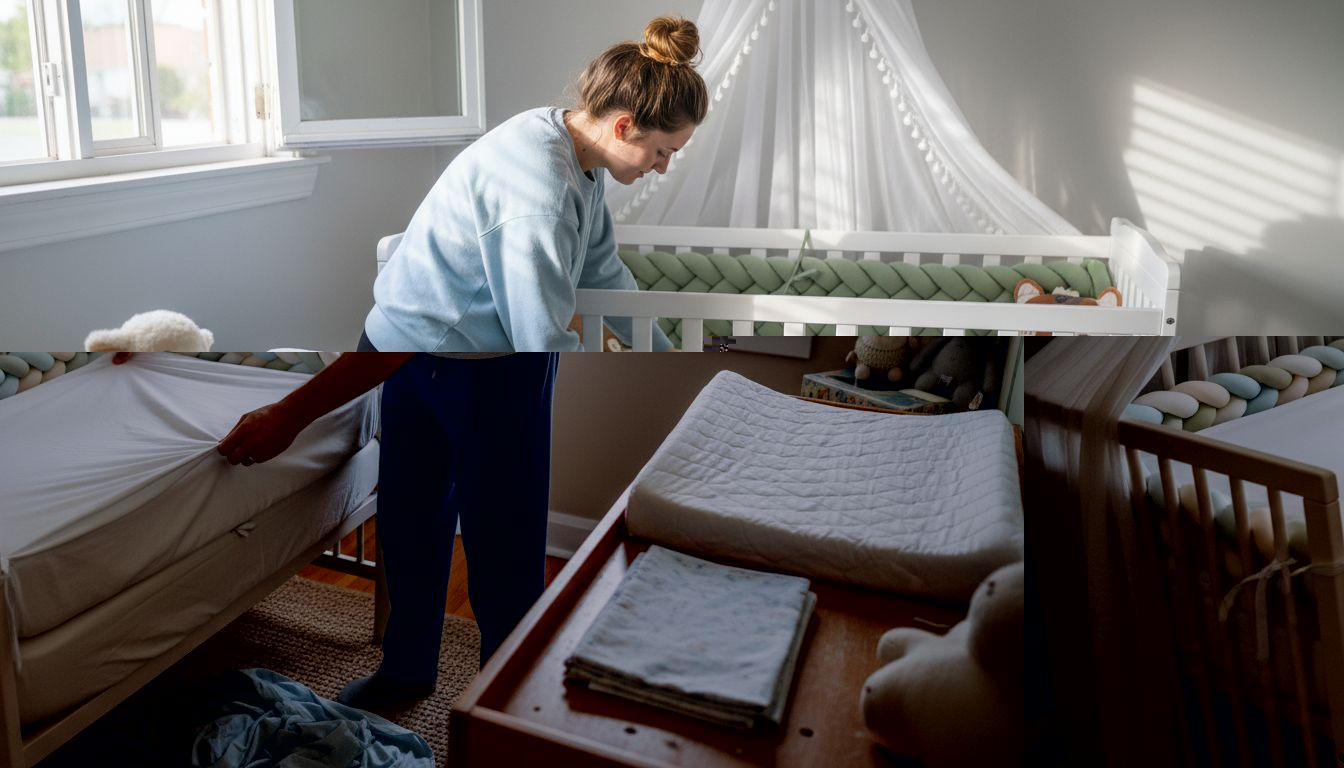
Garantizar la seguridad del bebé en la cuna requiere comprender las regulaciones integrales establecidas por las organizaciones nacionales. Las recomendaciones pediátricas estadounidenses hacen hincapié en la creación de un entorno de sueño protegido que minimice los riesgos potenciales para los recién nacidos y lactantes.
Las principales normas de seguridad exigidas por las organizaciones nacionales incluyen:
-
Requisitos del colchón
- Superficie firme y plana
- Se ajusta a la cuna con precisión sin dejar espacios
- Soporta el peso corporal del bebé
-
Integridad estructural
- La separación de los barrotes de la cuna evita el atrapamiento
- Construcción robusta
- Sin bordes afilados ni herrajes que sobresalgan
Artículos de ropa de cama prohibidos según las directrices de la Comisión de Seguridad de Productos del Consumidor (CPSC):
- Mantas blandas
- Almohadas
- Protectores de cuna
- Animales de peluche
- Ropa de cama suelta
Estas regulaciones tienen como objetivo prevenir la asfixia, el atrapamiento y posibles lesiones al bebé. Los fabricantes deben cumplir con estrictos procesos de prueba y certificación para garantizar la seguridad del producto.
Todo artículo de ropa de cuna debe priorizar la seguridad del bebé por encima de las consideraciones estéticas.
Consejo profesional: Verifique siempre que la ropa de su cuna cumpla con las normas de seguridad vigentes en los Estados Unidos comprobando las etiquetas de certificación oficial y las fechas de fabricación recientes.
Elección de materiales hipoalergénicos y seguros
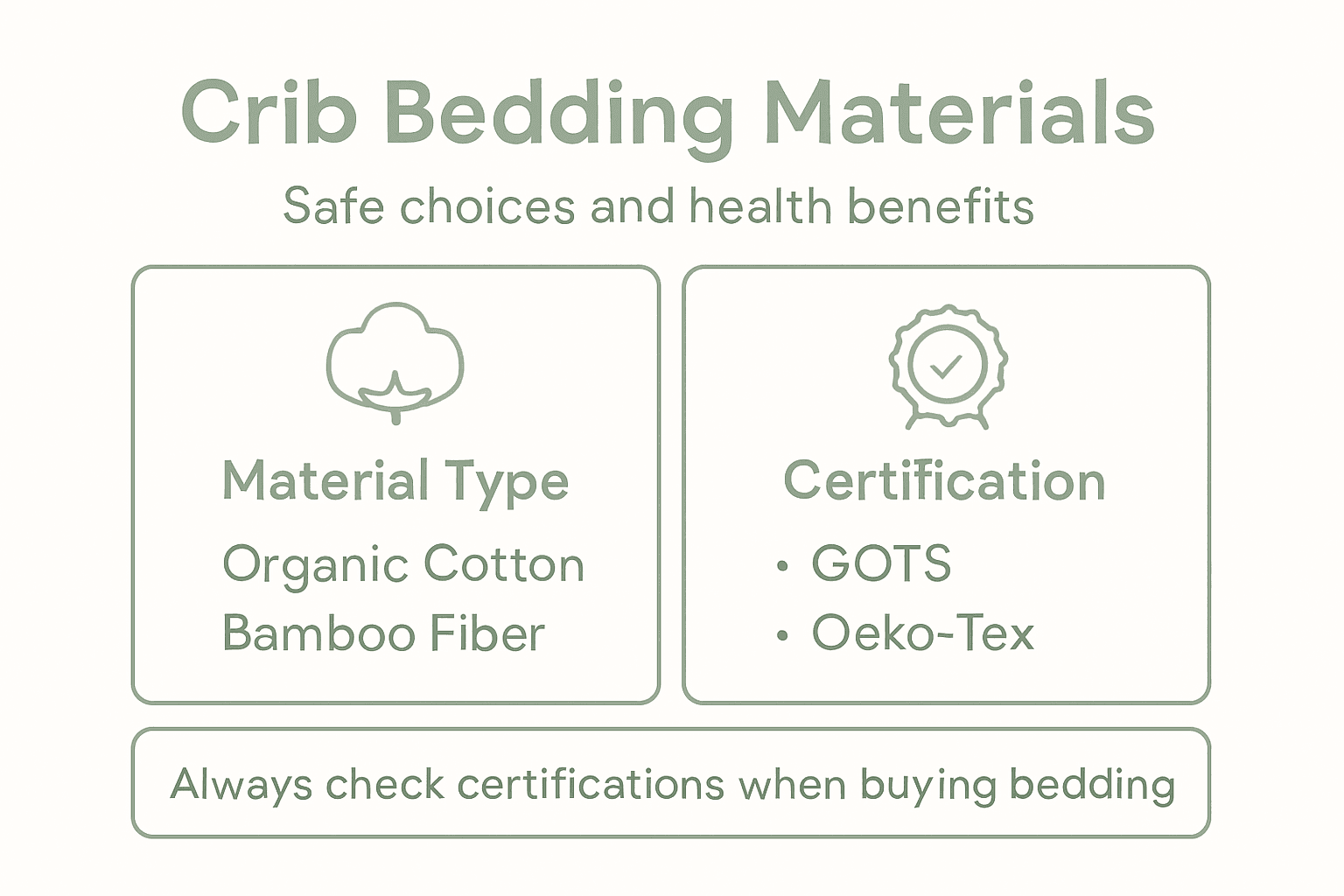
Los padres de hoy enfrentan decisiones complejas al seleccionar materiales para la ropa de cuna que protejan la salud y la comodidad de su bebé. Los expertos en seguridad ambiental recomiendan priorizar materiales no tóxicos e hipoalergénicos que minimicen los riesgos potenciales para la salud.
Características recomendadas para materiales seguros:
- Algodón orgánico: Naturalmente hipoalergénico y libre de pesticidas
- Telas de bambú: Transpirables y antimicrobianas
- Lana: Naturalmente resistente al fuego sin tratamientos químicos
- Mezclas de cáñamo: Duraderas y resistentes al crecimiento bacteriano
Productos químicos nocivos a evitar:
- Retardantes de llama
- Espuma de poliuretano
- Vinilo/PVC
- Tratamientos químicos sintéticos
- Acabados a base de formaldehído
Las organizaciones de sueño seguro enfatizan que la selección de materiales va más allá de las preferencias estéticas. Los bebés tienen una piel sensible y sistemas respiratorios en desarrollo, lo que hace que la elección de materiales sea fundamental para su salud y bienestar general.
Elegir materiales hipoalergénicos no es un lujo, es un aspecto fundamental del cuidado infantil.
Consejo profesional: Solicite siempre la certificación del material y lave los artículos nuevos de ropa de cuna antes del primer uso para eliminar cualquier residuo químico de fabricación.
Compare las opciones de materiales seguros para ropa de cuna de un vistazo:
| Material | Beneficio para la salud | Certificación común | Impacto ambiental |
|---|---|---|---|
| Algodón orgánico | Hipoalergénico, suave | GOTS, OEKO-TEX | Biodegradable, bajo en toxinas |
| Tela de bambú | Antimicrobiano, transpirable | OEKO-TEX | Renovable, desperdicio mínimo |
| Lana | Resistente al fuego, natural | Woolmark | Sostenible, compostable |
| Mezcla de cáñamo | Duradero, resiste bacterias | Varios textiles | Bajo uso de pesticidas |
Opciones de personalización y estilo para la habitación del bebé
Crear una habitación personalizada permite a los padres expresar su creatividad mientras mantienen un entorno seguro para su bebé. Las directrices sobre ropa de cama enfatizan que el estilo se puede lograr a través de decisiones de diseño seguras y bien pensadas.
Opciones de personalización:
- Paleta de colores: Tonos suaves y relajantes que promueven el descanso
-
Selección de temas
- Motivos de animales
- Diseños inspirados en la naturaleza
- Patrones geométricos minimalistas
-
Técnicas de personalización
- Nombres bordados
- Ropa de cama con monogramas
- Accesorios coordinados
Principios de estilo clave:
- Mantenga los elementos decorativos alejados de la zona de dormir
- Use adhesivos de pared removibles
- Seleccione telas lavables a máquina
- Mantenga colores base neutros para mayor flexibilidad
Los expertos en sueño seguro recomiendan crear interés visual sin comprometer la seguridad del bebé. Los elementos decorativos deben permanecer puramente estéticos y nunca interferir con el entorno de sueño.
La personalización debe mejorar el confort, no crear peligros potenciales.
Consejo profesional: Elija una combinación de colores versátil que pueda hacer la transición fácilmente a medida que su hijo crece, lo que permite que el diseño de la habitación se adapte con un gasto mínimo.
Errores comunes al montar una cuna
Las directrices de seguridad pediátrica revelan errores críticos que los padres cometen con frecuencia al preparar el entorno de sueño de un bebé. Comprender estos errores puede reducir drásticamente los riesgos de seguridad potenciales y crear una habitación segura.
Errores de montaje de cuna más peligrosos:
- Añadir artículos de ropa de cama blanda
- Almohadas
- Mantas sueltas
- Protectores de cuna
- Usar un colchón inadecuado
- Tamaño incorrecto
- Demasiado blando o desgastado
- Posicionamiento peligroso
- Cerca de ventanas
- Cerca de tomas de corriente
- Muebles inestables cerca
Riesgos estructurales a evitar:
- Modelos de cuna obsoletos
- Cunas de segunda mano sin certificación de seguridad
- Cunas con herrajes sueltos o faltantes
- Cunas con barandilla abatible (ahora prohibidas)
Las organizaciones de seguridad de productos enfatizan que muchas lesiones infantiles son resultado de errores de configuración prevenibles. La inspección rigurosa y el cumplimiento de las normas de seguridad vigentes son cruciales.
Una cuna bien preparada es la primera línea de defensa en la protección infantil.
Consejo profesional: Realice una inspección de seguridad mensual de su cuna, verificando si hay tornillos sueltos, materiales desgastados o posibles zonas de atrapamiento.
Cree una habitación segura y elegante con Kari Studio
Elaborar los elementos esenciales de ropa de cuna perfectos significa equilibrar la seguridad, la comodidad y el estilo para su pequeño. Si le preocupa evitar mantas sueltas o protectores voluminosos, pero desea añadir personalidad a la habitación de su bebé, Kari Studio ofrece soluciones hechas a mano diseñadas especialmente para usted. Nuestras telas hipoalergénicas y suaves aseguran que la delicada piel de su bebé se mantenga cómoda mientras cumplen con los estándares de seguridad cruciales descritos en el artículo.
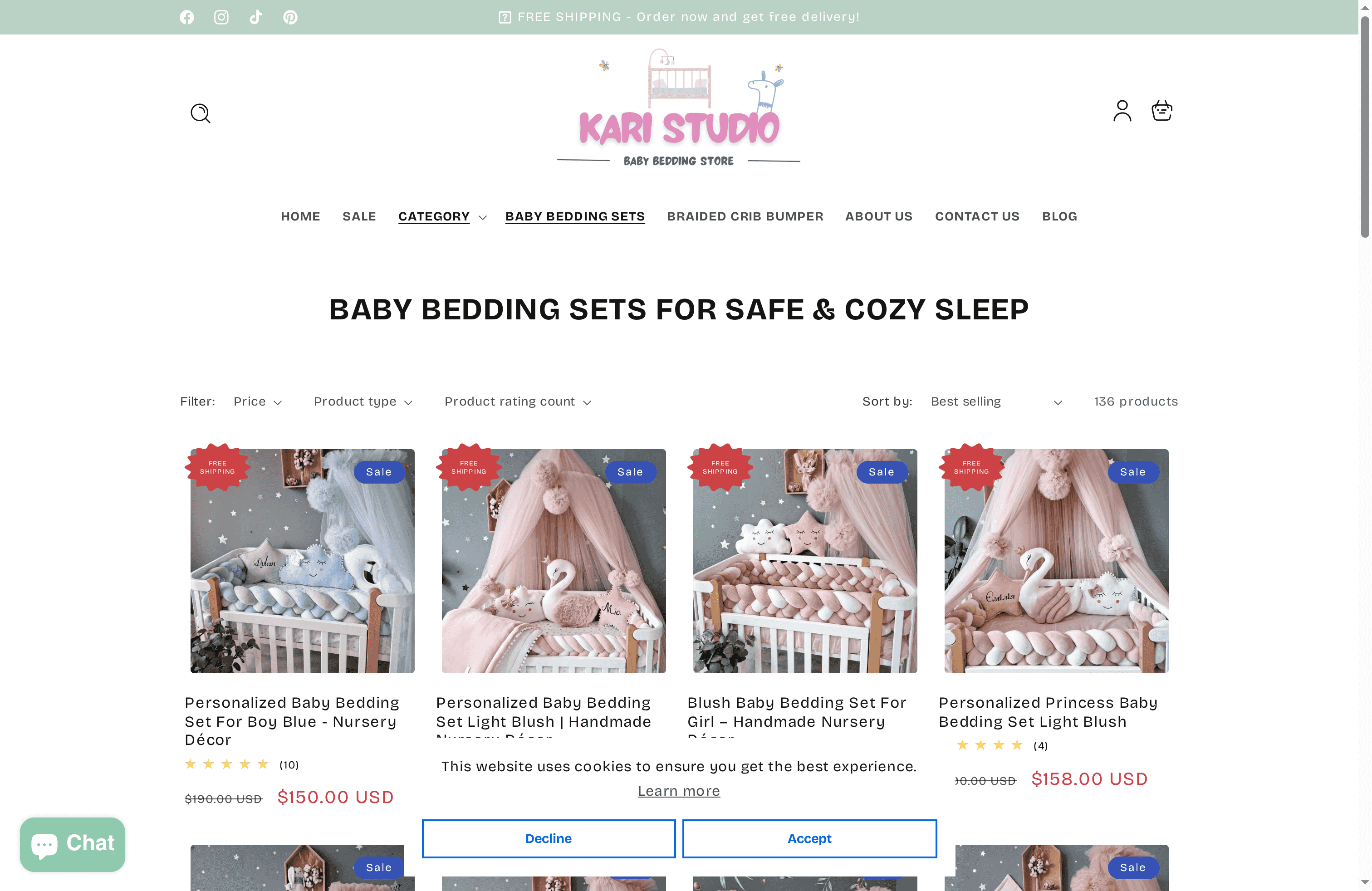
Explore nuestras colecciones curadas, incluyendo Juegos de protectores de cuna hechos a mano para niños y Juegos de protectores de cuna hechos a mano para niñas, para encontrar opciones de ropa de cama protectoras pero transpirables. Añada un toque de ensueño con nuestros Doseles para cuna hechos a mano que realzan el estilo de la habitación sin comprometer la seguridad. Visite nuestra gama completa de ropa de cama premium para bebés en Kari Studio para seleccionar piezas personalizadas bordadas con el nombre de su bebé. Comience hoy mismo a crear un espacio de sueño seguro y acogedor que su familia adorará.
Preguntas frecuentes
¿Cuáles son los componentes esenciales de la ropa de cuna?
Los componentes esenciales de la ropa de cuna incluyen un colchón firme, una sábana ajustable que se ajuste perfectamente y un protector de colchón impermeable. Estos artículos ayudan a crear un entorno de sueño seguro para su bebé.
¿Por qué no se recomiendan artículos de ropa de cama blanda como almohadas y mantas sueltas en las cunas?
Los artículos de ropa de cama blanda, como almohadas y mantas sueltas, suponen un alto riesgo de asfixia y pueden aumentar las probabilidades de Síndrome de Muerte Súbita del Lactante (SMSL). Es fundamental mantener un diseño minimalista en la cuna para garantizar la seguridad.
¿Qué materiales debo evitar al seleccionar ropa de cuna?
Evite materiales como retardantes de llama, espuma de poliuretano, vinilo/PVC y cualquier tratamiento químico sintético, ya que pueden ser perjudiciales para la salud de su bebé. Elegir materiales hipoalergénicos y seguros es esencial para el confort y bienestar de su infante.
¿Cómo puedo personalizar la habitación de mi bebé manteniendo la seguridad?
Puede personalizar la habitación de su bebé seleccionando una paleta de colores relajante, usando adhesivos de pared removibles y optando por telas lavables a máquina. Asegúrese de que todos los elementos decorativos se mantengan alejados de la zona de dormir para mantener un entorno seguro.
Recomendado
- La guía definitiva para elegir el juego de ropa de cama perfecto para bebés
- Cómo influyen las normas de seguridad modernas en la elección de ropa de cama y accesorios para bebés - kari-studio.com
- Errores al preparar la cuna que debes evitar para una habitación infantil segura
- Qué tener cerca de la cuna para una habitación segura y acogedora