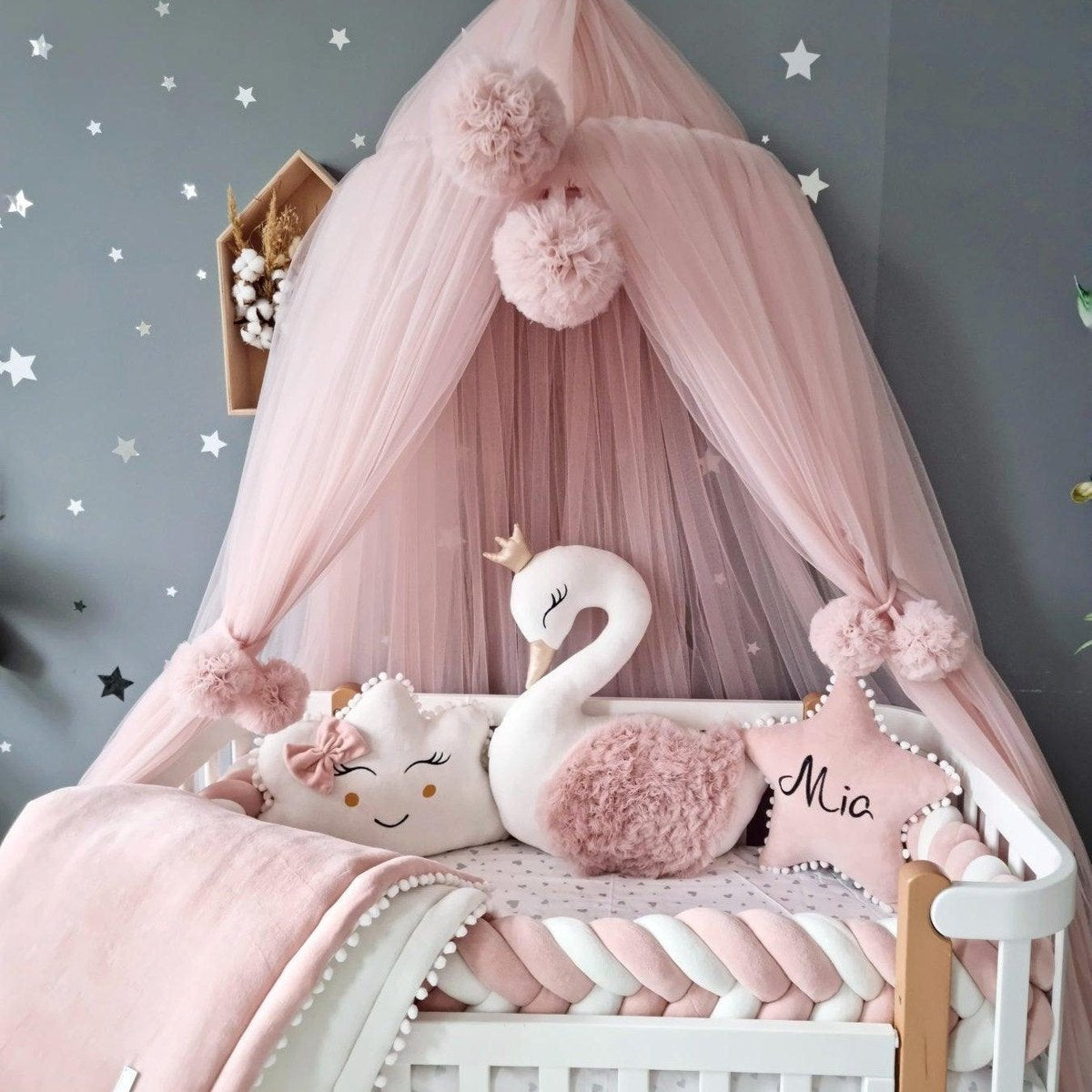
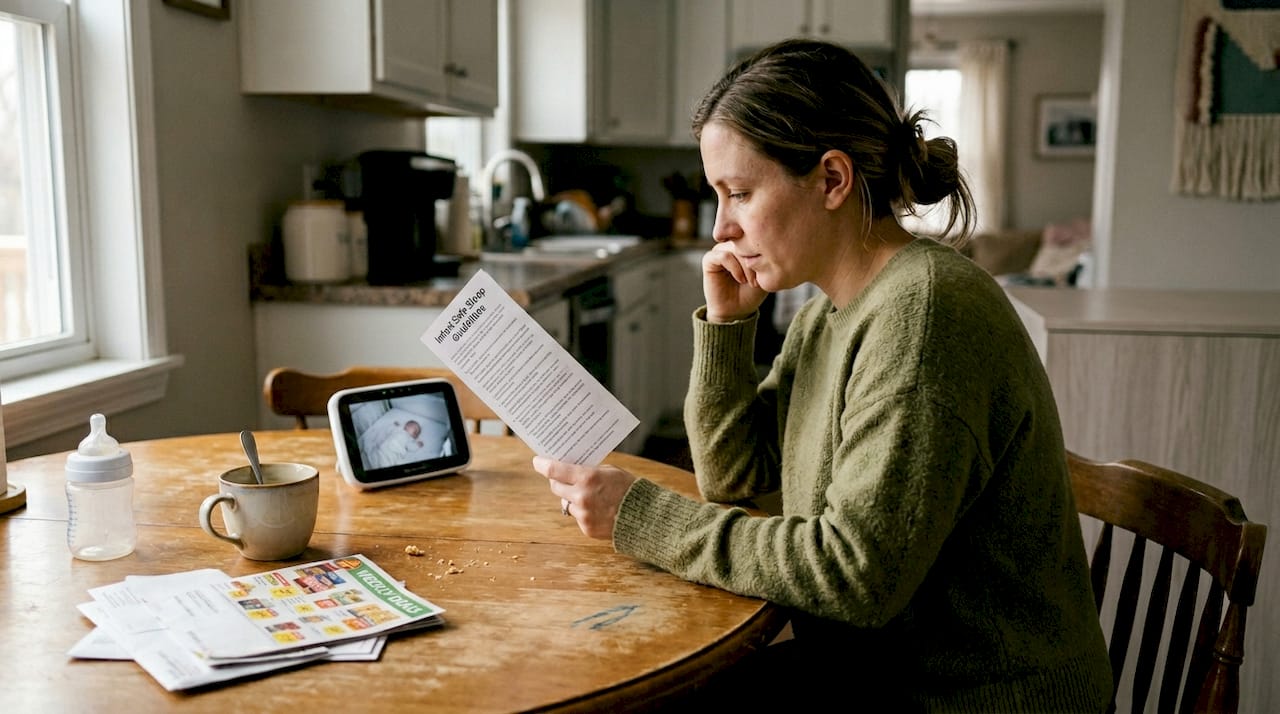
Muchos padres compran protectores de cuna transpirables creyendo que son una mejora más segura. Las etiquetas dicen "malla", "flujo de aire" y "riesgo reducido", y eso suena tranquilizador. Pero las recomendaciones de médicos, organismos reguladores y fabricantes de productos a menudo apuntan en direcciones diferentes, dejándole más confundido que al principio. Este artículo analiza exactamente qué son los protectores transpirables, qué dicen realmente la ciencia y la ley, y qué puede hacer ahora mismo para preparar un espacio de sueño que sea cómodo y genuinamente seguro para su bebé.
👉 Guía de seguridad para protectores de cuna
Tabla de contenido
- ¿Qué son los protectores transpirables y en qué se diferencian?
- ¿Por qué los expertos y pediatras desaconsejan todos los protectores?
- Entendiendo las leyes de EE. UU.: ¿Qué está realmente prohibido y qué permanece?
- Alternativas seguras para la cuna y consejos prácticos para la habitación
- ¿Por qué decir "no" a todos los protectores sigue siendo controvertido (y qué les decimos a los padres)?
- Cree una habitación segura y elegante con juegos de cama de confianza
- Preguntas frecuentes
Puntos clave
| Punto | Detalles |
|---|---|
| La cuna vacía es lo más seguro | Expertos y guías coinciden en que no incluir nada extra en la cuna reduce el riesgo de asfixia y SMSL. |
| Protectores transpirables no están exentos de riesgos | A pesar de la publicidad, los protectores de malla y transpirables conllevan riesgos de atrapamiento y asfixia. |
| Prohibido vs. permitido | La ley federal prohíbe los protectores acolchados pero no los forros de malla, así que conozca tanto la seguridad como los detalles legales. |
| Siga las guías de confianza | Las recomendaciones de la AAP y la CPSC deben guiar la configuración de la cuna, no solo las etiquetas de los productos. |
| Decore de forma segura | Elija ropa de cama segura y elegante para mayor comodidad, cumpliendo con todos los estándares de seguridad. |
¿Qué son los protectores transpirables y en qué se diferencian?
Un protector transpirable, también llamado forro de malla para cuna, es un panel de tela fina que se coloca alrededor del interior de los barrotes de una cuna. A diferencia de los protectores acolchados tradicionales, que son gruesos y acolchados, los protectores transpirables utilizan un material de malla de tejido abierto diseñado para permitir el paso del aire. La idea es que, si la cara del bebé se presiona contra el forro, el aire pueda circular, reduciendo la posibilidad de volver a respirar dióxido de carbono.
Los protectores acolchados tradicionales se diseñaron para evitar que los bebés se golpearan la cabeza o se quedaran con las extremidades atrapadas entre los barrotes. Se hicieron populares hace décadas, antes de que los modernos estándares de seguridad de las cunas redujeran el espacio entre los barrotes. Hoy en día, las opciones de protectores de cuna transpirables se comercializan como la siguiente evolución, prometiendo la misma protección sin el riesgo de asfixia.
Aquí tiene una comparación rápida de las tres opciones principales:
| Tipo | Material | Flujo de aire | Recomendación de expertos |
|---|---|---|---|
| Protector acolchado tradicional | Tela gruesa acolchada | Ninguno | No recomendado, prohibido a nivel federal |
| Forro de malla transpirable | Malla de tejido abierto | Moderado | No recomendado por expertos |
| Sin protector (cuna vacía) | N/A | Total | Recomendado por AAP y CPSC |
Las principales afirmaciones que hacen los fabricantes sobre los protectores transpirables incluyen:
- Circulación de aire: La malla permite el flujo de aire incluso cuando la cara del bebé está contra ella
- Protección de extremidades: Evita que los brazos o piernas se deslicen entre los barrotes
- Reducción del riesgo de lesiones: Superficie más suave en comparación con los barrotes de madera desnudos
- Cero muertes reportadas: Algunas marcas destacan que no hay muertes vinculadas a su producto específico
Sin embargo, las afirmaciones del fabricante sobre una caída del 35% en la mortalidad y cero muertes por productos transpirables contrastan drásticamente con la guía de los expertos, que prioriza constantemente una cuna completamente vacía como la única opción segura. La brecha entre lo que promete un producto y lo que recomiendan las organizaciones de seguridad es amplia, y esa brecha es exactamente donde reside la confusión de los padres.
¿Por qué los expertos y pediatras desaconsejan todos los protectores?
Tras entender las diferencias y las afirmaciones de los productos, es vital ver qué dicen los pediatras y los organismos reguladores sobre CUALQUIER tipo de protector. La respuesta es coherente: evítelos todos.
Las guías de sueño seguro de la AAP desaconsejan explícitamente las almohadillas protectoras, incluidas las versiones transpirables o de malla, debido a los riesgos de asfixia, atrapamiento y estrangulamiento. No es una sugerencia cautelosa. Es una recomendación firme respaldada por años de datos sobre lesiones y muertes.
“No hay evidencia de que los protectores de cuna prevengan lesiones, y hay evidencia de que los protectores pueden causar daños graves, incluida la muerte. Mantenga la cuna vacía”. — Academia Americana de Pediatría
Incluso los forros de malla plantean riesgos reales. He aquí por qué:
- Asfixia: Un bebé pequeño puede presionar su cara incluso contra una malla fina y carecer del control motor para alejarse
- Atrapamiento: Los bebés pueden quedar atrapados con la cabeza entre el forro y el colchón
- Estrangulamiento: Las cintas utilizadas para asegurar los protectores a los barrotes pueden envolverse alrededor del cuello del bebé
- Peligro de escalada: Los bebés mayores pueden usar un protector como escalón para trepar fuera de la cuna
- Sobrecalentamiento: Cualquier capa adicional en la cuna puede elevar la temperatura del entorno de sueño
Los estándares de seguridad de ropa de cama que rigen los productos para bebés en los EE. UU. reflejan esta misma preocupación. La CPSC ha rastreado docenas de muertes de bebés relacionadas con protectores en las últimas dos décadas, y los datos no distinguen significativamente entre las versiones acolchadas y las de malla cuando se trata de atrapamiento y asfixia posicional.
El problema central es el control motor. Los recién nacidos y los bebés pequeños simplemente no pueden reposicionarse de manera fiable. Incluso un producto que “permite el flujo de aire” no puede garantizar la seguridad cuando un bebé no puede alejarse de él.
Entendiendo las leyes de EE. UU.: ¿Qué está realmente prohibido y qué permanece?
Las recomendaciones de los expertos son claras, ¿pero qué pasa con las reglas? Así es como la ley actual de los EE. UU. encaja con lo que hay en los estantes de las tiendas.
La Ley de Sueño Seguro para Bebés (2022) prohíbe los protectores de cuna acolchados a nivel federal. Los forros de malla no acolchados no están prohibidos, pero los expertos no los recomiendan. Esta distinción es importante porque explica por qué todavía se puede entrar en una tienda y encontrar protectores de malla en el estante. Legal no significa seguro.
| Producto | ¿Prohibición federal? | Recomendación de expertos |
|---|---|---|
| Protector de cuna acolchado | Sí, prohibido desde 2022 | No usar |
| Forro de malla o transpirable | No, sigue siendo legal | No recomendado |
| Sin protector (cuna vacía) | N/A | Fuertemente recomendado |
| Saco de dormir portátil | No | Recomendado |
La ley se centró específicamente en los protectores acolchados porque la evidencia en su contra era abrumadora y de larga data. Los forros de malla ocupan una zona gris legal: no hay suficientes muertes documentadas para activar una prohibición federal, pero sí suficiente preocupación por parte de los pediatras para mantenerlos fuera de la lista de recomendaciones.
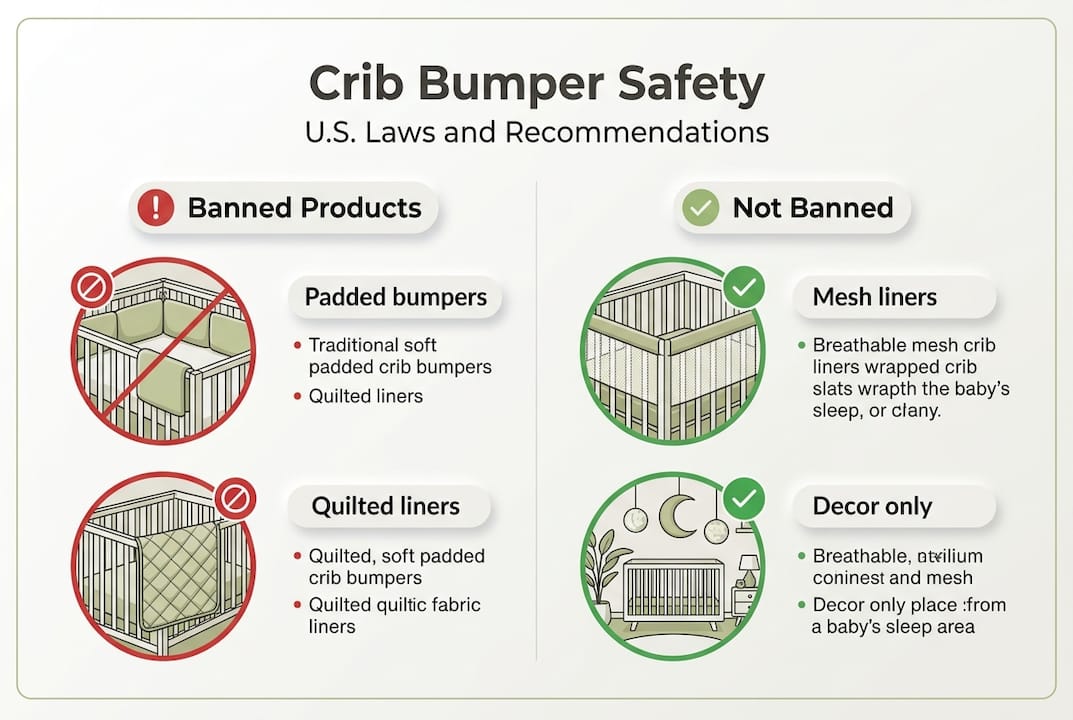
Para las leyes y alternativas sobre protectores de cuna, la conclusión práctica es sencilla. Que un producto se venda legalmente no significa que haya sido aprobado como seguro para el sueño del bebé. Los minoristas no están obligados a retirar los forros de malla de los estantes, y muchos siguen vendiéndolos porque existe demanda.
Consejo profesional: Siga siempre la guía de los expertos en lugar de las etiquetas de los productos. Una etiqueta de “seguro” en el empaque refleja marketing, no un respaldo médico. En caso de duda, mantenga la cuna vacía.
Alternativas seguras para la cuna y consejos prácticos para la habitación
Entendiendo los hechos de seguridad y legales, aquí le mostramos cómo aplicar los consejos en la configuración real de la habitación del bebé.
Una cuna vacía parece simple, y ese es precisamente el punto. Un colchón firme con una sola sábana ajustable es todo lo que su bebé necesita dentro de la cuna para un sueño seguro. El enfoque de seguridad de cuna vacía recomendado por la AAP y la CPSC minimiza los riesgos de SMSL y asfixia de manera más efectiva que cualquier protector, transpirable o no.
Aquí hay cambios prácticos que mantienen su habitación tanto segura como hermosa:
- Colchón de cuna firme: Elija uno que encaje perfectamente sin huecos en los bordes
- Sábana ajustable única: Use solo una, hecha de algodón transpirable o muselina
- Manta portátil o saco de dormir: Mantiene al bebé caliente sin tela suelta en la cuna
- Máquina de ruido blanco: Colocada fuera de la cuna, ayuda a los bebés a dormir más tiempo y más profundamente
- Compartir habitación (no cama): Mantenga la cuna en su habitación durante los primeros seis meses
Para la decoración, la regla clave es simple: manténgala fuera de la cuna. Los doseles, almohadas decorativas y textiles elegantes pueden hacer que una habitación se sienta cálida y personal cuando se colocan en paredes, estantes o sobre la cuna en lugar de dentro de ella. Puede explorar alternativas a los protectores de cuna que añaden encanto visual sin comprometer la seguridad del sueño.
Consejo profesional: Si le encanta el aspecto de una cuna decorada, use un hermoso dosel sobre ella y una sábana ajustable con estampado. Obtendrá la estética sin el riesgo. Explore opciones de ropa de cama orgánica para cuna que sean suaves y cumplan con los estándares de seguridad actuales.
¿Por qué decir “no” a todos los protectores sigue siendo controvertido (y qué les decimos a los padres)?
Demos un paso atrás y exploremos por qué persiste la confusión, y qué aconsejamos a los padres que luchan con estas decisiones.
El mensaje de “solo cuna vacía” es médicamente sólido. Pero no siempre llega de la forma en que los expertos pretenden. Los padres son tomadores de decisiones emocionales, especialmente cuando un recién nacido está involucrado. Cuando un bebé se golpea la pierna contra un barrote a las 3 a.m. y llora, el instinto de añadir algo suave es poderoso. Eso es humano, no irresponsable.
Los fabricantes entienden esto. Utilizan un lenguaje como “clínicamente probado”, “cero muertes reportadas” y “diseñado por pediatras” para posicionar los protectores de malla como un punto medio razonable. Y para los padres privados de sueño, esa formulación es persuasiva. Los puntos de vista contrastantes muestran a los fabricantes reclamando una caída del 35% en la mortalidad para los productos transpirables, mientras que los expertos continúan priorizando una cuna vacía como la única opción segura.
Nuestro consejo es este: si no está seguro, opte por lo vacío. Eso no es un compromiso. Es la opción más segura, punto. Si los familiares o cuidadores insisten, comparta las guías de la AAP directamente. No necesita debatir. La evidencia es clara.
Para los padres que desean alternativas de protectores seguros que aún añadan comodidad y estilo, la respuesta es centrarse en lo que rodea la cuna, no en lo que va dentro. Una habitación bien diseñada puede ser acogedora, personal y completamente segura al mismo tiempo.
Cree una habitación segura y elegante con juegos de cama de confianza
¿Listo para actualizar su habitación con seguridad y comodidad? Aquí le mostramos cómo nuestros juegos de cama seleccionados apoyan su viaje.
En Kari Studio, diseñamos elementos esenciales para la habitación que trabajan con las guías de sueño seguro, no en contra de ellas. Nuestras sábanas ajustables, sacos de dormir y doseles decorativos le permiten construir una habitación hermosa sin añadir riesgos dentro de la cuna.
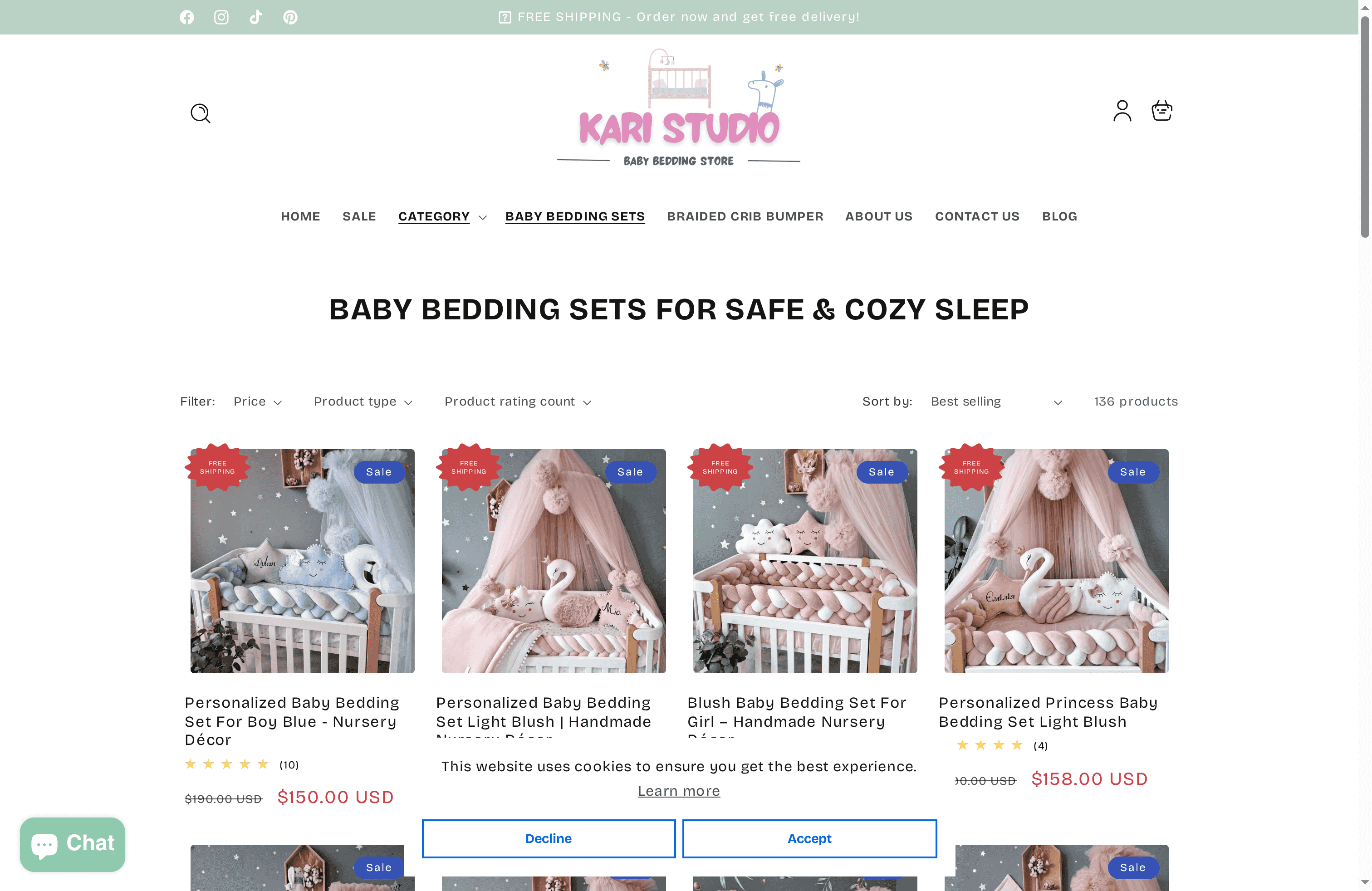
Cada pieza de nuestra colección utiliza telas suaves e hipoalergénicas que son delicadas con la piel del recién nacido. Puede personalizar artículos con el nombre de su bebé o elegir diseños que combinen con cualquier tema de habitación. Explore nuestra colección de ropa de cama personalizada para bebés para encontrar sábanas ajustables, envoltorios de muselina y juegos coordinados que cumplen con los estándares de seguridad actuales. ¿Busca una gran oferta? Consulte nuestras ofertas en ropa de cama para cuna para obtener descuentos estacionales en artículos para la habitación mejor calificados. Seguro, acogedor y elegante: su habitación puede tener las tres cosas.
Preguntas frecuentes
¿Son seguros los protectores transpirables para recién nacidos?
No. La AAP desaconseja cualquier tipo de protector, incluidas las versiones de malla transpirable, porque los recién nacidos carecen del control motor para alejarse de riesgos de asfixia o atrapamiento.
¿Es ilegal usar forros de malla para cuna en los EE. UU.?
Los forros de malla no están prohibidos a nivel federal bajo la Ley de Sueño Seguro para Bebés, pero los expertos en seguridad no los recomiendan para el sueño del bebé bajo ninguna circunstancia.
¿Por qué algunas tiendas siguen vendiendo protectores transpirables?
Sigue siendo legal vender protectores de malla no acolchados, pero la disponibilidad legal no equivale a seguridad. La AAP y la CPSC siguen recomendando una cuna vacía con un colchón firme y solo una sábana ajustable.
¿Cuál es la alternativa más segura a los protectores de cuna?
Una cuna vacía con un colchón firme y una sola sábana ajustable es la configuración más segura. Evite todos los protectores, almohadas, posicionadores y ropa de cama suelta dentro del espacio para dormir.
Recomendado
- Elija opciones seguras de protectores de cuna transpirables en 2026
- Mitos sobre los protectores de cuna desmentidos: consejos de sueño seguro para padres
- Protectores de cuna: Leyes de seguridad de EE. UU. y opciones más seguras
- Seguridad en los protectores de cuna: Lo que todo padre debe saber antes de comprar