Elegir la tela adecuada para la cuna de tu bebé es una de las decisiones más importantes que tomarás para su habitación. Muchos padres se enfocan en el color y el estilo, pero el tipo de tela afecta directamente la seguridad, la comodidad y el riesgo de alergias de tu bebé. El 55% de los bebés duerme sobre ropa de cama que no cumple con las pautas de sueño seguro, una cifra que sorprende a la mayoría de los padres primerizos. Este artículo cubre los tipos de telas más comunes para ropa de cama de bebé, cómo compararlos, qué certificaciones buscar y cómo personalizar la decoración de la cuna sin sacrificar la seguridad.
👉 Guía de seguridad para protectores de cuna
Tabla de contenidos
- Por qué la elección de la tela es importante para la ropa de cama del bebé
- Descripción general de los tipos de telas populares para bebés
- Entendiendo las certificaciones y la ropa de cama hipoalergénica
- Personalizando la ropa de cama: estilo, clima y detalles personales
- Errores que debes evitar y consejos de seguridad de expertos
- Explora juegos de ropa de cama seguros y con estilo para tu bebé
- Preguntas frecuentes
Puntos clave
| Punto | Detalles |
|---|---|
| El algodón orgánico es lo más seguro | El algodón orgánico certificado ofrece una seguridad, suavidad y protección hipoalergénica inigualables. |
| Considera el clima y la transpirabilidad | Las telas de muselina y bambú son ideales para climas cálidos, mientras que la franela es adecuada para temporadas frías. |
| La certificación es crucial | Busca ropa de cama con certificación GOTS o OEKO-TEX para evitar químicos dañinos y alérgenos. |
| Evita ropa de cama suelta o blanda | Usa siempre juegos de cama firmes y bien ajustados para reducir riesgos y asegurar un sueño óptimo. |
| Personaliza sin comprometer la seguridad | Decora la habitación con telas certificadas, equilibrando el estilo personal con las necesidades climáticas e hipoalergénicas. |
Por qué la elección de la tela es importante para la ropa de cama del bebé
La tela no es solo cuestión de tacto. Afecta la calidad de la respiración del bebé mientras duerme, la acumulación de calor en la cuna y la exposición a alérgenos o químicos en su piel sensible. Acertar desde el principio es más importante de lo que muchos padres creen.
Un hallazgo respaldado por los NIH confirma que las superficies de sueño firmes y planas con sábanas ajustadas reducen el riesgo de SMSL (Síndrome de Muerte Súbita del Lactante) y asfixia, mientras que la ropa de cama blanda o suelta aumenta el peligro. Esa misma investigación encontró que el 55% de los bebés son colocados sobre ropa de cama insegura. La tela que eliges juega un papel directo en ese riesgo.
Las fibras naturales como el algodón orgánico, el bambú y el TENCEL son reconocidas por su transpirabilidad y propiedades hipoalergénicas, lo que reduce el sobrecalentamiento y la irritación de la piel. Estas cualidades son fundamentales para un sueño seguro, no solo por comodidad. Las telas sintéticas, por el contrario, tienden a retener el calor y pueden contener residuos químicos que irritan la piel del recién nacido.
Esto es lo que debes priorizar al evaluar cualquier tela para la ropa de cama de tu bebé:
- Transpirabilidad: Permite que el aire circule y evita la acumulación de calor.
- Suavidad: Reduce la fricción y la irritación en la piel delicada.
- Propiedades hipoalergénicas: Minimiza la exposición a alérgenos e irritantes.
- Seguridad química: Libre de tintes, acabados o tratamientos que puedan dañar a tu bebé.
- Ajuste y seguridad: Sábanas bajeras que se mantienen firmes en el colchón sin arrugarse.
Para profundizar en lo que hace que una cuna sea verdaderamente segura, la guía de estándares de seguridad para ropa de cama de cuna cubre las reglas clave que todo padre debe conocer. También puedes explorar nuestras ideas sobre ropa de cama hipoalergénica para comprender por qué el procesamiento de la tela es tan importante como el tipo de fibra.
Descripción general de los tipos de telas populares para bebés
No todas las telas funcionan igual. El clima, la estación y las necesidades individuales de tu bebé influyen en qué material funciona mejor. Aquí tienes una comparación de las opciones más comunes.
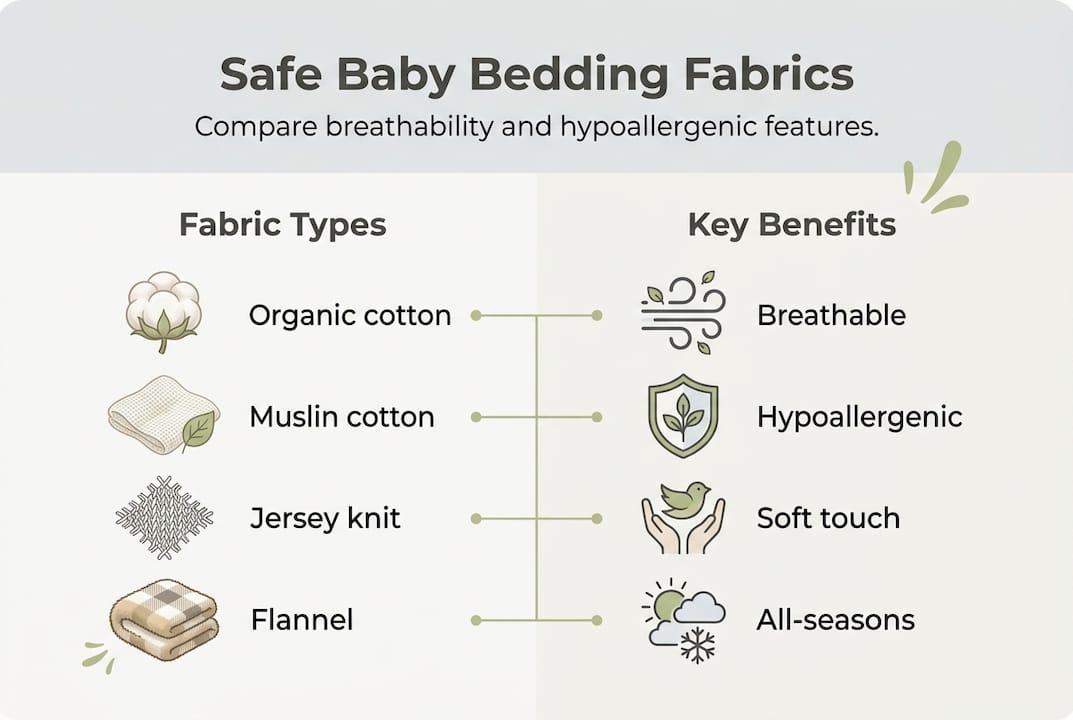
| Tela | Transpirabilidad | Suavidad | Hipoalergénico | Ideal para |
|---|---|---|---|---|
| Algodón orgánico | Alta | Alta | Sí (certificado GOTS) | Todo el año, todos los climas |
| Muselina | Muy alta | Media | Sí | Climas cálidos, capas |
| Punto Jersey | Media | Muy alta | Moderado | Sábanas bajeras, noches frescas |
| Franela | Baja | Alta | Moderado | Solo climas fríos |
| Bambú | Alta | Muy alta | Sí (OEKO-TEX) | Climas cálidos, piel sensible |
| TENCEL | Alta | Alta | Sí | Piel sensible, todo el año |
| Poliéster | Baja | Media | No | No recomendado para bebés |
El algodón orgánico es ampliamente considerado el estándar de oro para la ropa de cama de bebé. Cuando cuenta con certificación GOTS, está libre de químicos dañinos, es suave al tacto y transpirable para la mayoría de los climas. Es una opción confiable para padres que buscan seguridad y sencillez.
El algodón de muselina es ligero y altamente transpirable, lo que lo hace ideal para climas cálidos. Además, se vuelve más suave con cada lavado, una ventaja práctica para el lavado frecuente.
El punto jersey tiene una textura elástica, similar a una camiseta, que se ajusta perfectamente a los colchones. Es muy suave pero menos transpirable que el algodón tejido, por lo que funciona mejor en habitaciones frescas o como capa secundaria.
La franela es cálida y acogedora, pero atrapa el calor fácilmente. Solo es adecuada para climas fríos o meses de invierno, y se recomienda encarecidamente optar por versiones orgánicas para evitar la exposición a químicos.
Para un desglose completo de materiales y lo que cada uno significa para la habitación de tu bebé, visita nuestra explicación sobre materiales de ropa de cama para cuna.
Consejo profesional: Si tu bebé suele ser caluroso o vives en un clima cálido, usa una sábana de muselina o bambú como base. En meses fríos, añade una sábana de punto jersey encima para mayor calidez sin riesgo de sobrecalentamiento.
Entendiendo las certificaciones y la ropa de cama hipoalergénica
Las certificaciones no son solo etiquetas de marketing; te indican si una tela ha sido probada contra sustancias nocivas y si el proceso de producción cumple con los estándares de seguridad. Para la ropa de cama de bebé, dos certificaciones son primordiales: GOTS y OEKO-TEX.
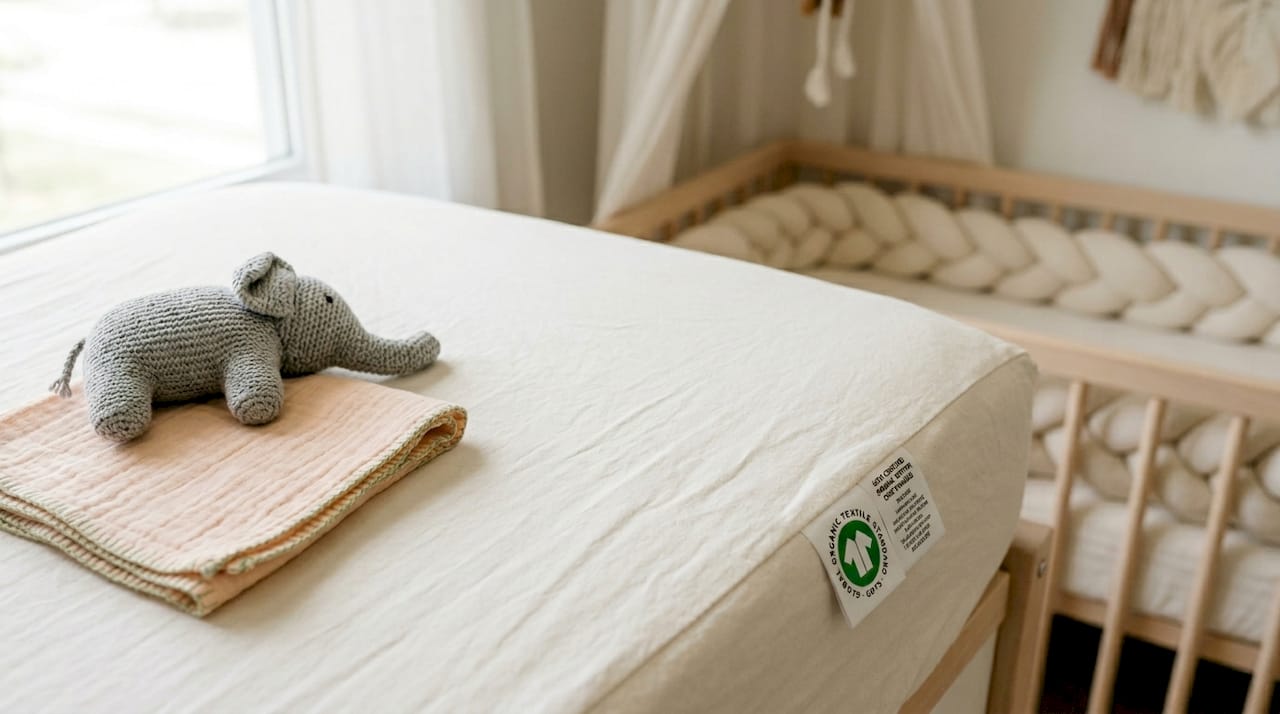
GOTS (Global Organic Textile Standard) se aplica a fibras orgánicas como el algodón. Certifica que toda la cadena de producción, desde el cultivo hasta el acabado, cumple con estrictos estándares ambientales y de seguridad química. El algodón orgánico con certificación GOTS está libre de pesticidas sintéticos, metales pesados y tintes nocivos.
OEKO-TEX Standard 100 se aplica a cualquier tela, incluidos el bambú y las mezclas. Certifica que el producto final ha sido probado para detectar más de 100 sustancias nocivas. El bambú, por ejemplo, es elogiado por su suavidad, pero los químicos de procesamiento pueden ser preocupantes. Una etiqueta OEKO-TEX confirma que esos riesgos han sido mitigados.
“Los textiles sin certificación pueden contener residuos químicos de procesos de teñido, acabado o control de plagas que no son visibles ni detectables al tacto, pero que pueden afectar la piel sensible y el sistema respiratorio de un recién nacido.”
Aquí tienes una lista de verificación numerada para identificar ropa de cama realmente segura:
- Busca la certificación GOTS o OEKO-TEX en la etiqueta o descripción del producto.
- Verifica que la tela se describa como libre de formaldehído, tintes azoicos y metales pesados.
- Confirma que la sábana esté diseñada como modelo bajero con esquinas profundas y seguras.
- Evita ropa de cama con elementos decorativos como botones, lazos o adornos sueltos.
- Verifica que la marca brinde información transparente sobre su origen o fabricación.
Para una visión completa de lo que significan las certificaciones en la práctica, la guía de certificaciones de seguridad en cunas es una referencia útil.
Personalizando la ropa de cama: estilo, clima y detalles personales
La ropa de cama segura no tiene por qué ser aburrida. Puedes personalizar la habitación de tu bebé manteniendo todos los estándares de seguridad. La clave es hacer que la tela y el ajuste sean la prioridad, y luego añadir toques de estilo.
Sigue estos cuatro pasos para personalizar la ropa de cama de forma segura:
- Elige primero la tela base. Selecciona según tu clima y la sensibilidad de la piel de tu bebé. El algodón orgánico o el bambú funcionan para la mayoría.
- Selecciona un producto certificado. Confirma la certificación GOTS o OEKO-TEX antes de añadir personalización.
- Añade estilo mediante color y diseño. Opta por tintes no tóxicos a base de agua. Los tonos neutros y diseños simples son fáciles de coordinar.
- Personaliza con bordados o monogramas. Son opciones seguras que no afectan la integridad ni la seguridad de la tela.
Las opciones de personalización que funcionan bien con ropa de cama segura incluyen:
- Nombres del bebé o iniciales bordadas.
- Combinaciones de colores personalizadas para combinar con la paleta de la habitación.
- Patrones temáticos (animales, botánicos, formas geométricas).
- Sets coordinados que incluyan sábanas bajeras, protectores y doseles.
Para cambios de temporada, la muselina o el bambú funcionan bien como base en climas cálidos. En meses fríos, añade una sábana bajera de punto jersey para mayor calidez. Evita añadir mantas o edredones sueltos dentro de la cuna independientemente de la estación.
Consejo profesional: Una sábana bajera que se mantenga firme y plana es más importante que cualquier detalle decorativo. Si la sábana se mueve o se arruga al presionar, no es segura para un sueño sin supervisión.
Para más guía sobre cómo construir una cuna segura, los artículos sobre cómo los estándares modernos influyen en la elección de ropa de cama y consejos esenciales para ropa de cama valen la pena leer.
Errores que debes evitar y consejos de seguridad de expertos
Incluso los padres que investigan cuidadosamente pueden cometer errores de montaje que crean riesgos. Saber qué evitar es tan importante como saber qué comprar.
Errores comunes al seleccionar y montar la ropa de cama:
- Usar sábanas sueltas o grandes que pueden moverse durante el sueño y crear riesgo de asfixia.
- Elegir ropa de cama blanda o acolchada, como edredones gruesos, protectores acolchados o cojines dentro de la cuna.
- Comprar telas no certificadas sin verificar las etiquetas GOTS o OEKO-TEX.
- Añadir demasiadas capas, lo que aumenta el riesgo de sobrecalentamiento.
- Ignorar el ajuste y asumir que cualquier sábana sirve para cualquier tamaño de colchón.
La investigación demuestra consistentemente que las superficies firmes y planas con sábanas bien ajustadas son el entorno más seguro. Cualquier tipo de ropa de cama blanda aumenta el riesgo de SMSL y asfixia.
Consejo profesional: Antes de acostar al bebé, presiona tu mano sobre la sábana y mantén durante cinco segundos. Si la sábana se mueve, se arruga o no recupera su forma plana, cámbiala por una opción que ajuste mejor.
Para una lista completa de errores de montaje y cómo corregirlos, errores en el montaje de la cuna es un recurso práctico. También puedes comparar opciones usando nuestra guía comparativa de ropa de cama vs. mantas.
Explora juegos de ropa de cama seguros y con estilo para tu bebé
Ahora tienes una idea clara de qué telas son más seguras, qué certificaciones buscar y cómo evitar errores comunes. El siguiente paso es encontrar ropa de cama que reúna todo esto en un solo lugar.
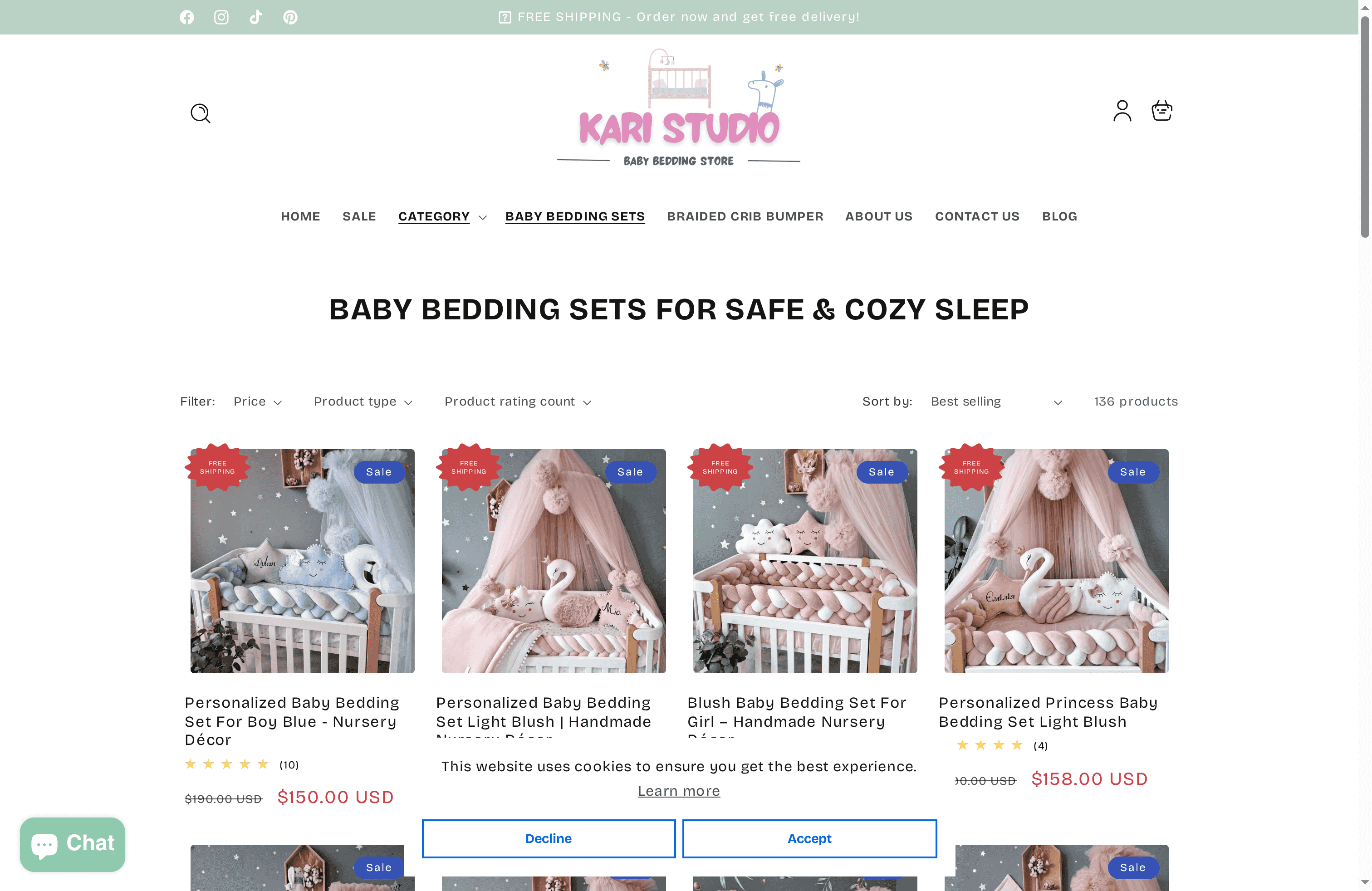
En Kari Studio, cada juego de ropa de cama está fabricado con telas hipoalergénicas y suaves, diseñadas pensando tanto en la seguridad como en el estilo. Puedes explorar nuestra ropa de cama orgánica personalizada para bebés para encontrar sets que pueden llevar el nombre de tu pequeño o ajustarse a la decoración de tu habitación. Si buscas valor, nuestra sección de ofertas en ropa de cama para bebés presenta opciones certificadas a precios reducidos. Para un look coordinado, el set de estilo neutro es una opción popular para padres que desean una estética limpia y atemporal sin comprometer la seguridad.
Preguntas frecuentes
¿Qué tipo de tela es más segura para la ropa de cama del recién nacido?
El algodón orgánico es considerado ampliamente la opción más segura debido a su suavidad, transpirabilidad y ausencia de químicos nocivos, especialmente cuando cuenta con certificación GOTS.
¿Es mejor la muselina o el punto jersey para climas cálidos?
La muselina es la mejor opción para climas cálidos debido a su transpirabilidad superior. El punto jersey es suave y ajustado, pero retiene más calor, siendo mejor para habitaciones frescas.
¿Qué certificaciones deben buscar los padres en la ropa de cama?
Busca certificaciones GOTS y OEKO-TEX. Las telas GOTS son orgánicas y libres de químicos, mientras que OEKO-TEX confirma que el producto final ha sido probado contra sustancias nocivas.
¿Cómo evito los errores comunes en la cuna?
Usa siempre sábanas certificadas y bien ajustadas sobre un colchón firme y retira todos los objetos blandos del área de sueño.
Recomendado
- Ropa de cama vs. mantas: 5 veces menos riesgo de SMSL con sets seguros
- Elige opciones de protectores de cuna seguros y transpirables
- Materiales de ropa de cama explicados: opciones seguras y suaves