

Ihr Baby vom Stubenwagen ins Kinderbett zu legen, ist einer dieser Meilensteine, die sich größer anfühlen können, als sie tatsächlich sind. Viele Eltern machen sich Sorgen, dass sie die Schlafpläne, an denen sie so hart gearbeitet haben, stören könnten, oder fragen sich, ob ihr Baby wirklich bereit für die Veränderung ist. Die gute Nachricht ist, dass dieser Übergang mit dem richtigen Timing, einer soliden Einrichtung und einem schrittweisen Ansatz reibungslos und sicher verlaufen kann. Dieser Leitfaden führt Sie durch jeden Schritt, vom Erkennen der richtigen Anzeichen bis zur Lösung schwieriger Nächte, damit Sie und Ihr Baby sich vom ersten Tag an im Kinderbett sicher fühlen können.
👉 Leitfaden zur Sicherheit von Babybett-Stoßstangen
Inhaltsverzeichnis
- Wann ist Ihr Baby bereit für den Übergang vom Stubenwagen zum Kinderbett?
- Was Sie vor dem Übergang benötigen: Checkliste und Vorbereitung
- Schritt für Schritt: So bringen Sie Ihr Baby vom Stubenwagen ins Kinderbett
- Fehlerbehebung: Häufige Übergangsherausforderungen und wie man sie meistert
- Wie Sie wissen, dass sich Ihr Baby erfolgreich angepasst hat
- Schaffen Sie das gemütlichste und sicherste Kinderzimmer für den Schlaf Ihres Babys
- Häufig gestellte Fragen
Wichtigste Erkenntnisse
| Punkt | Details |
|---|---|
| Anzeichen für den Übergang | Legen Sie Ihr Baby ins Kinderbett, wenn es aus dem Stubenwagen herausgewachsen ist oder neue Mobilität zeigt, normalerweise im Alter von 3-6 Monaten. |
| Sichere Umgebung | Verwenden Sie eine feste Matratze und vermeiden Sie lose Bettwäsche, um Ihr Baby während des Schlafs zu schützen. |
| Schrittweiser Prozess | Führen Sie Kinderbettschlaf und -routinen über mehrere Tage langsam ein, um eine reibungslose Anpassung zu gewährleisten. |
| Fehlerbehebung | Erwarten Sie einige Herausforderungen, bleiben Sie aber konsequent und geduldig, um Ihrem Baby zu helfen, sich im neuen Schlafplatz einzuleben. |
Wann ist Ihr Baby bereit für den Übergang vom Stubenwagen zum Kinderbett?
Jeder Stubenwagen hat eine vom Hersteller festgelegte Gewichts- und Längenbegrenzung. Sobald Ihr Baby diese Grenzen erreicht oder überschreitet, ist es Zeit, umzuziehen. Die meisten Stubenwagen sind bis etwa 7 bis 9 Kilogramm ausgelegt, aber überprüfen Sie immer Ihr spezifisches Modell. Das Ignorieren dieser Grenzen stellt ein echtes Sicherheitsrisiko dar, nicht nur eine Richtlinie.
Neben dem Gewicht achten Sie auf diese körperlichen und entwicklungsbedingten Anzeichen:
- Umrollen im Stubenwagen, was das Risiko erhöht, an den Seiten hängen zu bleiben
- Sich auf Hände und Knie stützen, was stärkere motorische Fähigkeiten und den Bedarf an mehr Platz signalisiert
- Mit Unterstützung aufrecht sitzen, was bedeutet, dass die Wände des Stubenwagens keine sichere Begrenzung mehr sind
- Häufiges Aufwachen, weil der Platz zu eng oder einschränkend wirkt
Da Wachstumsmeilensteine und Stubenwagen-Grenzen die Notwendigkeit eines Umzugs signalisieren, sorgt schnelles Handeln für die Sicherheit Ihres Babys. Sie können auch Erkenntnisse über Kinderbett vs. Stubenwagen überprüfen, um die Hauptunterschiede zwischen den beiden Schlafplätzen zu verstehen.
„Ein Stubenwagen, der Ihrem Baby nicht mehr passt, ist nicht nur unbequem. Er ist ein Sicherheitsproblem, das sofortige Aufmerksamkeit erfordert.“
Profi-Tipp: Wenn Ihr Baby unruhig zu sein scheint oder öfter als gewöhnlich aufwacht, überprüfen Sie die Abmessungen des Stubenwagens im Verhältnis zu seiner aktuellen Länge. Manchmal löst der Übergang zum Kinderbett Schlafprobleme, die Eltern für unrelated hielten.
Einige Babys schlafen auch leichter ein, wenn sie mehr Platz haben, um sich zu bewegen und natürlich einzuschlafen. Da Sie sich nun entschieden haben, dass der richtige Zeitpunkt gekommen ist, sammeln Sie die wichtigsten Dinge für einen erfolgreichen Umzug.
Was Sie vor dem Übergang benötigen: Checkliste und Vorbereitung
Eine sichere Kinderbett-Einrichtung ist nicht kompliziert, erfordert aber die Beachtung einiger wichtiger Details. Beginnen Sie mit dem Kinderbett selbst. Die Gitterstäbe sollten nicht mehr als 6 Zentimeter voneinander entfernt sein, um zu verhindern, dass der Kopf Ihres Babys stecken bleibt. Das Kinderbett sollte stabil sein und keine losen Teile haben.

Hier ist ein schneller Vergleich dessen, was im Kinderbett verwendet werden sollte und was zu vermeiden ist:
| Artikel | Sicher zu verwenden | Vermeiden |
|---|---|---|
| Matratze | Fest, flach, passend | Weich oder Memory-Schaum |
| Laken | Nur Spannbetttuch | Lose Laken oder Decken |
| Stoßfänger | Nur atmungsaktives Netz | Gepolsterte Stoßfänger |
| Spielzeug | Keins während des Schlafs | Stofftiere, Kissen |
| Schlafsack | Ja, größenangepasst | Lose Pucktücher |
Die Wahl der geeigneten Kinderbettwäsche ist einer der wichtigsten Schritte zur Reduzierung von Schlaf-Risiken. Halten Sie die Schlafumgebung konstant: eine Raumtemperatur zwischen 20 und 22 Grad Celsius, gedämpftes Licht und weißes Rauschen, wenn Ihr Baby daran gewöhnt ist.
Ihre Checkliste zur Vorbereitung:
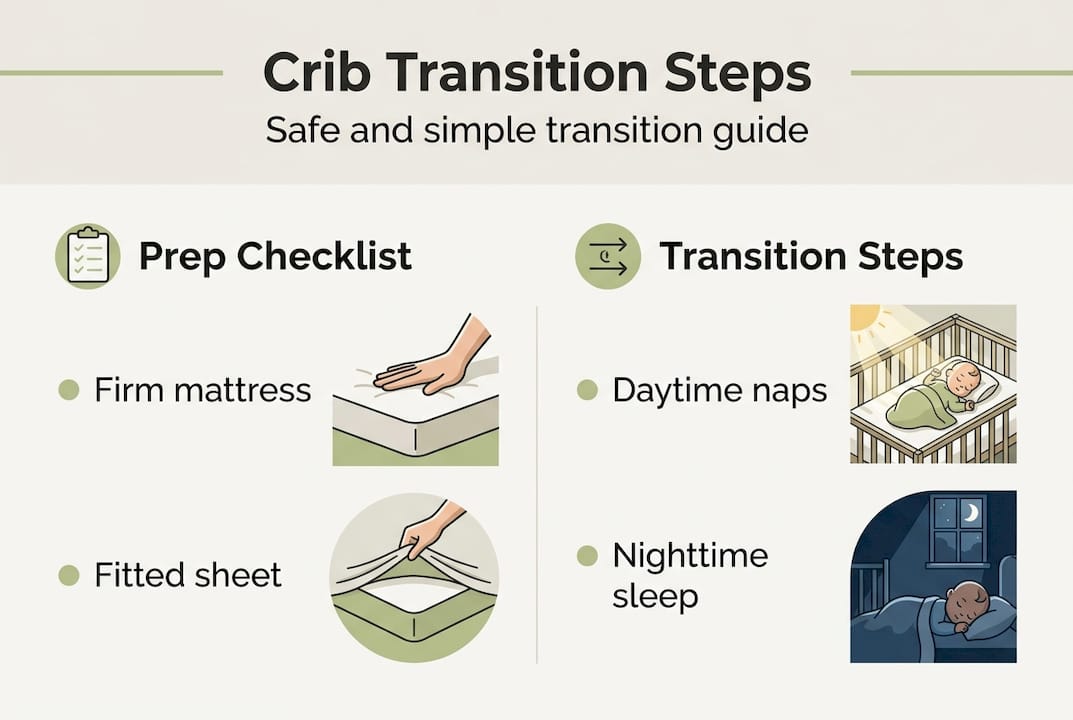
- Feste, sicherheitszertifizierte Matratze mit einem passgenauen Spannbetttuch
- Keine losen Gegenstände im Kinderbett während des Schlafs
- Babyphone mit klarer Sicht positioniert
- Verdunklungsvorhänge für den Mittagsschlaf
- Weißes Rauschen, falls im Stubenwagen verwendet
Überprüfen Sie eine vollständige Checkliste für ein sicheres Kinderzimmer, um sicherzustellen, dass nichts vergessen wird. Eine schlaffreundliche Kinderzimmereinrichtung macht einen echten Unterschied, wie schnell sich Ihr Baby anpasst.
Profi-Tipp: Legen Sie vor der ersten Nacht ein getragenes T-Shirt von Ihnen an den Rand der Kinderbettmatratze (nicht in den Schlafbereich). Ein vertrauter Geruch kann die Eingewöhnung erleichtern, ohne ein Sicherheitsrisiko darzustellen.
Sobald Ihr Kinderbett eingerichtet ist, können Sie mit dem schrittweisen Übergangsprozess beginnen.
Schritt für Schritt: So bringen Sie Ihr Baby vom Stubenwagen ins Kinderbett
Ein schrittweiser Ansatz funktioniert besser als ein plötzlicher Wechsel. Schrittweise Übergangstechniken helfen, Schlafstörungen zu reduzieren und Ihrem Baby Zeit zu geben, sich an den neuen Raum zu gewöhnen.
Befolgen Sie diese Schritte der Reihe nach:
- Beginnen Sie mit dem Mittagsschlaf. Legen Sie Ihr Baby in den ersten Tagen für ein Nickerchen pro Tag ins Kinderbett. Diese drucklose Einführung ermöglicht es ihm, den neuen Raum zu erkunden, ohne den Druck des Nachtschlafs.
- Halten Sie Ihre Routine identisch. Verwenden Sie die gleichen Einschlafhinweise: Füttern, ein kurzes Lied, Licht dimmen. Die Routine signalisiert Schlaf, unabhängig davon, wo das Baby liegt.
- Gehen Sie bis zum dritten oder vierten Tag zu allen Nickerchen im Kinderbett über. Ihr Baby sollte beginnen, das Kinderbett als Schlafplatz zu erkennen.
- Beginnen Sie mit der ersten Nachtruhe im Kinderbett. Bleiben Sie die ersten Nächte in der Nähe. Beruhigen Sie Ihr Baby, wenn es quengelt, aber vermeiden Sie es, es jedes Mal sofort hochzunehmen.
- Reduzieren Sie allmählich Ihre Anwesenheit. Geben Sie Ihrem Baby in den folgenden Nächten etwas mehr Zeit, sich selbst zu beruhigen, bevor Sie reagieren.
Hier ist ein Beispielplan für die Übergangswoche:
| Tag | Nickerchen | Nachtruhe |
|---|---|---|
| Tag 1 bis 2 | 1 Nickerchen im Kinderbett | Stubenwagen |
| Tag 3 bis 4 | Alle Nickerchen im Kinderbett | Stubenwagen |
| Tag 5 | Alle Nickerchen im Kinderbett | Erste Nacht im Kinderbett |
| Tag 6 bis 7 | Alle Nickerchen im Kinderbett | Ganze Nächte im Kinderbett |
Das Verständnis der Unterschiede zwischen Kinderbett und Stubenwagen kann Ihnen helfen, realistische Erwartungen an die Reaktion Ihres Babys zu entwickeln. Wenn Sie Ihr Kinderbett noch auswählen, lesen Sie vor Beginn den Leitfaden zur Auswahl eines Kinderbetts.
Profi-Tipp: Wärmen Sie die Kinderbettmatratze einige Minuten mit einem Heizkissen an, bevor Sie Ihr Baby hineinlegen, und entfernen Sie es dann vollständig vor dem Schlaf. Eine kalte Matratze kann ein schläfriges Baby aufschrecken.
Die Schaffung eines Kinderzimmer-Rückzugsortes hilft Ihnen, die Einrichtung mit Absicht statt mit Stress anzugehen. Auch bei einem sorgfältigen Übergang können einige Herausforderungen auftreten. So gehen Sie damit um.
Fehlerbehebung: Häufige Übergangsherausforderungen und wie man sie meistert
Widerstand ist normal. Ihr Baby hat in einem gemütlichen, vertrauten Raum geschlafen, und das Kinderbett fühlt sich anders an. Hier ist, womit Sie konfrontiert werden könnten und wie Sie damit umgehen:
- Häufiges nächtliches Aufwachen: Bleiben Sie konsequent. Bringen Sie das Baby nicht wieder in den Stubenwagen, da dies gemischte Signale sendet. Bieten Sie stattdessen ruhige Beruhigung an.
- Schwierigkeiten beim Einschlafen: Verlängern Sie die Einschlafroutine um fünf Minuten. Eine längere Abkühlzeit hilft, den Schlaf einzuleiten.
- Unbeabsichtigte Schlafstörungen: Wenn Ihr Baby eine Decke oder ein Spielzeug in den Schlafbereich zieht, entfernen Sie es sofort und überprüfen Sie das Kinderbett nach jedem Einschlafen.
- Elterliche Erschöpfung: Wenn möglich, wechseln Sie sich mit einem Partner ab. Übergangswochen sind vorübergehend, und Konsequenz bedeutet jetzt für alle bald besseren Schlaf.
„Konsistenz und Geduld sind die beiden zuverlässigsten Werkzeuge bei jedem Schlafwechsel. Den Ansatz jede Nacht zu ändern, verlängert den Prozess, statt ihn zu verkürzen.“
Überprüfen Sie immer die Tipps zur Kinderzimmer-Komfort, um sicherzustellen, dass die Umgebung den Schlaf unterstützt, anstatt dagegen zu wirken. Vermeiden Sie die häufigsten Fehler bei der Kinderbett-Einrichtung, die den Übergang unnötig erschweren können.
Das Verständnis, warum Kinder Schlaf brauchen, unterstreicht, warum dieser Übergang für die Entwicklung Ihres Babys wichtig ist. Nachdem die Herausforderungen gemeistert wurden, stellen wir sicher, dass der Übergang erfolgreich ist.
Wie Sie wissen, dass sich Ihr Baby erfolgreich angepasst hat
Nach ein bis zwei Wochen gewöhnen sich die meisten Babys ohne größeren Widerstand an das Kinderbett. Hier sind die Anzeichen dafür, dass der Übergang funktioniert:
- Weniger nächtliches Aufwachen im Vergleich zu den ersten Nächten im Kinderbett
- Leichteres Einschlafen, wobei Ihr Baby innerhalb von 15 bis 20 Minuten nach dem Ablegen einschläft
- Ruhige Körpersprache beim Ablegen im Kinderbett, kein sofortiges Weinen oder Wegstrecken
- Längere Schlafphasen, die zeigen, dass sich Ihr Baby in dem neuen Raum sicher fühlt
- Konstante Nickerchenlängen, die den Mustern des Nickerchens im Stubenwagen entsprechen oder diese verbessern
Der Übergang zum Kinderbett unterstützt ein gesundes Schlafverhalten bei Säuglingen, und die meisten Babys passen sich innerhalb von zwei Wochen an, wenn der Prozess schrittweise und konsequent erfolgt. Überprüfen Sie weiterhin den Schlafbereich auf Sicherheit: Stellen Sie sicher, dass die Matratze noch fest sitzt, dass keine Gegenstände in das Kinderbett gelegt wurden und dass die Raumtemperatur im sicheren Bereich bleibt.
Sobald Ihr Baby gut schläft, halten Sie die Routine bei. Beständigkeit ist das, was gute Schlafgewohnheiten aufrechterhält. Überprüfen Sie die Anzeichen für den Erfolg des Kinderbettes und kehren Sie zu Ihrer gemütlichen Schlafumgebung zurück, wenn die Schlafqualität wieder nachlässt.
Wenn Sie bereit sind, Ihr Kinderzimmer für noch reibungslosere Übergänge zu verbessern, erkunden Sie spezielle Bettwäsche- und Dekorationsoptionen.
Schaffen Sie das gemütlichste und sicherste Kinderzimmer für den Schlaf Ihres Babys
Sobald Ihr Baby im Kinderbett liegt, machen die richtige Bettwäsche und das passende Zubehör einen echten Unterschied in Bezug auf Komfort und Sicherheit. Bei Kari Studio entwerfen wir handgefertigte Kinderzimmerartikel aus hypoallergenen, weichen Stoffen, die sanft zur Neugeborenenhaut sind und auf Sicherheit ausgelegt sind.

Unsere Bio-Babybettwäsche-Sets sind so konzipiert, dass sie vom ersten Abend im Kinderbett an eine sichere, gemütliche Schlafumgebung schaffen. Wenn Sie einen kompletten Look wünschen, passt unser neutrales Kinderzimmer-Styling-Set wunderbar zu jeder Kinderzimmer-Farbgebung. Verleihen Sie mit unseren Kinderbett-Baldachin-Vorhängen eine sanfte, verträumte Note, die den Schlafbereich abgrenzt und eine ruhige, gemütliche Atmosphäre schafft. Jeder Artikel kann mit dem Namen Ihres Babys personalisiert werden, was ihn zu einer bedeutungsvollen Ergänzung für Ihr Kinderzimmer macht.
Häufig gestellte Fragen
In welchem Alter sollte ein Baby vom Stubenwagen ins Kinderbett umziehen?
Die meisten Babys wechseln zwischen 3 und 6 Monaten oder wenn sie die Gewichts- oder Bewegungsgrenzen des Stubenwagens erreichen. Die körperliche Bereitschaft ist wichtiger als das Alter allein.
Wie kann ich mein Baby im Kinderbett bequem machen?
Behalten Sie Ihre Einschlafroutine bei und verwenden Sie sichere, vertraute Bettwäsche. Eine konsequente Einschlafroutine signalisiert Schlaf, unabhängig vom neuen Ort.
Was sind die unverzichtbaren Gegenstände für ein sicheres Kinderbett?
Eine feste Matratze, ein Spannbetttuch und keine losen Gegenstände im Schlafbereich sind die Grundlagen. Sichere Kinderbettwäsche reduziert direkt schlafbezogene Risiken.
Was, wenn mein Baby weint, nachdem es ins Kinderbett umgezogen ist?
Etwas Quengeln ist zu erwarten und normal. Bleiben Sie konsequent bei Ihrer Routine und bieten Sie ruhige Beruhigung an. Tipps zur Kinderzimmer-Komfort können Ihnen helfen, die Umgebung zu optimieren, wenn das Weinen über die erste Woche hinaus anhält.
Empfohlen
- Fehler bei der Kinderbett-Einrichtung, die Sie für ein sicheres Babyzimmer vermeiden sollten
- Kinderbettwäsche vs. Stubenwagen-Bettwäsche: 50 % geringeres SIDS-Risiko
- Tipps zur Kinderbett-Einrichtung für Eltern: Schaffen Sie ein sicheres Kinderzimmer
- Verständnis, wann der Übergang vom Kinderbett für Ihr Kind stattfinden sollte
- So gestalten Sie ein schlaffreundliches Schlafzimmer für Ihr Kind – Hazli Collection