
TL;DR:
- Die richtige Größe und Passform von Spannbetttüchern ist entscheidend für die Sicherheit des Babyschlafs und um lose Stoffgefahren zu vermeiden.
- Messen Sie Ihre Matratze und überprüfen Sie regelmäßig die Bettlaken, um eine straffe, sichere Passform über die Zeit zu gewährleisten.
- Wählen Sie Bettlaken mit tiefen Taschen, Rundum-Gummizug und hochwertigen, zertifizierten Stoffen für Sicherheit und Haltbarkeit.
Viele Eltern gehen davon aus, dass jedes Spannbetttuch, das als „passend für Standard-Kinderbett“ gekennzeichnet ist, automatisch sicher ist. Diese Annahme kann kostspielig sein. Die Realität ist, dass Spannbetttücher in ihren Abmessungen, Taschentiefen, Stoffelastizität und Gummizugqualität variieren, und diese Unterschiede wirken sich direkt darauf aus, wie sicher Ihr Baby schläft. Die AAP und CPSC empfehlen ausschließlich eng anliegende Bettlaken, ohne lose Stoffe im Schlafbereich. Dieser Leitfaden erklärt genau, was Größenangaben bedeuten, wie man die Passform misst und worauf man bei der Auswahl eines Bettlakens für das Kinderbett achten sollte.
Inhaltsverzeichnis
- Warum die Größe von Spannbetttüchern für die Sicherheit wichtig ist
- Standardgrößen von Spannbetttüchern und Matratzen erklärt
- Wie man die Passform von Spannbetttüchern misst und testet
- Materialien, Taschentiefe von Spannbetttüchern und worauf zu achten ist
- Häufige Fehler und Problembehebung bei der Passform von Spannbetttüchern
- Was die meisten Eltern bei der Größenbestimmung von Spannbetttüchern übersehen
- Finden Sie das perfekte Spannbetttuch für Ihr Kinderzimmer
- Häufig gestellte Fragen
Wichtige Erkenntnisse
| Punkt | Details |
|---|---|
| Eng anliegender Sitz ist unerlässlich | Eng anliegende Spannbetttücher verhindern Sicherheitsrisiken wie Erstickung und Einklemmen. |
| Messen Sie vor dem Kauf | Überprüfen Sie immer die Größe Ihrer Kinderbettmatratze und testen Sie die Passform des Bettlakens mit einfachen Hausmitteln. |
| Material und Taschentiefe sind wichtig | Wählen Sie sichere Stoffe und die richtige Taschentiefe für Komfort und einen sicheren Sitz. |
| Vermeiden Sie häufige Größenfehler | Kennen Sie die häufigsten Fehler und Lösungen, um Ihr Kinderzimmer sicher und stressfrei zu halten. |
Warum die Größe von Spannbetttüchern für die Sicherheit wichtig ist
Die Größe entscheidet nicht nur darüber, ob ein Laken ordentlich auf der Matratze aussieht. Sie ist direkt mit der Sicherheit Ihres Babys während des Schlafs verbunden. Ein zu großes Laken wird sich zusammenballen oder an den Ecken abheben. Ein Laken mit einer flachen Tasche wird sich bei Bewegung Ihres Babys ganz lösen. Beide Situationen können eine Gefahr durch lose Stoffe darstellen.
Lose oder zusammengeknüllte Bettwäsche im Schlafbereich ist ein bekanntes Risiko für Einklemmung und Erstickung bei Säuglingen. Große Sicherheitsbehörden fordern konsequent eng anliegende Spannbetttücher und sonst nichts im Kinderbett.
Die spezifischen Risiken durch schlecht sitzende Bettlaken umfassen:
- Erstickung: Loser Stoff kann das Gesicht eines Säuglings bedecken, besonders wenn er sich im Schlaf bewegt.
- Einklemmung: Spalten zwischen der Matratze und einem zusammengeknüllten Laken können kleine Arme, Beine oder sogar den Kopf eines Babys einklemmen.
- Wiederatmung: Wenn sich Stoff in der Nähe des Gesichts eines Säuglings ansammelt, kann er ausgeatmete Luft wieder einatmen, was die Sauerstoffaufnahme reduziert.
- Ablösen des Lakens: Ein Laken mit einer unzureichenden Tasche kann sich in der Nacht lösen und Ihr Baby auf einer nackten Matratze mit einem losen Laken in der Nähe zurücklassen.
Obwohl keine Studie direkt einen Zusammenhang zwischen einer bestimmten Taschentiefe und den SIDS-Raten herstellt, ist der Expertenkonsens bezüglich eines festen Sitzes sowohl von der AAP als auch von der CPSC klar: Je enger der Sitz, desto geringer das Risiko von Vorfällen mit losem Stoff. Informationen über Sicherheitsstandards für Kinderbettwäsche sind ein guter Ausgangspunkt für alle Eltern, die ein Kinderzimmer einrichten. Es lohnt sich auch, die häufigsten Fehler bei der Kinderbetteinrichtung vor der Ankunft Ihres Babys zu überprüfen.
Pro-Tipp: Verlassen Sie sich nicht allein auf die Verpackung. Ein Laken, das als „Standard-Kinderbett“ gekennzeichnet ist, kann immer noch eine flache Tasche oder einen unzureichenden Gummizug haben. Messen und testen Sie immer die Passform, bevor Sie Ihr Baby zum Schlafen hinlegen.
Standardgrößen von Spannbetttüchern und Matratzen erklärt
Unter Berücksichtigung der Sicherheitsstandards schauen wir uns die tatsächlichen Maße und verfügbaren Optionen an.
Die CPSC legt Mindestgrößenanforderungen für große Kinderbettmatratzen fest. Gemäß diesen Richtlinien misst eine Standard-Kinderbettmatratze mindestens 27,25 x 51,625 Zoll. Die meisten großen Kinderbettmatratzen liegen genau oder knapp über diesen Maßen, normalerweise bei etwa 28 x 52 Zoll. Standard-Spannbetttücher sind so dimensioniert, dass sie in diesen Bereich passen.
Hier ist eine Aufschlüsselung der gängigen Kinderbett- und Matratzentypen sowie der entsprechenden Laken-Größen:
| Kinderbetttyp | Matratzengröße (ca.) | Benötigte Laken-Größe |
|---|---|---|
| Großes Kinderbett | 27,25 x 51,625 Zoll | 28 x 52 Zoll (Standard) |
| Mini-Kinderbett | 24 x 38 Zoll | Mini-Kinderbettlaken |
| Tragbares/Reise-Kinderbett | Variiert je nach Marke | Variiert; Produktangaben prüfen | Umwandelbares Kinderbett | 28 x 52 Zoll (typischerweise) | Standard-Kinderbettlaken |
| Ovales/rundes Kinderbett | Markenspezifisch | Nur Speziallaken |
Einige wichtige Punkte, die bei der Betrachtung dieser Tabelle zu beachten sind:
- Mini-Kinderbettlaken sind nicht mit Standardlaken austauschbar. Ein Standardlaken auf einer Mini-Kinderbettmatratze hätte viel zu viel überschüssigen Stoff. Ein Mini-Kinderbettlaken auf einer großen Matratze würde nicht reichen und abspringen.
- Ovale und runde Kinderbetten erfordern spezielle Bettlaken. Diese sind weniger verbreitet, und Sie müssen Bettlaken kaufen, die speziell für Ihr Kinderbettmodell hergestellt wurden.
- Umwandelbare Kinderbetten akzeptieren in der Regel Standardbettlaken, aber überprüfen Sie immer die Matratzenmaße Ihres Kinderbettes vor dem Kauf.
- Die Taschentiefe ist genauso wichtig wie die Oberflächenmaße. Die meisten Standard-Kinderbettmatratzen sind 4 bis 6 Zoll dick. Dickere Bio- oder Schaumstoffmatratzen können bis zu 8 Zoll erreichen. Die Tasche Ihres Bettlakens muss tief genug sein, um sich herumzulegen und an Ort und Stelle zu bleiben.
Für einen detaillierteren Blick darauf, wie Abmessungen zu tatsächlicher Passform führen, deckt unser Anpassungsleitfaden für Kinderbettlaken die gesamte Bandbreite der Optionen ab. Wenn Sie sich noch für Bettwäsche im Allgemeinen entscheiden, hilft es, Kinderbettwäsche zu wählen, wobei die Größe von Anfang an berücksichtigt wird.
Wie man die Passform von Spannbetttüchern misst und testet
Sobald Sie die Standardgrößen kennen, erfahren Sie hier, wie Sie sicherstellen, dass Ihre Spannbetttücher diesen in der Praxis tatsächlich entsprechen.
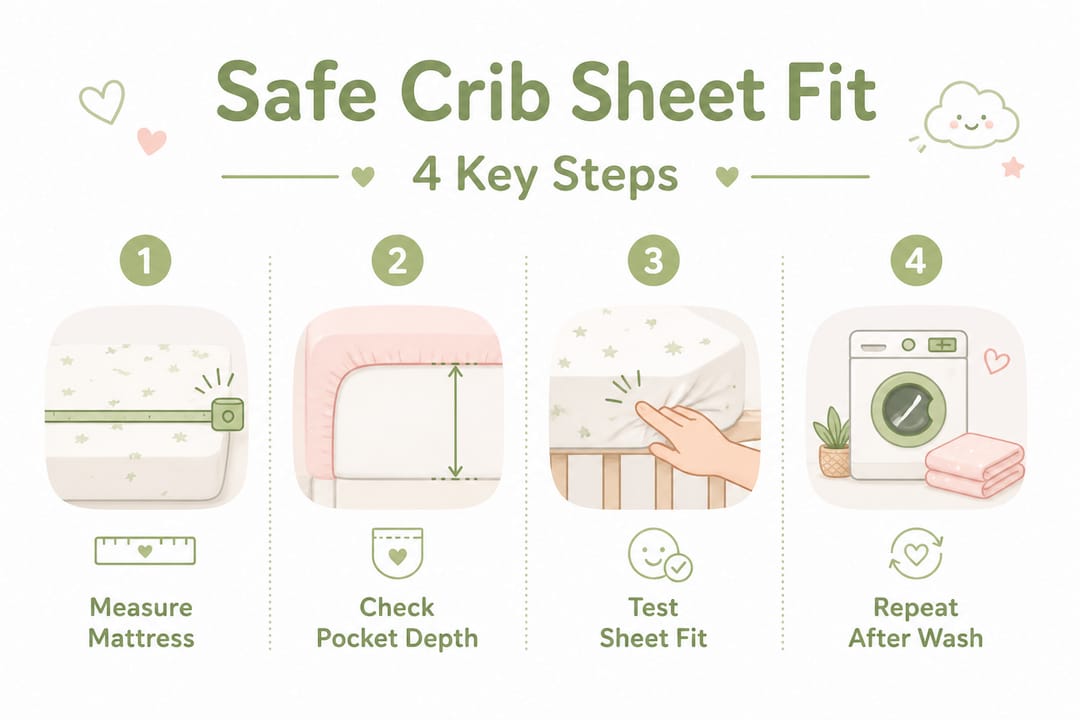
Die Überprüfung der Passform ist einfach und dauert nur wenige Minuten. Sie benötigen keine speziellen Werkzeuge. Hier ist ein Schritt-für-Schritt-Prozess:
- Messen Sie Ihre Kinderbettmatratze. Verwenden Sie ein Maßband, um Länge, Breite und Dicke (Höhe) Ihrer Matratze zu ermitteln. Notieren Sie diese Zahlen vor dem Einkauf.
- Vergleichen Sie mit den Lakenmaßen. Überprüfen Sie die Produktspezifikationen des Lakens auf die flachen Maße und die Taschentiefe. Die Tasche muss mindestens so tief sein wie Ihre Matratze dick ist, mit etwas zusätzlichem Platz, damit der Gummizug greifen kann.
- Legen Sie das Laken auf die Matratze. Passen Sie alle vier Ecken an. Wenn eine Ecke von selbst abspringt, ist die Tasche zu flach.
- Führen Sie den Zwei-Finger-Test durch. Schieben Sie zwei Finger zwischen die Matratzenkante und den Kinderbettrahmen. Sie sollten einen festen Widerstand spüren. Wenn viel Platz ist, ist Ihre Matratze möglicherweise zu klein oder Ihr Laken zieht sie vom Rahmen weg.
- Machen Sie den Viertel-Test oder den Schnapp-Test. Greifen Sie die Mitte des Lakens und heben Sie es leicht an. Es sollte nicht mehr als etwa einen Viertel Zoll anheben. Wenn Sie loslassen, sollte es sofort wieder flach zurückspringen. Wenn es durchhängt oder Zeit zum Absetzen braucht, ist das Laken zu locker.
- Überprüfen Sie nach einer simulierten Nacht. Legen Sie ein gerolltes Handtuch unter das Laken, wo der Körper Ihres Babys liegen würde. Lassen Sie es 30 Minuten liegen und überprüfen Sie, ob sich Ecken gehoben oder das Laken verschoben hat.
Fehlerbehebung bei häufigen Passformproblemen:
- Laken springt an den Ecken ab: Die Taschentiefe ist zu gering. Suchen Sie nach Bettlaken mit mindestens 6 bis 8 Zoll Taschentiefe und voll elastischen Kanten.
- Laken knittert in der Mitte: Das Laken ist wahrscheinlich zu groß für die Matratze. Probieren Sie ein enger sitzendes Modell.
- Gummizug ist nach einigen Wäschen locker: Ersetzen Sie das Laken. Ausgedehnter Gummizug ist ein Sicherheitsproblem.
- Laken passt, fühlt sich aber sehr eng beim Anziehen an: Das ist tatsächlich gut. Ein Laken, das etwas schwierig anzubringen ist, ist viel sicherer als eines, das leicht anzubringen ist, aber in der Nacht verrutscht.
Schauen Sie sich unsere Tipps zur Kinderbetteinrichtung an, um einen umfassenderen Blick auf die sichere Gestaltung des Schlafbereichs zu erhalten, sobald Sie das richtige Laken haben.
Pro-Tipp: Waschen Sie Ihre Kinderbettlaken immer vor dem ersten Gebrauch und testen Sie dann die Passform erneut. Einige Stoffe schrumpfen nach der ersten Wäsche leicht, was die Passform tatsächlich verbessern kann. Andere können sich dehnen. So oder so, Sie möchten bestätigen, dass das Laken nach dem Waschen immer noch den Schnapp-Test besteht.
Materialien, Taschentiefe von Spannbetttüchern und worauf zu achten ist
Ein Bettlaken richtig anzupassen ist wichtig, aber auch das Material macht einen Unterschied.
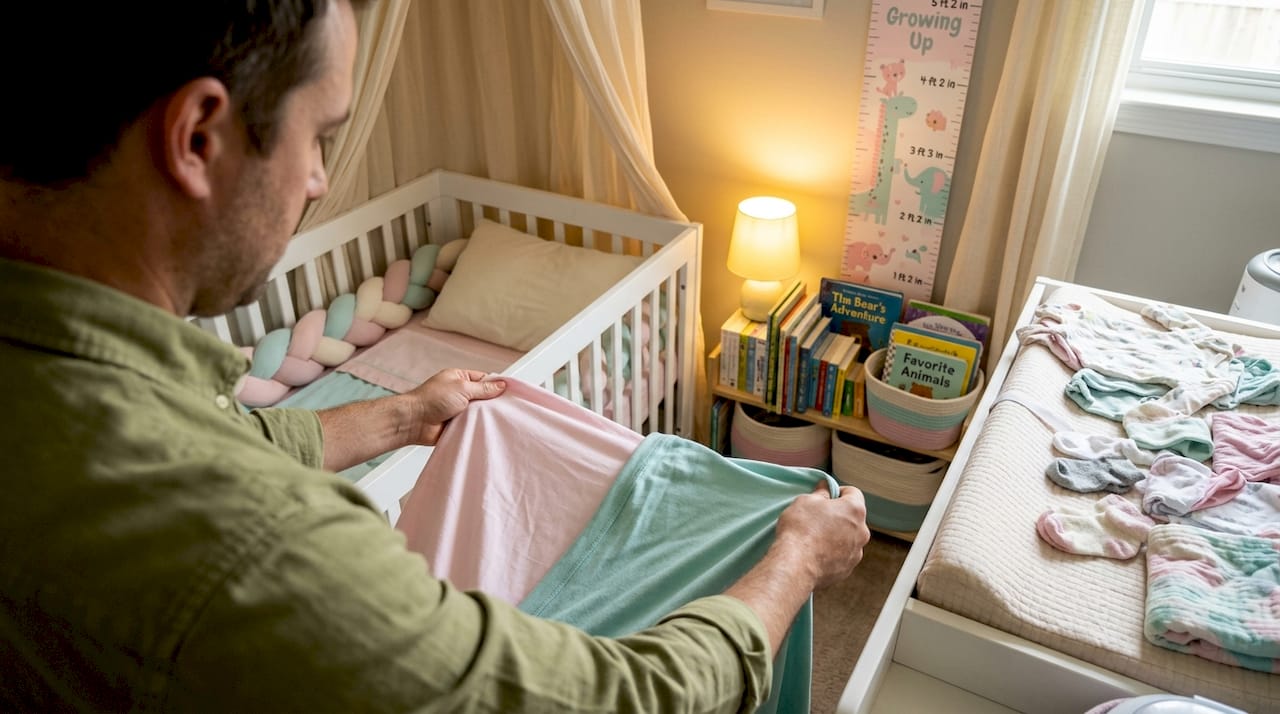
Das Material beeinflusst, wie sich ein Laken dehnt, wie es nach wiederholtem Waschen seine Form behält und wie angenehm es auf der Haut Ihres Babys ist. Hier ist ein Vergleich der gängigsten Materialien für Kinderbettlaken:
| Material | Dehnbarkeit | Haltbarkeit | Weichheit | Anmerkungen |
|---|---|---|---|---|
| Bio-Baumwolle | Niedrig bis mittel | Hoch | Hoch | Hypoallergen; gut für empfindliche Haut |
| Jersey-Baumwolle | Hoch | Mittel | Hoch | Dehnbar für gute Passform; kann mit der Zeit nachgeben |
| Musselin | Niedrig | Mittel | Sehr hoch | Atmungsaktiv; weniger Dehnbarkeit erfordert präzisere Passform |
| Bambus | Mittel | Hoch | Sehr hoch | Temperaturregulierend; beliebt für empfindliche Babys |
| Polyester-Mischung | Hoch | Hoch | Mittel | Mehr Dehnbarkeit; auf Chemiezertifizierungen achten |
Wichtige Merkmale, auf die Sie bei der Auswahl eines Kinderbettlakens achten sollten:
- Vollständig elastische Kanten. Bettlaken mit Gummizug nur an den Ecken lösen sich eher ab. Achten Sie auf einen Gummizug rundherum.
- Tiefe Taschen. Für die meisten Standardmatratzen ist eine Taschentiefe von mindestens 6 Zoll ausreichend. Für dickere Matratzen sollten Sie 8 Zoll oder mehr wählen.
- OEKO-TEX oder GOTS Zertifizierung. Diese Zertifizierungen bestätigen, dass der Stoff auf Schadstoffe geprüft wurde, was sehr wichtig ist, wenn Ihr Baby 12 bis 16 Stunden am Tag darauf verbringt.
- Einlaufvorbeugendes Gewebe. Einige Bettlaken sind als vorgeschrumpft gekennzeichnet, was das Risiko verringert, dass das Einlaufen die Passform nach dem Waschen beeinträchtigt.
Obwohl die Taschentiefe allein in kontrollierten Studien nicht mit SIDS in Verbindung gebracht wurde, ist der Expertenkonsens bezüglich eines festen Sitzes konsistent: Ein fester Sitz reduziert die Wahrscheinlichkeit gefährlicher loser Stoffe. Tiefere Taschen in Kombination mit Rundum-Gummizug bieten auf Dauer die zuverlässigste Passform. Für einen ausgewählten Blick auf Materialien und Marken deckt unser Leitfaden zu den besten Kinderbettlaken die Top-Auswahlen detailliert ab. Sie finden auch praktische Tipps für Kinderbettwäsche, die das Gesamtbild über die Laken hinaus abdecken.
Häufige Fehler und Problembehebung bei der Passform von Spannbetttüchern
Auch nach sorgfältiger Auswahl können Probleme auftreten. Hier erfahren Sie, wie Sie diese erkennen und beheben können.
Die häufigsten Probleme, auf die Eltern bei Spannbetttüchern stoßen, lassen sich auf einige wiederkehrende Muster zurückführen:
- Kauf nur aufgrund des Etiketts. „Passend für Standard-Kinderbett“ ist keine regulierte Angabe. Überprüfen Sie vor dem Kauf immer die tatsächlichen Maße.
- Ignorieren der Taschentiefe. Eltern konzentrieren sich oft auf die flachen Maße (Länge und Breite), vergessen aber, wie tief die Tasche ist. Ein Laken kann zur Matratzenoberfläche passen, aber trotzdem abspringen, weil die Tasche die Matratzendicke nicht aufnehmen kann.
- Keine Berücksichtigung von Matratzenauflagen. Einige Eltern fügen eine dünne Matratzenauflage hinzu, um den Komfort zu erhöhen. Dies erhöht die Gesamtdicke und kann ein zuvor eng anliegendes Laken zu flach machen. Hinweis: Matratzenauflagen werden im Allgemeinen nicht für den Schlaf von Säuglingen empfohlen. Befolgen Sie immer die AAP-Anweisungen.
- Verzicht auf die Passformkontrolle nach dem Waschen. Ein Laken, das nach dem Waschen nicht sicher sitzt, stellt ein Sicherheitsrisiko dar. Machen Sie es sich zur Gewohnheit, die Passform jedes Mal zu überprüfen, wenn Sie ein frisch gewaschenes Laken auf die Matratze legen.
- Verwendung von Laken älterer Geschwister oder Second-Hand-Laken. Elastizität lässt mit der Zeit nach. Ein Laken, das vor zwei Jahren perfekt passte, kann jetzt einen ausgeleierten Gummizug haben, was bedeutet, dass es nicht mehr eng anliegt.
- Übersehen der Umbauphasen des Kinderbettes. Wenn ein umwandelbares Kinderbett zu einem Kleinkinderbett umgebaut wird, ändert sich die Position der Matratze. Vergewissern Sie sich, dass Ihr Laken nach Änderungen der Kinderbettkonfiguration immer noch richtig sitzt.
Schnelle Lösungen für häufige Probleme:
- Wenn eine Ecke immer wieder abspringt, versuchen Sie es mit einem Laken mit tieferen Taschen und Rundum-Gummizug.
- Wenn das Laken in der Mitte Falten wirft, ist es wahrscheinlich zu groß. Wählen Sie eine kleinere Größe.
- Wenn der Gummizug nach dem Waschen locker ist, entsorgen Sie dieses Laken. Sicherheit geht vor.
- Halten Sie zwei oder drei Laken im Wechsel, damit Sie immer ein getestetes, gut sitzendes Laken bereit haben. Lesen Sie unseren Artikel darüber, was man in der Nähe des Kinderbettes aufbewahren sollte, um eine umfassendere Checkliste für die Kinderzimmerbereitschaft zu erhalten.
Pro-Tipp: Führen Sie nach jedem Waschgang einen kurzen Zwei-Sekunden-Eckentest durch, bevor Sie das Kinderbett neu beziehen. Es dauert fast keine Zeit und hält Ihre Laken-Routine ohne zusätzlichen Aufwand konsistent.
Was die meisten Eltern bei der Größenbestimmung von Spannbetttüchern übersehen
Hier ist eine ehrliche Beobachtung, nachdem ich gesehen habe, wie Eltern die Auswahl von Kinderbetttüchern angehen: Die meiste Energie wird an der falschen Stelle eingesetzt.
Eltern verbringen Stunden damit, Bewertungen zu lesen, die Taschentiefe bis auf den Millimeter zu vergleichen und über Jersey versus Musselin zu debattieren. Dieses Forschungsniveau ist nicht schädlich, kann aber den Fokus von den Gewohnheiten ablenken, die tatsächlich am wichtigsten sind. Ein Laken mit einer 7-Zoll-Tasche von einer zertifizierten Marke ist sicherer als ein Laken mit einer 8-Zoll-Tasche, dessen Passform nach dem Waschen nie überprüft wird.
Das eigentliche Risiko zeigt sich meist nicht beim Kauf, sondern während der Nutzung. Bettlaken, die am ersten Tag passten, können nach mehreren Wäschen locker werden. Ein Gummizug, der im Sommer gut hielt, kann sich nach dem Trocknen bei hoher Hitze im Winter anders verhalten. Kinderbettmatratzen, die sich bei Gebrauch leicht zusammenpressen, können die Art und Weise verändern, wie ein Laken sitzt.
Was die Sicherheit tatsächlich vorantreibt, ist Konsistenz. Überprüfen Sie die Passform jedes Mal, wenn Sie ein Laken auflegen. Halten Sie eine kurze Rotation von zwei oder drei vertrauenswürdigen Laken anstelle eines großen Stapels unterschiedlicher Marken und Größen. Wissen Sie, wie sich eine feste Passform anfühlt, aus Ihren eigenen Tests, nicht nur von einem Etikett. Der Leitfaden für ein sicheres und gemütliches Kinderzimmer ist eine nützliche Referenz, die Sie regelmäßig konsultieren sollten, insbesondere nach dem Waschen oder bei Anpassungen des Kinderbettes.
Perfektion ist nicht das Ziel. Konsistente, einfache Gewohnheiten bezüglich der Passform sind das, was Säuglinge im Schlaf sicher hält. Ein gut gewähltes Laken, das korrekt verwendet und regelmäßig überprüft wird, ist immer besser als ein Premium-Laken, das einmal aufgelegt und nie wieder überprüft wird.
Finden Sie das perfekte Spannbetttuch für Ihr Kinderzimmer
Sie haben jetzt ein klares Bild davon, was Größe, Passform und Material für die Schlafsicherheit Ihres Babys bedeuten. Der nächste Schritt ist, Bettwäsche zu finden, die all diesen Standards ohne Rätselraten entspricht.
Bei Kari Studio entwerfen wir Kinderzimmerbettwäsche, bei der Sicherheit und Weichheit im Mittelpunkt stehen. Unsere Bio-Krippenbettwäsche wird aus hypoallergenen, zertifiziert sicheren Stoffen mit tiefen Taschen und vollständig elastischen Kanten hergestellt, die an Ort und Stelle bleiben. Jedes Stück ist handgefertigt und kann mit dem Namen Ihres Babys personalisiert oder an Ihren Kinderzimmerstil angepasst werden. Wenn Sie Ihr Kinderzimmer ohne Kompromisse bei der Sicherheit ausstatten möchten, stöbern Sie in unserem Bettwäsche-Sale nach aktuellen Angeboten unserer beliebtesten Sets. Wir bieten internationalen Versand an, sodass sichere und gemütliche Bettwäsche für Sie erreichbar ist, egal wo Sie sich befinden.
Häufig gestellte Fragen
Was ist die Standardgröße für Kinderbettlaken?
Die Standardgröße für Kinderbettlaken passt auf Matratzen mit den Maßen ca. 27,25 x 51,625 Zoll, was den von der CPSC festgelegten Abmessungen für Matratzen in Standard-Kinderbetten entspricht. Die meisten Standard-Kinderbettlaken sind so gefertigt, dass sie auf Matratzen bis zu 28 x 52 Zoll passen.
Wie eng sollte ein Kinderbettlaken sitzen?
Ein Kinderbettlaken sollte so eng sitzen, dass es beim Ziehen nicht mehr als einen viertel Zoll ansteigt und beim Loslassen sofort wieder zurückspringt. Keine lockeren Stellen, Falten oder Ecken, die von selbst abspringen.
Sind Kinderbettlaken und Mini-Kinderbettlaken austauschbar?
Nein. Mini-Kinderbettlaken sind deutlich kleiner und passen nicht sicher auf eine Matratze in Standardgröße. Passen Sie die Größe des Lakens immer an Ihren spezifischen Matratzentyp und Ihre Maße an.
Benötige ich spezielle Laken für dickere Kinderbettmatratzen?
Ja. Wenn Ihre Matratze dicker als die Standardmaße von 4 bis 6 Zoll ist, überprüfen Sie, ob die Taschentiefe des Lakens ausreicht, um sicher an Ort und Stelle zu bleiben. Obwohl es keine strenge Regel für die Taschentiefe gibt, unterstützen Experten einen festen Sitz, um lose Stoffgefahren zu vermeiden.
Empfehlungen
- Anleitung zur Kinderbettlaken-Passform für eine sichere und gemütliche Kinderzimmereinrichtung
- Tipps zur Kinderbetteinrichtung für Eltern: Ein sicheres Kinderzimmer schaffen
- Was man in der Nähe des Kinderbettes aufbewahren sollte für ein sicheres und gemütliches Kinderzimmer
- So wählen Sie Kinderbettwäsche: Ein vollständiger Elternratgeber
- Wickelunterlage – tragbar & weich