
New parents often worry about germs and allergens lurking in baby bedding. Avoiding harsh detergents and using correct sanitizing methods drastically reduces skin irritation and infection risks. This guide covers everything from selecting the right detergents to perfecting your drying technique, ensuring your infant sleeps in a safe, hygienic environment every night.
Table of Contents
- Prerequisites: What You Need Before You Start
- Step 1: Washing Baby Bedding Safely
- Step 2: Sanitizing Baby Bedding
- Step 3: Drying and Storing Baby Bedding
- Common Mistakes and Troubleshooting
- Expected Outcomes and Success Metrics
- Create a Safe and Cozy Nursery with Our Baby Bedding Sets
- Frequently Asked Questions
Key Takeaways
| Point | Details |
|---|---|
| Wash weekly or after spills | Use hypoallergenic detergent and warm or hot water for best results. |
| Use correct water temperature | At least 130°F effectively removes germs without damaging fabric. |
| Sanitize only when needed | Diluted bleach (50-200 ppm) works after illness, but avoid overuse. |
| Dry completely | Heat drying or sun exposure prevents mold and bacteria regrowth. |
| Skip fabric softeners | Scented products and softeners often irritate sensitive infant skin. |
Prerequisites: What You Need Before You Start
Before washing baby bedding, gather the right supplies to protect your infant’s delicate skin. Parents should have hypoallergenic detergent, access to water at recommended temperatures, bleach for sanitizing if safe, and a machine with appropriate settings. Having everything ready prevents last minute scrambles and ensures you follow safe washing protocols.
Your essential supplies include fragrance-free, hypoallergenic laundry detergent designed specifically for babies. A washing machine with temperature control is critical because you need access to warm or hot water cycles. Household bleach remains optional but invaluable for sanitizing after illness or heavy soiling.
Prepare a clean drying area, whether that’s a heat dryer or a dust-free outdoor line. Regular washing of baby bedding after spills or weekly prevents germ buildup and allergen exposure in infant nurseries. You’ll also benefit from reviewing CDC recommendations on cleaning baby bedding for the most current safety standards.
| Supply | Use | Safety Notes |
|---|---|---|
| Hypoallergenic detergent | Primary cleaning agent | Must be fragrance-free and dye-free |
| Washing machine | Hot water cycles | Temperature control to reach 130°F minimum |
| Household bleach | Occasional sanitizing | Dilute properly; use sparingly |
| Heat dryer or outdoor line | Complete drying | Prevents mold and bacterial regrowth |
| Clean storage containers | Dust-free bedding storage | Keeps bedding fresh between washes |
Consider how to store baby bedding in ways that maintain cleanliness between uses. Pre-sort bedding by fabric type and soil level before washing. Check for stains or spills and prioritize immediate washing for heavily soiled items.
Pro Tip: Inspect each piece of bedding for loose threads or damage before washing. Addressing small repairs now prevents bigger problems and extends the life of your investment.
Step 1: Washing Baby Bedding Safely
Proper washing technique forms the foundation of infant bedding hygiene. Cleaning baby bedding with soap and water removes dirt and most microorganisms effectively if done properly before sanitizing or disinfecting. Follow these steps to maximize safety while preserving fabric quality.
- Sort bedding by fabric type and soil level, separating heavily soiled items from lightly used pieces.
- Load the washing machine without overstuffing, allowing water and detergent to circulate freely.
- Add hypoallergenic, fragrance-free detergent according to package directions for your load size.
- Select a warm or hot water cycle, ensuring water temperature reaches at least 130°F to kill most bacteria.
- Run an extra rinse cycle to completely remove detergent residues that could irritate infant skin.
- Remove bedding promptly after the cycle completes to prevent musty odors.
Washing baby bedding with water temperature set to warm or hot kills most bacteria while being safe for the fabric and infant use. This temperature range balances sanitation needs with fabric care, especially for delicate items like those found in washing crib bumpers safely guides.
Choosing the right detergent makes a significant difference in washing outcomes. Avoid using fabric softeners or scented detergents on baby bedding to prevent skin irritation or allergic reactions in infants. Scented products leave chemical residues that contact your baby’s skin for hours each night.
- Use only hypoallergenic, fragrance-free detergents labeled safe for infants
- Skip fabric softeners entirely, as they coat fibers with irritating chemicals
- Avoid detergents with dyes, perfumes, or optical brighteners
- Measure detergent carefully to prevent residue buildup
- Select gentle or delicate cycles for handmade or embroidered bedding
Compare cleaning methods for baby bedding to determine which approach works best for your specific fabrics. Machine washing remains the most effective option for routine cleaning, but understanding alternatives helps with specialty items.
For parents seeking convenience without sacrificing safety, review machine washable baby bedding tips when shopping for new nursery essentials. Selecting bedding designed for frequent washing saves time and maintains hygiene standards more easily.
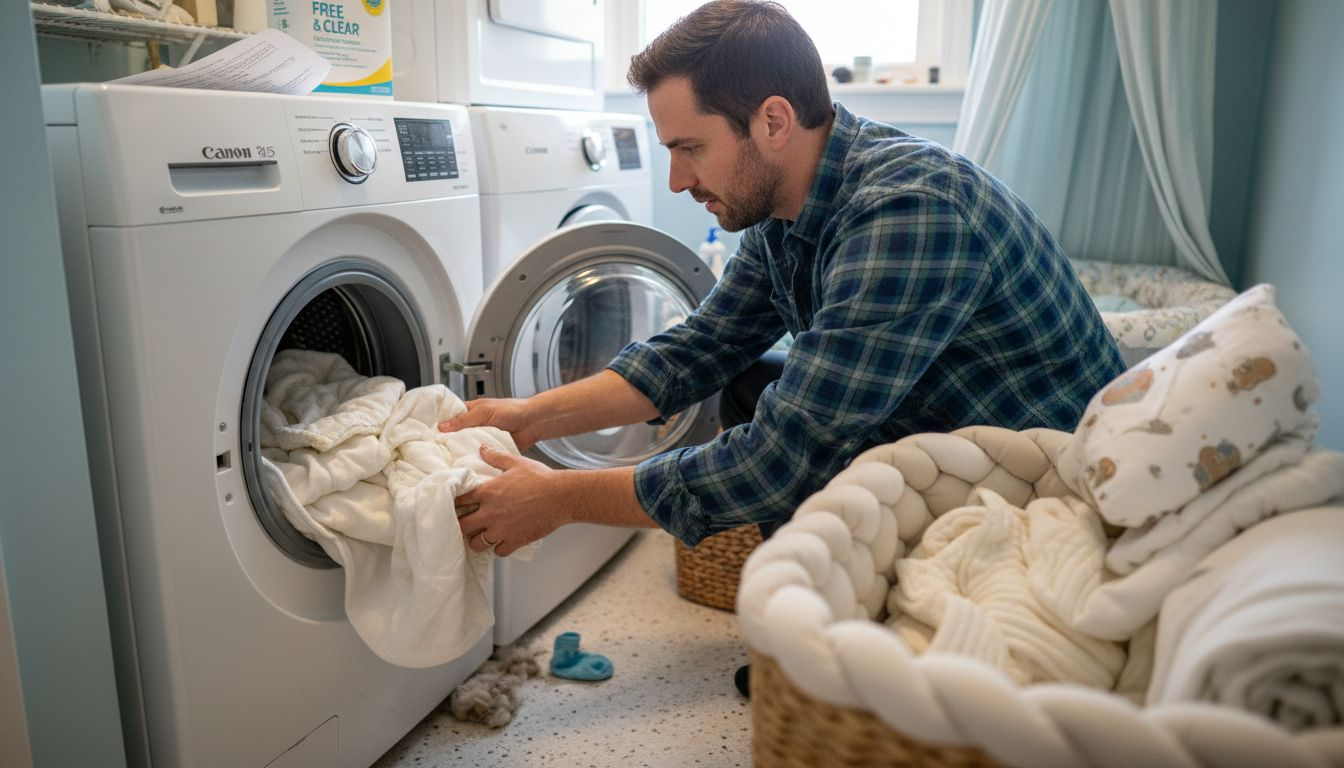
Pro Tip: Run two or three rinse cycles instead of one to guarantee complete detergent removal. This extra step prevents residue buildup that causes skin irritation and keeps bedding softer naturally.
Refer to effective cleaning methods documentation for additional guidance on handling different fabric types. Understanding proper washing techniques protects your investment in quality bedding while keeping your infant safe from irritants and allergens.
Step 2: Sanitizing Baby Bedding
Sanitizing adds an extra layer of protection beyond regular washing, but it’s not necessary for every wash. Sanitizing baby bedding with a safe bleach solution (50-200 ppm) after cleaning helps reduce bacterial counts to safe levels for infants. Reserve this step for situations requiring additional disinfection.
Sanitize bedding after your infant recovers from illness, following diaper blowouts, or when dealing with excessive spit-up. Regular weekly washing without bleach handles routine maintenance effectively. Overusing sanitizers can damage delicate fabrics and leave chemical residues that irritate sensitive skin.
When sanitizing becomes necessary, dilute bleach carefully according to safety guidelines. Using bleach improperly or at excessive concentrations can damage baby bedding fabric and cause chemical residues harmful to infants. Follow these dilution ratios precisely for safe sanitizing.
| Bleach Concentration | Water Amount | Bleach Amount | PPM Range |
|---|---|---|---|
| Light sanitizing | 1 gallon | 1/2 teaspoon | 50-100 ppm |
| Standard sanitizing | 1 gallon | 1 teaspoon | 100-150 ppm |
| Heavy sanitizing | 1 gallon | 1 tablespoon | 150-200 ppm |
| Maximum safe level | 1 gallon | 4 teaspoons | 200 ppm |
Always add diluted bleach solution to the rinse cycle, never directly onto dry fabric. Let the solution contact bedding for the manufacturer-recommended time, typically 2 to 5 minutes. Follow with at least two additional rinse cycles using clean water to remove all chemical traces.
- Wear gloves when handling bleach to protect your skin from irritation
- Work in a well-ventilated area to avoid inhaling fumes
- Never mix bleach with other cleaning products, especially ammonia
- Test bleach solution on a hidden fabric area first to check for colorfastness
- Store bleach safely away from children and pets
- Rinse bedding thoroughly after sanitizing to eliminate all residues
Review safe bleach sanitizing instructions before your first sanitizing attempt. Understanding proper dilution ratios and contact times prevents fabric damage while achieving effective disinfection. Consider the importance of hypoallergenic bedding when selecting materials that withstand periodic sanitizing without degrading.
For families preferring chemical-free alternatives, steam cleaning or extended hot water washing cycles can reduce bacterial loads without bleach. These methods work well for routine maintenance but may not achieve the same disinfection level as properly diluted bleach during illness outbreaks.
Step 3: Drying and Storing Baby Bedding
Thorough drying prevents microbial growth that threatens infant health. Drying baby bedding in a hot dryer cycle or line drying completely prevents mold and bacteria regrowth. Bedding must be fully dry before use or storage to maintain the hygiene you achieved through washing.
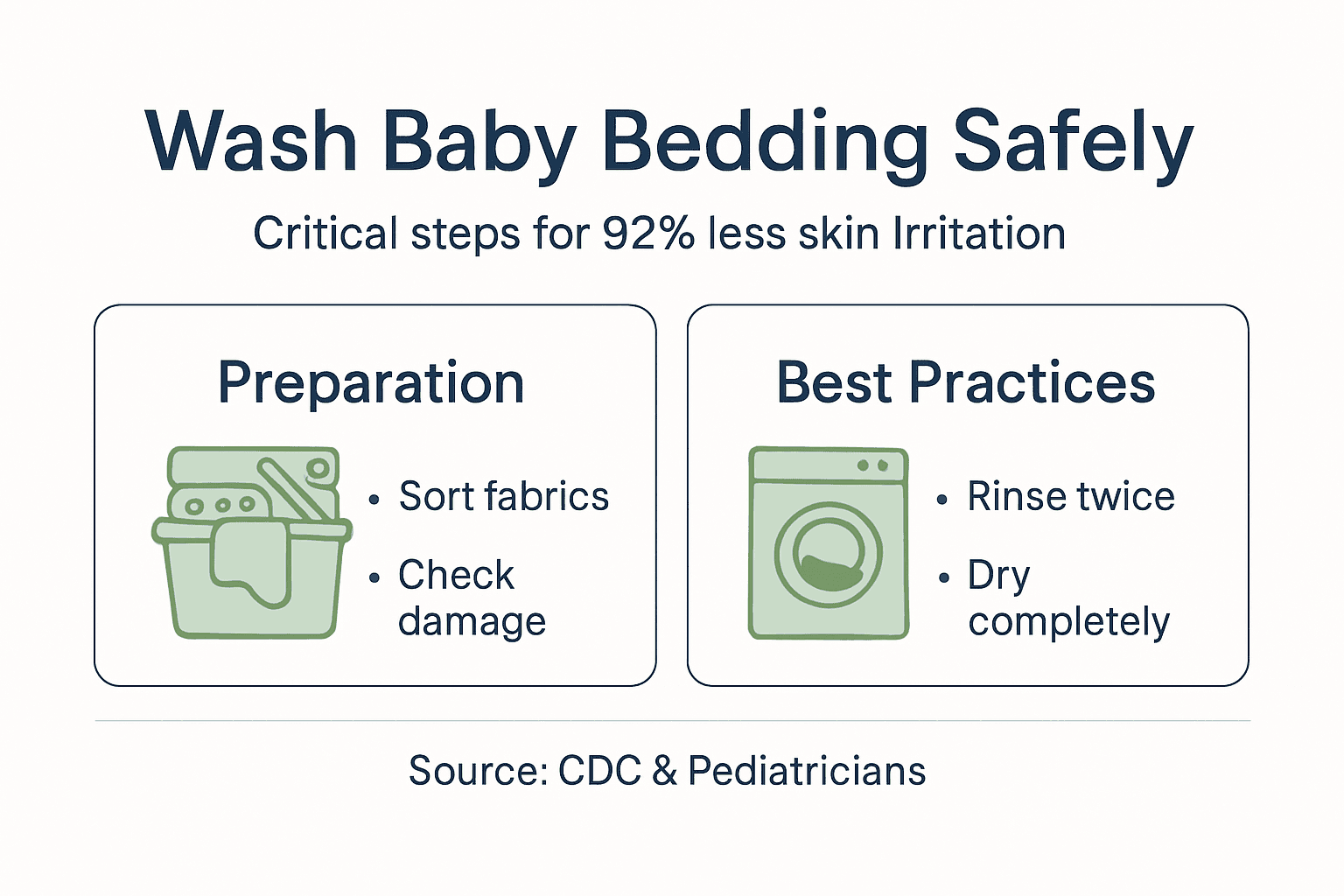
Heat drying in a machine offers the most reliable results, killing any remaining microbes through sustained high temperatures. Set your dryer to medium or high heat and run a complete cycle. Check bedding before removing it, ensuring no damp spots remain in seams or thick areas.
Line drying works beautifully in sunny weather, as UV rays provide natural disinfection. Hang bedding in direct sunlight on a clean line or rack, spacing items to allow air circulation. This method takes longer but leaves bedding smelling fresh without artificial fragrances.
- Use high heat dryer settings for cotton and durable fabrics
- Select lower heat for delicate materials like silk or specialty embroidery
- Shake out bedding before placing in the dryer to reduce wrinkles
- Clean the lint trap before each drying cycle for optimal airflow
- Line dry in direct sunlight when weather permits for natural sanitizing
- Ensure bedding is completely dry to touch before folding or storing
Partial drying creates the perfect environment for mold and bacterial growth. Even slightly damp bedding develops musty odors and can harbor microorganisms. Feel all layers and seams carefully, especially in quilted or padded items where moisture hides.
Once bedding is completely dry, store it properly to maintain cleanliness. Place folded bedding in clean, dust-free containers or dedicated linen closets. Avoid storing bedding in damp basements or humid areas where moisture accumulates. Review storing baby bedding safely techniques for long-term storage between seasons or children.
Consult CDC drying and storage guidelines for detailed recommendations on maintaining bedding hygiene between washes. Proper storage extends the time bedding stays fresh and reduces how often you need to wash items not in active use.
Pro Tip: Smell bedding after drying and before storing. A fresh, clean scent indicates proper drying and successful washing. Any musty or sour odor means the bedding needs additional drying time or another wash cycle.
Common Mistakes and Troubleshooting
Even well-intentioned parents make washing errors that compromise bedding safety. Common mistakes include washing baby bedding with harsh detergents, skipping rinsing cycles, and overusing bleach, leading to skin irritation or fabric damage. Recognizing these pitfalls helps you avoid them and correct course when needed.
Using scented or conventional detergents ranks as the most frequent error. These products contain fragrances and additives that irritate infant skin, causing rashes and discomfort. Switch immediately to fragrance-free, hypoallergenic options designed specifically for babies if you notice any skin reactions.
Skipping extra rinse cycles leaves detergent residue embedded in fabric fibers. This residue contacts your baby’s skin constantly during sleep, potentially causing irritation over time. Always run at least one additional rinse cycle, or two if your machine allows.
Overusing bleach damages fabric integrity and may leave harmful chemical residues. Some parents believe more bleach means better disinfection, but excessive amounts weaken fibers and create toxic exposure risks. Stick to recommended dilution ratios and sanitize only when genuinely necessary.
Incomplete drying creates the perfect environment for mold and mildew growth. Putting away slightly damp bedding leads to musty odors and potential health hazards. Take extra time to ensure complete dryness, even if it means running another dryer cycle.
- If bedding feels stiff: You used too much detergent or skipped rinse cycles; rewash with no detergent and extra rinses
- If baby develops rashes: Switch to fragrance-free detergent and eliminate fabric softeners immediately
- If bedding smells musty: Items weren’t fully dried; rewash and dry completely before use
- If fabric looks faded: You used too much bleach or washed in excessively hot water too frequently
- If residue appears on fabric: Detergent buildup from insufficient rinsing; run multiple rinse-only cycles
Learn from common crib and bedding mistakes to create a safer sleep environment overall. Washing technique forms just one part of nursery safety, but it’s a critical component you control daily.
Review common washing mistakes documentation for comprehensive troubleshooting guidance. Understanding what went wrong helps you fix current issues and prevent future problems, protecting both your bedding investment and your infant’s health.
Expected Outcomes and Success Metrics
Knowing whether your washing efforts succeeded helps you maintain consistent infant safety. Following proper washing and sanitizing protocols can reduce bacterial colonies on baby bedding to levels considered safe by public health standards, reducing infant illness risk. Look for these clear indicators of successful bedding care.
Clean bedding should be completely free of visible stains, spots, and discoloration. Check sheets, blankets, and bumpers carefully in good lighting. Any remaining stains indicate the need for rewashing or spot treatment before the next use.
Smell bedding after washing and drying. Fresh, clean bedding has no odor at all, or perhaps a very subtle scent from your hypoallergenic detergent. Musty, sour, or chemical smells signal problems requiring immediate attention.
Fabric texture reveals washing success or failure. Properly washed bedding feels soft and comfortable against skin, without stiffness or rough spots. Stiff fabric indicates detergent residue, while rough patches may signal fabric damage from overbleaching.
Your baby’s skin reaction provides the ultimate success metric. Watch for any signs of irritation, redness, or rashes after using freshly washed bedding. Clear, healthy skin confirms your washing routine protects rather than harms.
- Bedding appears bright and clean with no visible staining or discoloration
- Fabric smells completely neutral or has only the faintest clean scent
- Sheets and blankets feel soft and comfortable without stiffness
- Baby shows no signs of skin irritation, rashes, or allergic reactions
- Bedding is completely dry with no dampness or musty odors
- Fabric maintains its original texture and hasn’t become rough or damaged
Maintaining a regular washing schedule prevents problems before they start. Weekly washing keeps bacterial counts low and removes allergens before they accumulate. After establishing this routine, you’ll notice bedding stays fresher longer and requires less intensive cleaning.
Explore storage best practices to maintain cleanliness between uses. Proper storage protects your washing efforts, ensuring bedding stays hygienic from closet to crib. Consult cleaning success metrics for scientific standards used in childcare settings.
Create a Safe and Cozy Nursery with Our Baby Bedding Sets
Now that you understand proper washing techniques, ensure your nursery features bedding designed for easy, safe cleaning. Our organic baby bedding sets use hypoallergenic fabrics that withstand frequent washing while maintaining softness and durability.

Every piece in our collection is crafted with infant safety as the top priority. We use only chemical-free, breathable materials that reduce skin irritation risks. Our bedding pairs perfectly with the washing protocols you’ve learned, making it simple to maintain a hygienic sleep environment. Explore our complete nursery setup guide for comprehensive advice on creating a safe space, and review safe nursery essentials to complete your infant’s sleep sanctuary with confidence.
Frequently Asked Questions
How Often Should I Wash Baby Bedding for Safety?
Wash baby bedding at least once per week under normal circumstances. Increase frequency immediately after spills, diaper leaks, or illness. Proper drying technique and hypoallergenic detergent selection matter as much as washing frequency for maintaining safety between cleanings.
Is It Safe to Use Bleach Every Time I Wash Baby Bedding?
No, reserve bleach sanitizing for occasional use after illness or heavy soiling. Always dilute bleach according to safety guidelines, aiming for 50-200 ppm concentration. Excessive or undiluted bleach damages fabric and creates harmful residues that irritate infant skin.
Can I Use Fabric Softeners with Baby Bedding?
Never use fabric softeners or scented detergents on baby bedding. These products leave chemical residues that commonly cause skin irritation and allergic reactions in infants. Choose hypoallergenic, fragrance-free detergents as safer alternatives that clean effectively without risking baby’s health.
What Is the Best Way to Dry Baby Bedding to Prevent Mold?
Use a hot dryer cycle or line dry bedding completely in direct sunlight. Check all seams and thick areas to ensure no dampness remains before storage or use. Avoid partially drying or storing damp bedding, as moisture promotes rapid mold and bacterial growth.
Recommended
- Comparing Cleaning Methods for Baby Bedding: Hand Wash, Machine Wash, or Steam Cleaning - kari-studio.com
- How to Wash Crib Bumpers Naturally: A Step-by-Step Guide
- How to Store Baby Bedding: A Complete Step-by-Step Guide
- 7 Essential Tips for Choosing Machine Washable Bedding
- Personalised Baby Shower Banner - Mum Shower Theme – My Party Banners