TL;DR:
- Proper crib placement significantly reduces SIDS risk, especially when on an interior wall at least 3 feet from hazards.
- Safe nursery design involves avoiding windows, cords, outlets, and heavy decor near or above the crib.
- Adjust crib height and position as your baby grows, ensuring safety from birth through toddler years.
Where you put the crib is one of the most important safety decisions you will make for your baby. Room-sharing for the first year can cut your baby’s risk of sudden infant death syndrome (also called crib placement mistakes by up to 50%. Yet most parents spend more time picking a crib color than deciding exactly where to position it. The good news: getting placement right does not mean sacrificing a beautiful nursery. This guide walks you through the safety rules, practical room layouts, and how to adjust the setup as your baby grows.
Table of Contents
- Why crib placement matters more than you think
- Safe crib placement: Rules every parent should follow
- designing for both safety and style: layouts that work
- Growing with your baby: adjusting crib setup over time
- Our experience: what most crib setup checklists miss
- Find safe, stylish baby essentials for your nursery
- frequently asked questions
Key Takeaways
| Point | Details |
|---|---|
| Prioritize safety | Place the crib away from hazards like windows, cords, and heavy decor for maximum safety. |
| Room-share early | Keeping your baby’s crib in your room for the first 6-12 months can cut SIDS risk in half. |
| Update as baby grows | Adjust crib settings and placement as your child develops new skills and mobility. |
| Style within safe limits | You can achieve a stylish nursery layout that follows evidence-based safety rules. |
Why crib placement matters more than you think
With the stakes established, let’s break down how crib placement can directly impact your baby’s safety and sleep.
SIDS (sudden infant death syndrome) is every parent’s fear, and nursery setup plays a real role in reducing that risk. The American Academy of safe sleep practices have reduced the overall rate of infant sleep-related deaths by over 50% since the 1990s. That number reflects years of research and behavioral change. Where and how you place the crib is a direct part of those practices.
Room-sharing, not bed-sharing, is the key recommendation. Keep the crib in your room for the first 6 to 12 months. Your baby sleeps on their own firm surface, close to you, but never in your bed.
The difference matters. Room-sharing lets you respond quickly without putting your baby at risk from soft bedding or adult mattresses. It also makes nighttime feeding easier, which helps with breastfeeding consistency.
Here are the placement risks most parents overlook:
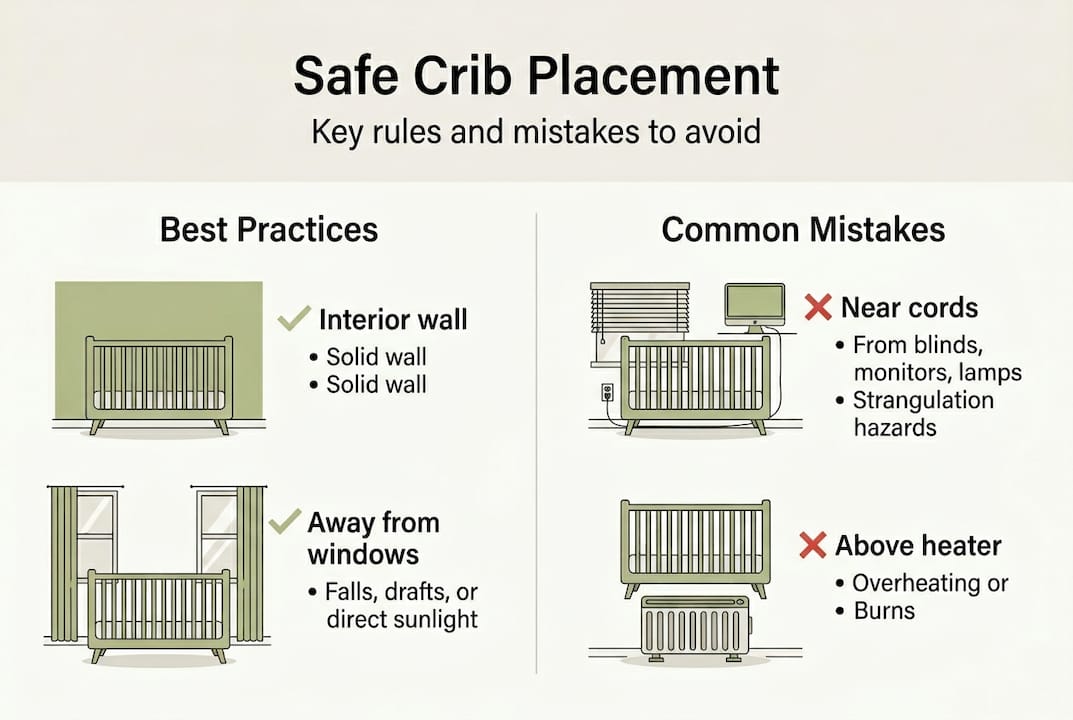
- Windows: Direct drafts, light exposure, and accessible blind cords all create hazards.
- Heat sources: Space heaters and radiators raise the local temperature, which is linked to increased sleep risk.
- Wall outlets: Within reach as babies grow, outlets near cribs are a genuine concern.
- Heavy wall art or shelves: Items mounted above the crib can fall during movement or seismic events.
- High-traffic areas: Near doors with heavy foot traffic can disrupt sleep cycles and increase noise exposure.
Once you understand why those risks exist, fixing them becomes straightforward. Learning more about crib bedding safety alongside placement gives you a full picture of nursery safety from day one.
Safe crib placement: Rules every parent should follow
Understanding the risks is only half the battle. Now let’s walk through the safety rules that can make your nursery truly secure.
Experts are clear on the minimum distances and location rules every crib must meet. According to pediatric safety guidelines, cribs must stay at least 3 feet from windows, blinds, cords, heaters, vents, outlets, and any heavy decor. That three-foot rule is not a suggestion. It accounts for how quickly babies begin to reach and roll.
How to set up a safe crib, step by step:
- Choose an interior wall as your starting point. Interior walls offer the most temperature stability and the fewest hazards.
- Keep the crib at least 3 feet from all windows, even if cords are secured.
- Clear the area above the crib. Never position the crib under shelves or heavy wall decorations.
- Check for outlets within reach. Cover them and move the crib away if they fall within arm’s reach of a standing toddler.
- Make sure the mattress is firm and fits snugly with no gaps between the mattress edge and crib frame. A Consumer Product Safety Commission (or tips for safe crib setup) compliant mattress is required.
- Remove soft bedding, bumpers that are not breathable, and loose items from inside the crib.
Pro tip: Walk the perimeter of the crib before your baby arrives and look up, not just around. Check what is directly above the crib. A picture frame or shelf you mounted months ago can easily be forgotten.
Quick comparison: Best vs. worst placement choices
| Feature | Best placement | Poor placement\ |
|---|---|---|
| Wall type | Interior wall | Wall with windows or vents\ |
| Distance from cords | At least 3 feet | Within reach of blind cords\ |
| Above the crib | Clear ceiling | Wall shelves or hanging decor\ |
| Heat exposure | Away from heaters | Next to radiator or floor vents\ |
| Access for parents | Easy side access | Against two walls in a corner |
Also read about safe crib near window placement if your nursery layout makes distance from windows challenging.
designing for both safety and style: layouts that work
Once you know the rules, you can get creative. Here is how to make your nursery inviting without sacrificing safety.
Safety and style are not opposites. Most well-designed nurseries actually look better when the crib is positioned thoughtfully, because that placement becomes the visual anchor of the room. Interior wall placement provides thermal stability, better noise control, and reduced light exposure, which also happens to be ideal for sleep.
Three layout options that work for most rooms:
| Layout type | Description | Best for\ |
|---|---|---|
| Interior wall center | Large nurseries with centered crib as focal point | Maximum style impact\ |
| Corner adjacent | Near a corner but not pressed into it, still 3 feet from walls | Small to medium rooms\ |
| Near door wall | Easy parental access, good for frequent night checks | First months in parent’s room |
- Use the crib as your anchor. Build the nursery layout around it, not the other way around.
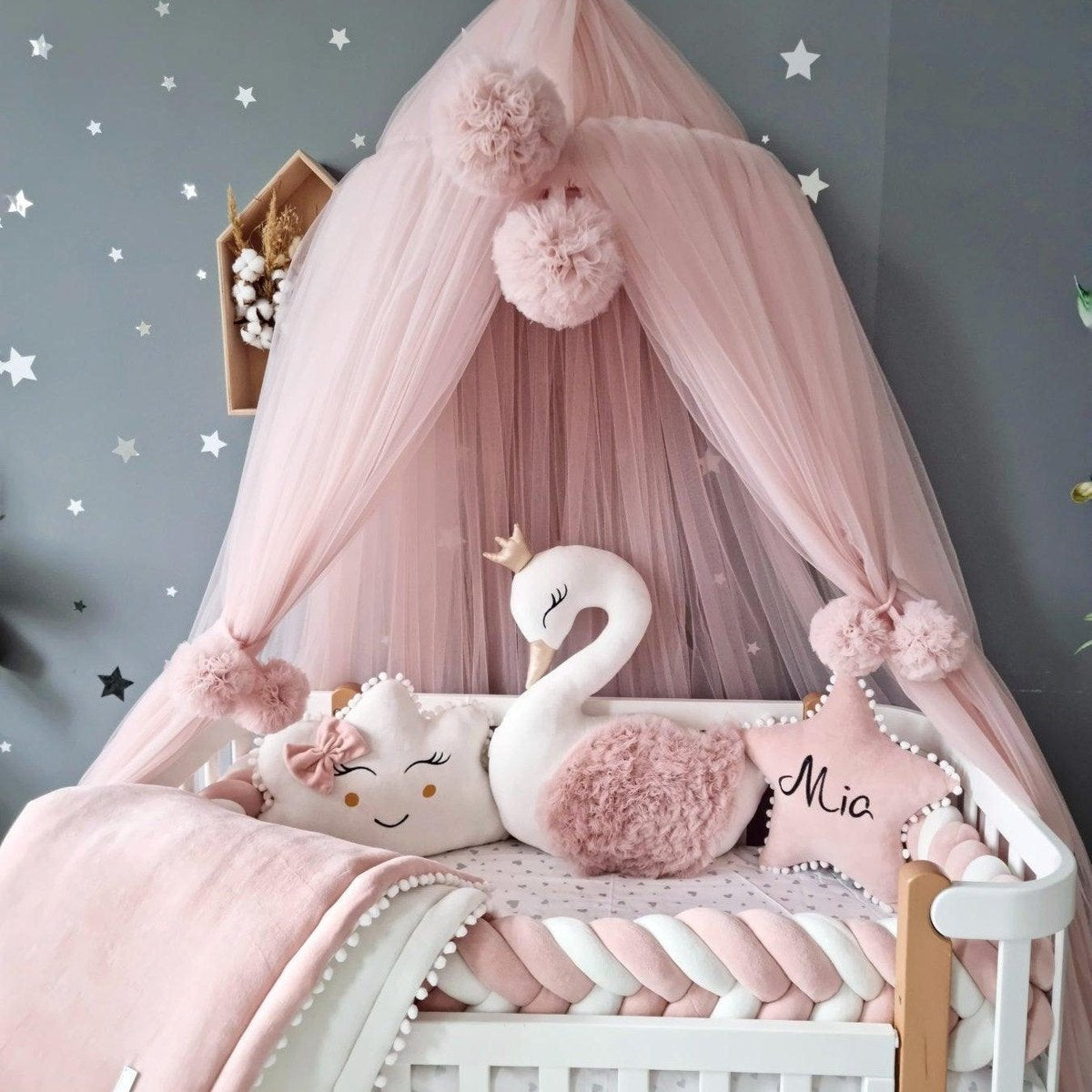
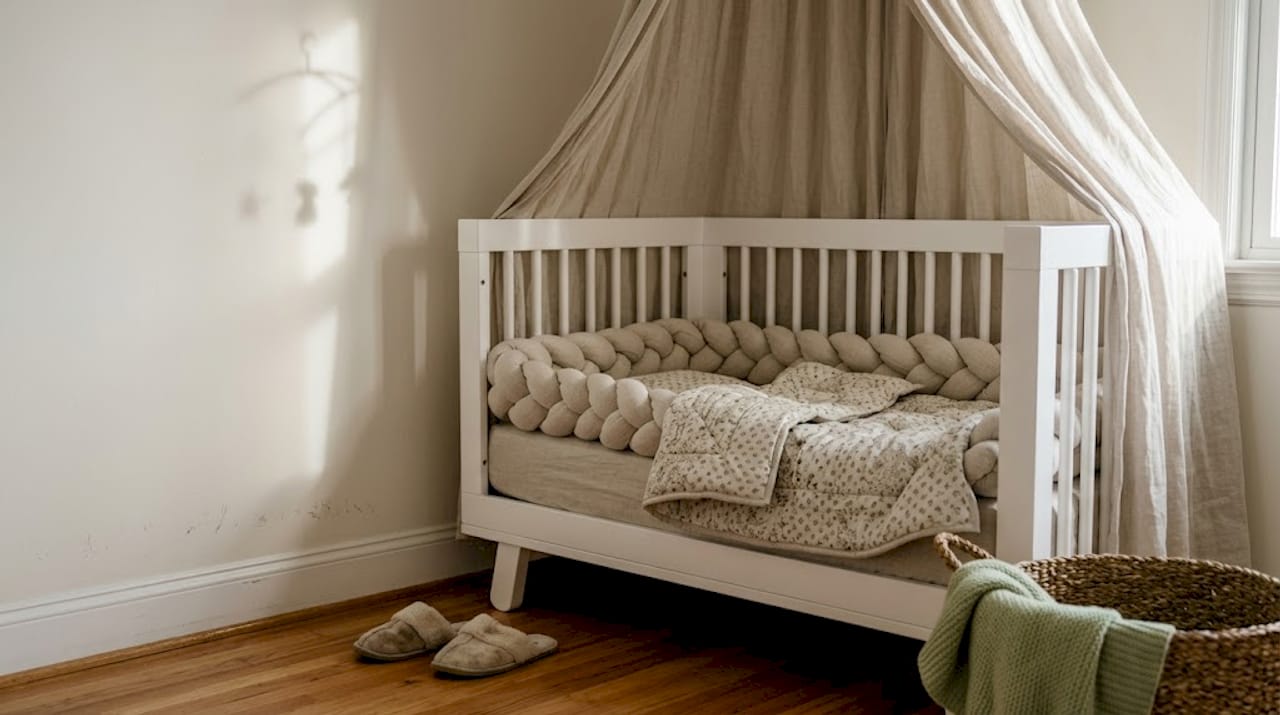
- Add a canopy or mobile above the crib for visual warmth, keeping all items at a safe height and firmly secured.
- Use rugs and soft lighting on the opposite wall to draw the eye without cluttering the crib zone.
- A side table or small dresser within arm’s reach of the feeding chair (not the crib) keeps essentials close.
Pro tip: Want the crib to feel cozy without adding items inside it? Use a canopy above it. It creates visual depth and softness without adding anything to the sleep surface. Find ideas on keeping baby essentials nearby to organize the space around the crib smartly.
Growing with your baby: adjusting crib setup over time
A safe nursery adapts as your child grows. Here is what to expect for crib placement beyond the newborn months.
Most parents set up the crib once and assume it stays that way. In reality, the setup changes three or four times in the first two years. Each stage requires a small but important adjustment.
Timeline for crib adjustments:
- Birth to sitting (0 to 6 months): Keep the mattress at the highest setting for easy lifting. Keep the crib in your room if possible.
- Baby can sit (around 6 months): Lower the mattress before your baby can pull up. If the mattress is still at the top level when they sit, it is already too late to lower it safely.
- Baby can stand (around 8 to 10 months): Drop the mattress to its lowest setting. Check that the crib rail height is at least three-quarters of your baby’s height when standing.
- Baby reaches 35 inches tall: At this point, most cribs no longer contain a standing toddler safely. Begin the transition to a toddler bed.
Pro tip: Mark the crib height adjustment on your phone calendar as a reminder. Parents often notice their baby can pull up one morning and realize the mattress has not yet been lowered. A quick weekly check saves you the scramble.
Moving the crib out of your bedroom is another adjustment many parents delay longer than needed. That is completely fine. The 6 to 12 month window is a guideline, not a strict deadline. Follow your baby’s patterns and your comfort level.
Our experience: what most crib setup checklists miss
Most crib setup checklists are useful but incomplete. They give you the distances and the rules, but they skip the part about how placement affects your daily routine as a parent.
We have seen many parents follow every rule perfectly but place the crib in the hardest possible spot to access at 3 a.m. They face a tight squeeze between the crib and the wall every time they go to pick up the baby. That is a problem no safety checklist addresses.
There are also persistent myths that hold parents back. Some believe that nursery corners are cold and dangerous. Most corners on interior walls are actually the warmest and most stable spots in the room. Others think the crib must face the window for natural light. That idea conflicts directly with glare, heat, and cord hazards.
What real experience shows is this: when you prioritize safety first, you actually gain more creative freedom. You rule out the problematic spots quickly, and everything left is workable. The focus shifts from “where can it go?” to “which of these good options looks best?”
Routine safety checks matter as much as the initial setup. Every time your baby hits a new developmental milestone, do a quick audit. Things shift. Items get added to walls. Your baby gets stronger and faster. The crib setup lessons that stick are the ones revisited regularly, not just followed once.
Find safe, stylish baby essentials for your nursery
Once you are ready to build your little one’s space, having the right nursery items makes safety and style much easier to combine.

At baby bedding sets, you will find hypoallergenic, soft fabrics designed specifically for newborn safety. Each set is made to fit standard crib dimensions securely, so there are no loose edges or risky gaps. If you want to add visual warmth without placing anything inside the crib, our crib canopy curtains create a cozy feel from above the sleep surface. For parents building their nursery on a budget, check out our current crib bumpers on sale for safe, stylish options at reduced prices. Every product ships internationally and can be personalized with your baby’s name.
frequently asked questions
Where is the safest spot to place a crib in the nursery?
The safest spot is on an interior wall, at least 3 feet from windows, cords, outlets, and any hanging decor. Interior walls offer the best temperature stability and fewest hazards.
Should I put my baby’s crib in my bedroom or the nursery at first?
Experts recommend room-sharing for at least the first 6 to 12 months. Room-sharing reduces the risk of infant sleep-related death by up to 50%, with the baby on a separate safe surface.
How close can the crib be to the wall?
You can place the crib a few inches from an interior wall, but always ensure you have easy parental access from at least one side for quick response during the night.
What should never be placed near or above the crib?
Avoid placing the crib near windows, blinds, cords, outlets, and heaters. Do not hang shelves or heavy decorations above the crib at any time.
When do you move the crib out of your bedroom?
Most experts suggest moving the crib once your baby is 6 to 12 months old. The first 6 to 12 months of room-sharing significantly reduce the risk of infant sleep-related death, so follow your baby’s development and your family’s comfort level.