
Fast alle amerikanischen Eltern möchten ihrem Baby den bestmöglichen Start ins Leben ermöglichen. Viele sind jedoch überrascht, dass die Bauchlage das Risiko eines abgeflachten Hinterkopfes um bis zu 50 Prozent senken kann . Während des Wachstums legen diese beaufsichtigten Spielphasen den Grundstein für die Muskelentwicklung und wichtige Meilensteine wie Drehen und Krabbeln. Zu verstehen, warum die Bauchlage so wichtig ist, gibt amerikanischen Familien praktische Tipps, wie sie ein gesundes Wachstum von Anfang an fördern können.
Inhaltsverzeichnis
- Was ist Bauchlage für Säuglinge?
- Wichtigste Vorteile für die Entwicklung des Babys
- Empfohlene Häufigkeit und bewährte Verfahren
- Häufige Herausforderungen und wie man sie bewältigt
- Sicherheitstipps und die Schaffung eines unterstützenden Umfelds
Wichtigste Erkenntnisse
| Punkt | Details |
|---|---|
| Die Bedeutung der Bauchlage | Die Bauchlage ist für die Muskelentwicklung, die motorischen Fähigkeiten und die kognitive Entwicklung von Säuglingen unerlässlich. Sie sollte ab der Geburt unter Aufsicht erfolgen. |
| Empfohlene Vorgehensweise | Beginnen Sie mit kurzen Einheiten von 3-5 Minuten mehrmals täglich und verlängern Sie die Dauer, sobald das Baby kräftiger und entspannter wird. |
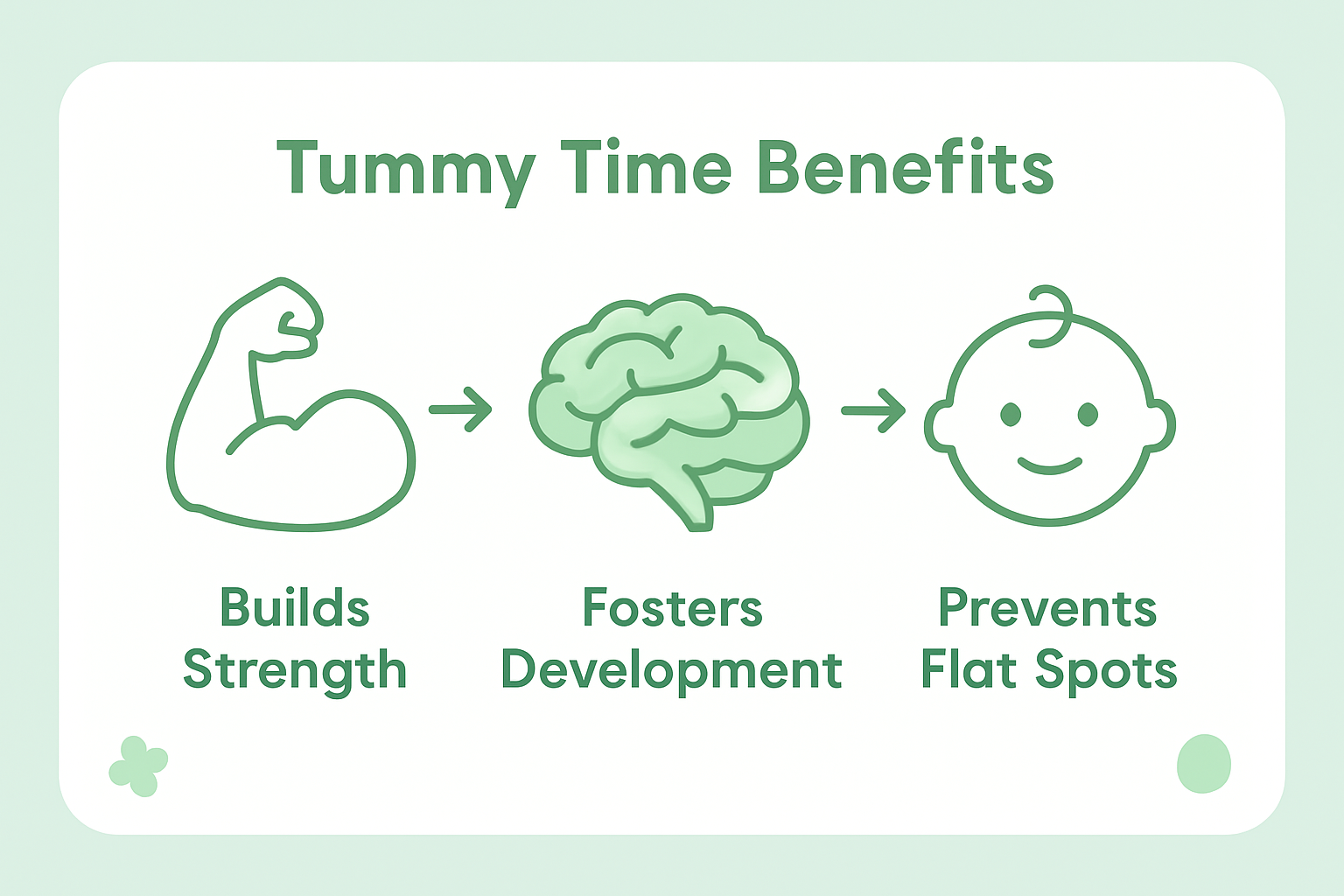
| Vorteile für die Entwicklung | Regelmäßiges Spielen in Bauchlage beugt dem Flachkopfsyndrom vor und unterstützt die Entwicklung körperlicher Meilensteine wie Drehen und Krabbeln. |
| Herausforderungen bewältigen | Zeigt das Baby Widerstand, sollten die Eltern eine anregende Umgebung schaffen, die Übungseinheiten kurz halten und gegebenenfalls einen Kinderarzt konsultieren. |
Was ist Bauchlage für Säuglinge?
Die Bauchlage ist eine wichtige Entwicklungsmaßnahme, bei der Säuglinge im wachen Zustand und unter direkter Aufsicht auf dem Bauch liegen. Diese von Kinderärzten empfohlene , gezielte Positionierung hilft Babys, in den ersten Lebensmonaten wichtige Muskelkraft und motorische Fähigkeiten aufzubauen.
Die Bauchlage erfüllt mehrere wichtige Entwicklungsfunktionen. In Bauchlage arbeiten Babys gegen die Schwerkraft, um ihren Kopf zu heben, die Nacken- und Schultermuskulatur zu stärken und die Rumpfmuskulatur zu entwickeln. Kinderärztliche Leitlinien empfehlen, damit ab dem ersten Tag nach der Entlassung aus dem Krankenhaus zu beginnen und die Dauer mit zunehmender Kraft des Kindes allmählich zu verlängern.
Zu den wichtigsten Vorteilen der Bauchlage gehören:
- Vorbeugung von lagebedingter Plagiozephalie (Flachkopfsyndrom)
- Entwicklung der Oberkörper- und Nackenmuskulatur
- Unterstützung der motorischen Entwicklung
- Verbesserung der visuellen Verfolgung und des räumlichen Bewusstseins
- Babys auf zukünftige Meilensteine wie das Drehen und Krabbeln vorbereiten
Eltern sollten die Bauchlage als sanfte, beaufsichtigte Aktivität gestalten. Beginnen Sie mit kurzen Einheiten von 3–5 Minuten mehrmals täglich auf weichen Unterlagen wie einer Spielmatte oder Decke. Beobachten Sie Ihr Baby stets aufmerksam und gestalten Sie die Bauchlage anregend, indem Sie buntes Spielzeug verwenden oder sich auf Augenhöhe mit Ihrem Baby begeben, um Bewegung und Interaktion zu fördern.
Wichtigste Vorteile für die Entwicklung des Babys
Umfassende Entwicklungsforschung belegt, dass die Bauchlage eine entscheidende Rolle für die körperliche und neurologische Entwicklung von Säuglingen spielt. Durch die aktive Beanspruchung verschiedener Muskelgruppen und die Förderung der körperlichen Fähigkeiten unterstützt diese einfache Übung zahlreiche Entwicklungsmeilensteine in den wichtigen ersten Lebensmonaten.
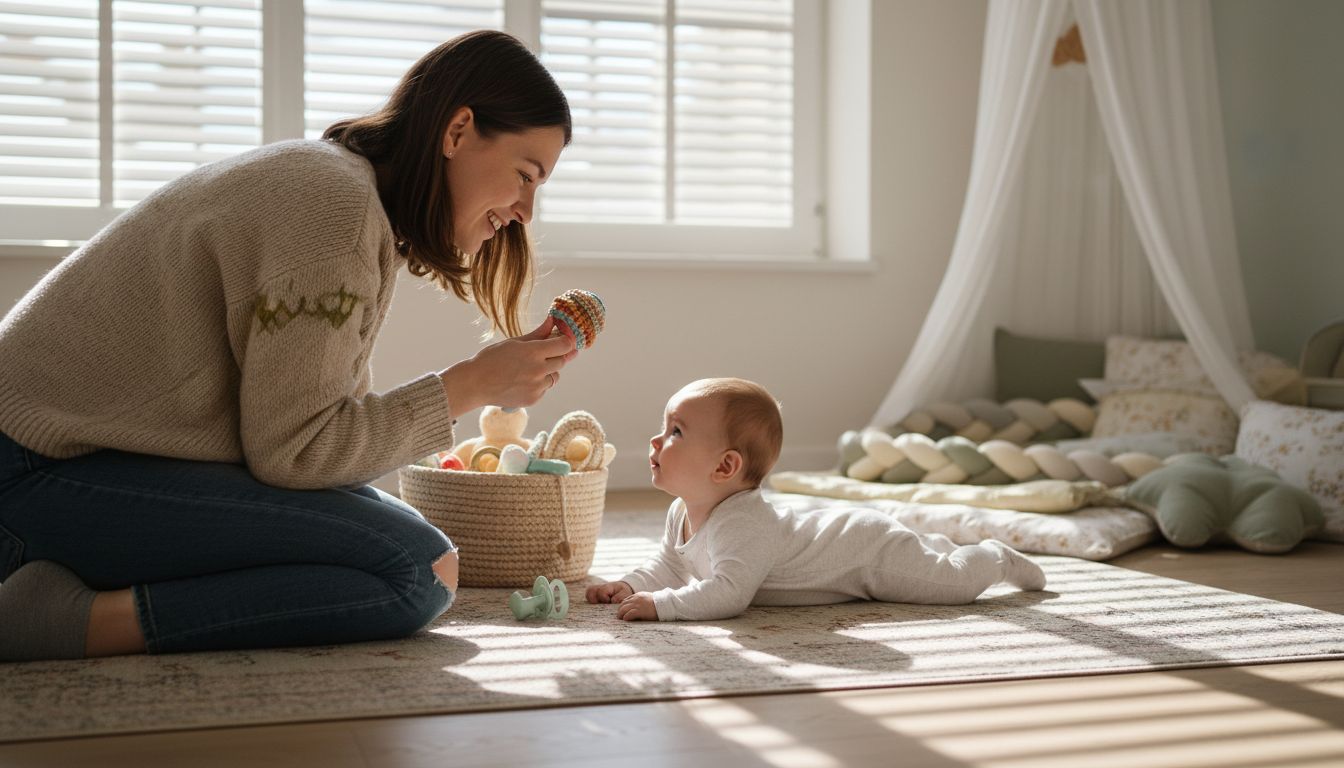
Zu den wichtigsten Entwicklungsvorteilen zählt die deutliche Verbesserung der motorischen Fähigkeiten. Durch das Training gegen die Schwerkraft stärken Babys ihre Rumpfmuskulatur sowie die Nacken- und Schultermuskulatur. Wissenschaftliche Studien belegen, dass regelmäßiges Spielen in Bauchlage Säuglingen hilft, die grundlegende Kraft für spätere Bewegungen wie Drehen, Krabbeln und schließlich Laufen aufzubauen.
Zu den wichtigsten entwicklungsfördernden Vorteilen der Bauchlage gehören:
- Verbesserte Fortschritte in der Grobmotorik
- Verbesserte Kontrolle der Kopf- und Nackenmuskulatur
- Verringertes Risiko von Entwicklungsverzögerungen
- Besseres räumliches Vorstellungsvermögen und Gleichgewicht
- Beschleunigte Bildung neuronaler Bahnen
- Prävention potenzieller Muskelasymmetrie
Neurologische Forschungen legen nahe, dass die Bauchlage mehr als nur körperliche Übung ist. Sie regt die Sinneswahrnehmung an, fördert die visuelle Wahrnehmung und bietet Babys wichtige Möglichkeiten, ihre Umgebung aus einer anderen Perspektive zu erkunden. Durch die Schaffung vielfältiger Sinnesreize unterstützt die Bauchlage neben dem körperlichen Wachstum auch die kognitive Entwicklung und ist somit eine unverzichtbare Maßnahme für die ganzheitliche Entwicklung von Säuglingen.
Empfohlene Häufigkeit und bewährte Verfahren
Pädiatrische Leitlinien empfehlen, Neugeborene unmittelbar nach der Geburt mit der Bauchlage zu beginnen. Zunächst sollten kurze, beaufsichtigte Einheiten durchgeführt werden, deren Dauer und Schwierigkeitsgrad sich allmählich steigern. Neugeborene können mit 2-3 kurzen Einheiten täglich beginnen, die jeweils nur 3-5 Minuten dauern. So können sie Kraft und Toleranz aufbauen, ohne überfordert zu werden.
Ab etwa der siebten Lebenswoche empfehlen Experten für Säuglingsentwicklung, dass Eltern täglich 15 bis 30 Minuten in Bauchlage verbringen sollten. Dieser schrittweise Ansatz fördert die Entwicklung von Muskelkraft, motorischen Fähigkeiten und körperlichem Selbstvertrauen. Eltern können diese Einheiten über den Tag verteilt in mehrere kurze Abschnitte aufteilen, um das Baby zu beschäftigen und ihm Geborgenheit zu vermitteln.
Zu den wichtigsten bewährten Methoden für effektives Spielen auf dem Bauch gehören:
- Wählen Sie eine saubere, ebene und weiche Oberfläche wie zum Beispiel eine Spielmatte.
- Sorgen Sie für ständige Aufsicht durch Erwachsene.
- Nutzen Sie ansprechende Spielzeuge, um das Interesse aufrechtzuerhalten.
- Achten Sie auf Anzeichen von Müdigkeit oder Erschöpfung.
- Platzieren Sie das Baby auf Augenhöhe, um die Interaktion zu ermöglichen.
- Wechseln Sie zwischen Bauchlage auf dem Boden und auf der Brust der Eltern ab.
- Hören Sie auf, wenn das Baby anhaltend unruhig wird.
Eine positive und förderliche Umgebung für die Bauchlage zu schaffen, erfordert Geduld und Kreativität. Buntes Spielzeug, Spiegel und sanfte Ermutigung können das Erlebnis angenehm gestalten. Manche Babys wehren sich anfangs, daher ist es wichtig, ruhig zu bleiben, Trost zu spenden und die Dauer allmählich zu verlängern, sobald sich Ihr Baby an diese Entwicklungsaktivität gewöhnt hat.
Häufige Herausforderungen und wie man sie bewältigt
Pädiatrische Studien zeigen , dass viele Säuglinge anfangs beim Spielen in Bauchlage Unbehagen oder Widerstand zeigen, was sowohl für Babys als auch für Eltern belastend sein kann. Diese häufigen Schwierigkeiten zu verstehen, ist der erste Schritt zu einer positiven und förderlichen Entwicklungserfahrung.
Negative Lautäußerungen sind eine typische Reaktion, die viele Eltern beobachten. Experten für kindliche Entwicklung empfehlen gezielte Maßnahmen, um die Unruhe des Babys zu lindern. Dazu gehören beispielsweise, sich Brust an Brust zum Baby zu positionieren, anregendes Spielzeug zu verwenden oder während der Bauchlage eine interaktivere und beruhigendere Umgebung zu schaffen.
Häufige Herausforderungen beim Spielen in Bauchlage und ihre Lösungen:
- Quengeln oder Weinen
- Verwenden Sie weiche, farbenfrohe Spielzeuge zur Ablenkung.
- Geben Sie sanfte, beruhigende Worte.
- Die Sitzungen sollen kurz und positiv sein.
- Körperliche Beschwerden
- Verwenden Sie stützende Oberflächen
- Überprüfen Sie die Lage des Babys.
- Sorgen Sie für eine angenehme Raumtemperatur.
- Geringes Engagement
- Nutzen Sie Spiegel zur visuellen Stimulation.
- Spielzeug sollte außerhalb der Reichweite von Kindern platziert werden.
- Drehe interessante Objekte
- Schnelle Ermüdung
- Beginnen Sie mit 1-2-minütigen Einheiten.
- Die Dauer schrittweise erhöhen.
- Achten Sie auf die Stresssignale Ihres Babys.
Konsequentes und geduldiges Vorgehen ist der Schlüssel, um die Herausforderungen beim Spielen auf dem Bauch zu meistern. Jedes Baby ist anders, daher sind Flexibilität und Beobachtung entscheidend. Sollte Ihr Säugling wiederholt starke Unruhe zeigen, konsultieren Sie Ihren Kinderarzt, um mögliche körperliche Ursachen auszuschließen und eine individuelle Beratung für die besonderen Entwicklungsbedürfnisse Ihres Babys zu erhalten.
Sicherheitstipps und die Schaffung eines unterstützenden Umfelds
Die Sicherheitsrichtlinien für Kinder betonen die entscheidende Bedeutung einer sicheren Umgebung für die Bauchlage. Die Wahl der richtigen Unterlage und die ständige Aufsicht sind grundlegend, um die Sicherheit und das Wohlbefinden Ihres Babys während dieser wichtigen Entwicklungsphasen zu gewährleisten.
Eine gute Vorbereitung ist entscheidend für ein gelungenes Bauchlageerlebnis. Experten für Säuglingsgesundheit empfehlen eine freie, ebene Unterlage mit einer weichen Decke oder Spielmatte. Ein zusammengerolltes Handtuch unter den Armen des Babys kann zusätzliche Unterstützung bieten. Achten Sie jedoch stets darauf, dass sich keine Kissen, Decken oder lose Gegenstände im Bereich befinden, die die Bewegungsfreiheit einschränken könnten.
Wichtige Sicherheitsaspekte beim Spielen in Bauchlage sind:
- Wählen Sie eine saubere, ebene Oberfläche.
- Alle potenziellen Erstickungsgefahren beseitigen.
- Sorgen Sie für eine angenehme Raumtemperatur.
- Sorgen Sie für eine gute Beleuchtung des Bereichs.
- Positionieren Sie sich in Armreichweite
- Verwenden Sie eine feste, aber weiche Oberfläche
- Vermeiden Sie es, Ihr Baby in der Nähe von Kanten oder erhöhten Flächen abzulegen.
Schaffen Sie eine anregende Umgebung für die Bauchlage, indem Sie verschiedene Elemente einbauen, die die Sinne Ihres Babys stimulieren. Verwenden Sie farbenfrohes, altersgerechtes Spielzeug, das etwas außerhalb seiner Reichweite platziert wird, um die Bewegung zu fördern. Weiche, waschbare Spielmatten in kontrastierenden Farben machen den Bereich einladender und bieten Halt. Denken Sie daran, dass jedes Baby einzigartig ist. Passen Sie Ihre Vorgehensweise daher individuell an das Wohlbefinden und die Reaktionen Ihres Kindes an.
Schaffen Sie ein gemütliches und sicheres Kinderzimmer, um die Bauchlage Ihres Babys optimal zu fördern.
Die Bauchlage ist wichtig für die Muskelkraft, die motorischen Fähigkeiten und die allgemeine Entwicklung Ihres Babys, kann aber auch Herausforderungen wie Unruhe und Unbehagen mit sich bringen. Ein komfortables und sicheres Umfeld während der Bauchlage ist daher entscheidend. Hochwertige, hypoallergene Babyartikel, die auf Weichheit und Sicherheit ausgelegt sind, sind deshalb so wichtig. Die handgefertigten Babybettwäsche-Sets und geflochtenen Nestchen von Kari Studio bieten Ihrem Baby die sanfte Unterstützung, die es braucht, um die Bauchlage entspannter und unbeschwerter zu genießen.
Schaffen Sie Ruhe und Geborgenheit in der Bauchlage mit unseren individuell gestaltbaren Babyartikeln, die Stil und Sicherheit vereinen. Entdecken Sie unsere gesamte Kollektion an Babybettwäsche-Sets und gestalten Sie einen gemütlichen Raum, der die Entwicklung Ihres Babys fördert und Ihnen gleichzeitig Sicherheit gibt. Verschönern Sie das Babyzimmer Ihres Kindes und besuchen Sie noch heute die Babybettwäsche-Kollektion von Kari Studio. Starten Sie die Reise zu einer liebevollen Bauchlage-Erfahrung. Erfahren Sie, wie die richtige Bettwäsche und schützende Accessoires diese wichtige Entwicklungsphase Ihres Babys unterstützen können – mit geflochtenen Nestchen und personalisierten Babyartikeln.
Häufig gestellte Fragen
Was ist Bauchlage und warum ist sie wichtig für Säuglinge?
Die Bauchlage ist eine Übung, bei der Säuglinge im wachen Zustand und unter Aufsicht auf den Bauch gelegt werden. Sie ist wichtig, da sie Babys hilft, Muskelkraft aufzubauen, motorische Fähigkeiten zu entwickeln und Problemen wie dem Flachkopfsyndrom vorzubeugen.
Wie oft sollte ich mit meinem Baby Bauchlage üben?
Kinderärzte empfehlen, Babys ab dem ersten Tag nach der Entlassung aus dem Krankenhaus in Bauchlage zu bringen. Beginnen Sie mit 2-3 kurzen Einheiten täglich von jeweils 3-5 Minuten und streben Sie bis zur 7. Lebenswoche eine Gesamtdauer von 15-30 Minuten pro Tag an.
Welche Vorteile bietet die Bauchlage für die Entwicklung meines Babys?
Die Bauchlage fördert die motorische Entwicklung erheblich, indem sie die Nacken-, Schulter- und Rumpfmuskulatur stärkt. Dies beugt Entwicklungsverzögerungen vor und verbessert das räumliche Vorstellungsvermögen, das Gleichgewicht und die Koordination.
Wie kann ich die Bauchlage für mein Baby angenehmer gestalten?
Um die Bauchlage abwechslungsreich zu gestalten, verwenden Sie buntes Spielzeug und Spiegel und begeben Sie sich auf Augenhöhe mit Ihrem Baby. Halten Sie die Einheiten kurz und positiv, indem Sie Ihr Baby sanft loben und ablenken, um sein Interesse zu erhalten.
Empfohlen
- Was ist Bauchlage? Ein umfassender Leitfaden für Eltern
- Wie geflochtene Babybettumrandungen die Entwicklung und den Schlaf Ihres Babys unterstützen – kari-studio.com – KariStudio
- Brauchen Babys Kissen? Sicherheitstipps für den Babyschlaf – KariStudio
- Wichtige Tipps für frischgebackene Eltern
- Gehirnentwicklung im Kindesalter: Ein Leitfaden für moderne europäische Mütter – Die Zoofamilie
- Γιατί τα παιδικά στρώματα είναι σημαντικά για την ανάπτυξη | Afrokoptiki