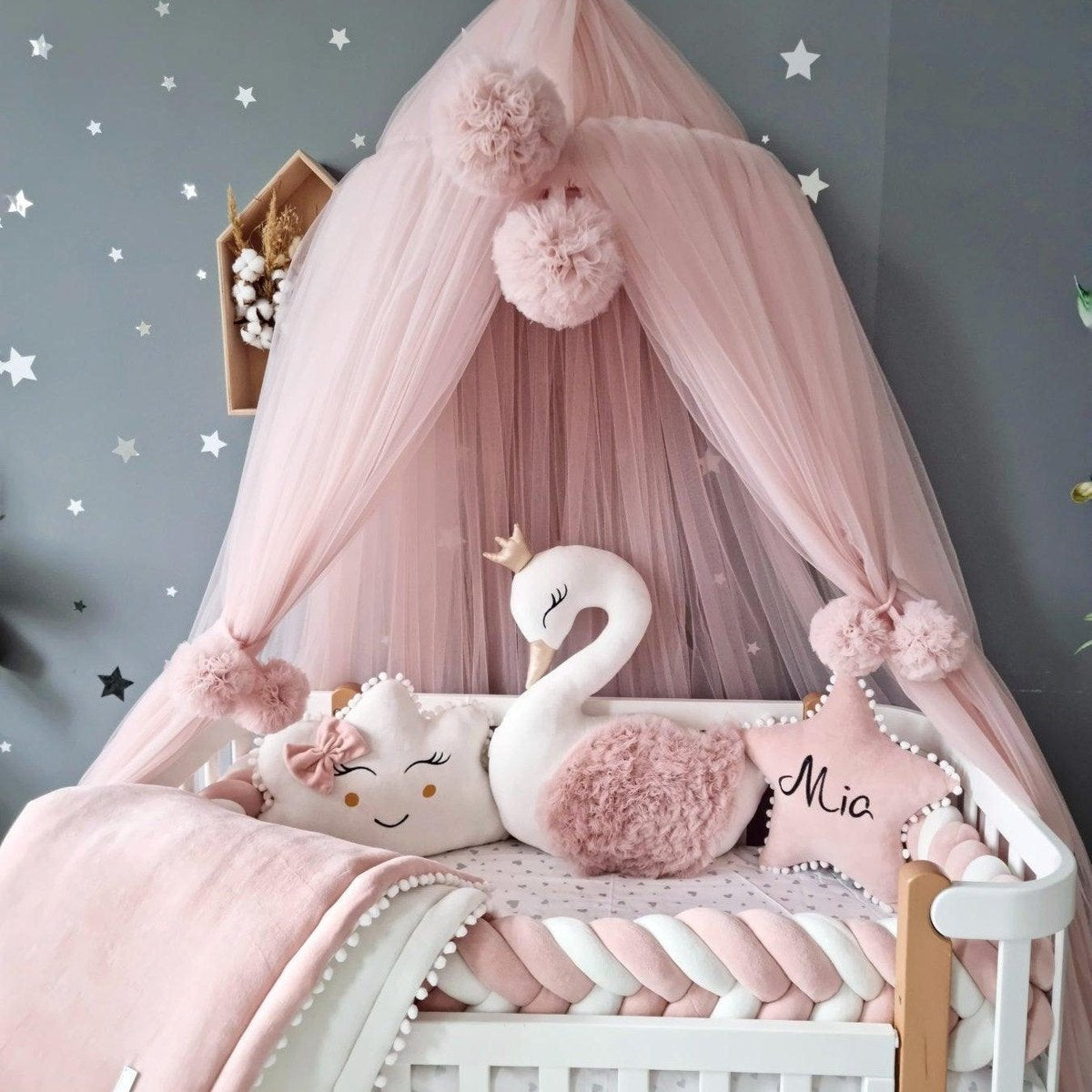
Die Auswahl sicherer Kinderbettwäsche kann überwältigend sein, wenn man versucht, das Baby vor versteckten Chemikalien und Allergenen zu schützen. Herkömmliche Bettwäsche enthält oft synthetische Materialien, die mit Flammschutzmitteln, Pestiziden und aggressiven Farbstoffen behandelt sind, die empfindliche Haut reizen oder Atemwegsprobleme auslösen können. Bio-Kinderbettwäsche verwendet zertifizierte Bio-Materialien, die frei von schädlichen Chemikalien sind, und bietet eine gesündere Alternative, die das Wohlbefinden Ihres Kindes in den Vordergrund stellt. Dieser Artikel beleuchtet die echten Vorteile von Bio-Optionen, von hypoallergenen Eigenschaften bis hin zur Umweltverträglichkeit, und bietet praktische Anleitungen zur Auswahl von Bettwäsche, die eine wirklich sichere Kinderzimmerumgebung schafft.
👉 Sicherheitsleitfaden für Babybettumrandungen
Inhaltsverzeichnis
- Die wichtigsten Erkenntnisse
- Was macht Kinderbettwäsche biologisch und sicher?
- Die wichtigsten Vorteile von Bio-Kinderbettwäsche für die Gesundheit und den Komfort Ihres Babys
- Bio-Kinderbettwäsche im Vergleich zu herkömmlichen Optionen: Was Eltern wissen sollten
- Praktische Tipps zur Auswahl und Pflege von Bio-Kinderbettwäsche
- Entdecken Sie Kollektionen von Bio-Kinderbettwäsche für Ihr Kinderzimmer
- FAQ
Die wichtigsten Erkenntnisse
| Punkt | Details |
|---|---|
| Chemikalienfreie Materialien | Bio-Kinderbettwäsche verwendet zertifizierte Materialien, die frei von Pestiziden, synthetischen Farbstoffen und Flammschutzmitteln sind, um die Belastung für Babys zu reduzieren. |
| Zertifizierte Bio-Standards | Achten Sie auf Labels von GOTS, OEKO-TEX, USDA Organic oder Made Safe, um eine authentische Bio-Produktion zu gewährleisten. |
| Hypoallergene Vorteile | Die chemikalienfreien, atmungsaktiven Fasern können helfen, Ekzemschübe und Hautirritationen bei empfindlichen Säuglingen zu minimieren. |
| Atmungsaktive Temperaturkontrolle | Naturfasern leiten Feuchtigkeit ab und regulieren die Wärme, um einen angenehmen Schlaf zu unterstützen und Überhitzung zu reduzieren. |
Was macht Kinderbettwäsche biologisch und sicher?
Bio-Kinderbettwäsche beginnt mit Fasern, die ohne synthetische Pestizide, Herbizide oder gentechnisch veränderte Organismen angebaut werden. Zertifizierte Bio-Baumwolle stellt das gebräuchlichste Material dar, das nach natürlichen Anbaumethoden angebaut wird, die die Bodengesundheit und Wasserqualität schützen. Bambus und andere pflanzliche Fasern sind ebenfalls qualifiziert, wenn sie nach strengen Bio-Standards angebaut und verarbeitet werden.
Was Bio-Bettwäsche wirklich von herkömmlicher Bettwäsche unterscheidet, ist das Fehlen chemischer Behandlungen während der gesamten Produktion. Hersteller verzichten auf synthetische Farbstoffe, Formaldehyd-basierte Ausrüstungen und chemische Flammschutzmittel, die üblicherweise auf Standard-Babyprodukte aufgetragen werden. Diese Substanzen können in die Kinderzimmerluft ausgasen oder während des Schlafs direkt auf die Haut des Säuglings übergehen. Moderne Sicherheitsstandards für Babybettwäsche betonen atmungsaktive, ungiftige Materialien, die das Erstickungsrisiko und das Risiko der Chemikalienexposition reduzieren.
Zertifizierungen bieten den klarsten Weg zu authentischer Bio-Bettwäsche. Achten Sie beim Einkauf auf diese Merkmale:
- Global Organic Textile Standard (GOTS) bestätigt den Anteil an Bio-Fasern und verbietet schädliche Chemikalien während der gesamten Herstellung.
- Die OEKO-TEX-Zertifizierung testet fertige Produkte auf Substanzen, die für die menschliche Gesundheit schädlich sind.
- USDA Organic bestätigt, dass landwirtschaftliche Praktiken den föderalen Bio-Standards entsprechen.
- Die Made Safe-Zertifizierung prüft die gesamte Lieferkette auf giftige Chemikalien.
Hypoallergene Eigenschaften ergeben sich auf natürliche Weise aus diesem chemikalienfreien Ansatz. Babys mit Ekzemen, empfindlicher Haut oder Atemwegserkrankungen zeigen oft weniger Symptome, wenn sie auf Bio-Bettwäsche schlafen. Die atmungsaktive Struktur der Naturfasern ermöglicht eine Luftzirkulation, die dazu beiträgt, Feuchtigkeitsansammlungen und Bakterienwachstum zu verhindern. Eltern, die die sicherste Schlafumgebung suchen, sollten Kinderbettwäschematerialien priorisieren, die diese Bio-Standards erfüllen, anstatt sich auf herkömmliche Optionen zu verlassen, die mit potenziell schädlichen Substanzen behandelt wurden.
Die wichtigsten Vorteile von Bio-Kinderbettwäsche für die Gesundheit und den Komfort Ihres Babys
Die gesundheitlichen Vorteile von Bio-Kinderbettwäsche gehen weit über Marketingaussagen hinaus. Herkömmliche Bettwäsche enthält oft Pestizidrückstände aus dem Baumwollanbau, wobei Studien diese Chemikalien noch Monate nach der Herstellung in fertigen Produkten nachweisen. Synthetische Flammschutzmittel, obwohl zur Verbesserung der Sicherheit gedacht, können bei Säuglingen die Hormonfunktion und die neurologische Entwicklung stören. Bio-Kinderbettwäsche reduziert die Exposition gegenüber schädlichen Chemikalien und senkt das Risiko von Allergien und Atemwegsproblemen in den kritischen frühen Monaten, in denen Babys täglich 14 bis 17 Stunden in ihren Betten verbringen.
Die Temperaturregulierung stellt einen weiteren wichtigen Komfortvorteil dar. Bio-Baumwolle und Bambusfasern leiten Feuchtigkeit auf natürliche Weise von der Haut ab und lassen gleichzeitig Wärme entweichen. Diese Atmungsaktivität verhindert die Überhitzung, die zu unruhigem Schlaf beiträgt und das SIDS-Risiko erhöhen kann. Synthetische Materialien speichern Wärme und Feuchtigkeit und schaffen ein unangenehmes Mikroklima, das die Schlafmuster von Säuglingen stört.
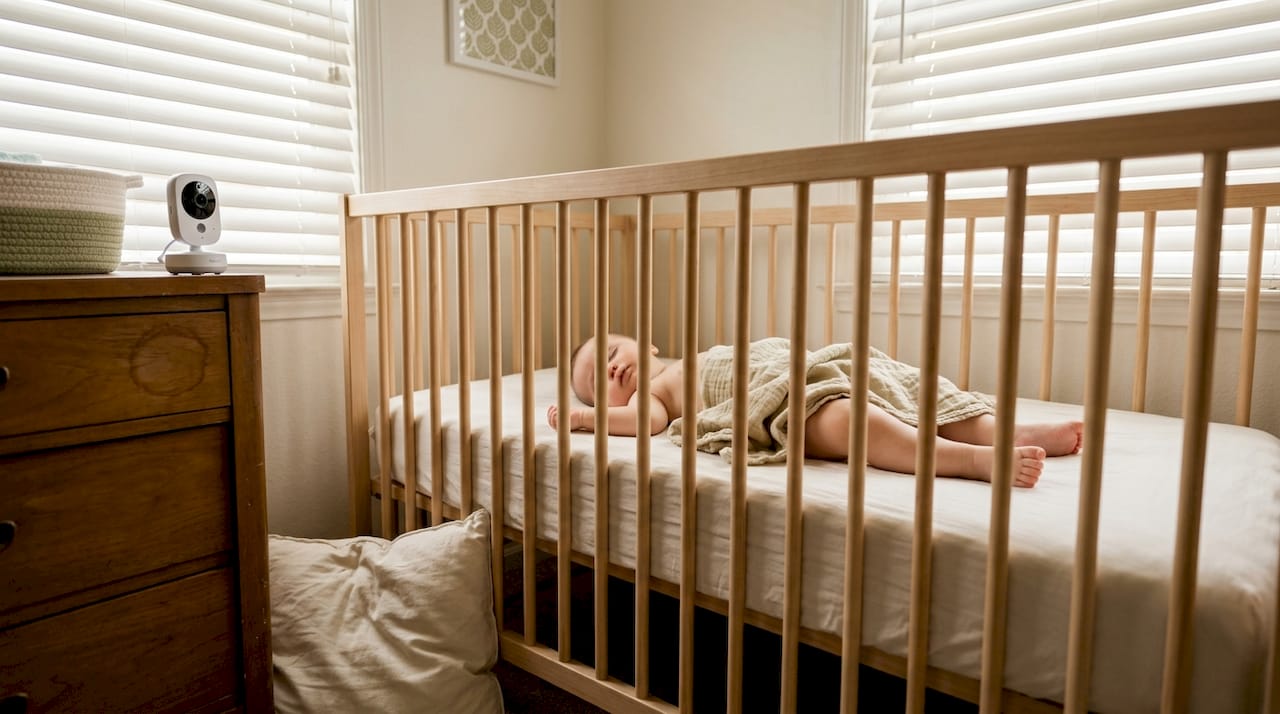
Verbesserungen der Hautgesundheit treten oft innerhalb weniger Tage nach dem Wechsel zu Bio-Bettwäsche auf. Eltern berichten von weniger Ekzemschüben, weniger Rötungen und weniger nächtlichem Kratzen, wenn Babys auf chemikalienfreien Stoffen schlafen. Die weiche Textur von Bio-Baumwolle wird mit dem Waschen noch sanfter, im Gegensatz zu herkömmlicher Bettwäsche, die raue Stellen oder Pilling entwickeln kann. Babys mit diagnostizierten Hauterkrankungen profitieren am dramatischsten, obwohl alle Säuglinge auf natürlich weichen Materialien bequemer schlafen.
Umweltvorteile schaffen eine gesündere Welt für die Zukunft Ihres Kindes:
- Bio-Landwirtschaft erhält die Bodenqualität und schützt Wasserquellen vor Chemikalienabfluss.
- Reduzierter Pestizideinsatz schützt Landarbeiter und umliegende Ökosysteme.
- Natürliche Verarbeitungsmethoden minimieren Wasserverschmutzung und Energieverbrauch.
- Biologisch abbaubare Fasern zersetzen sich am Ende der Lebensdauer sicher.
Haltbarkeit erweist sich bei Bio-Bettwäsche als überraschend überlegen. Hochwertige Bio-Baumwolle behält ihre strukturelle Integrität über Dutzende von Waschgängen hinweg, während herkömmliche Stoffe dünner werden oder Schwachstellen entwickeln können. Diese Langlebigkeit bedeutet, dass Bio-Bettwäsche oft für mehrere Kinder dient oder auf Kleinkinderbetten übergeht, was die höhere Anfangsinvestition ausgleicht.
Profi-Tipp: Waschen Sie neue Bio-Bettwäsche vor dem ersten Gebrauch zweimal, um die Weichheit zu maximieren und natürliche Öle aus der Herstellung zu entfernen. Verwenden Sie nur milde, parfümfreie Waschmittel, um die hypoallergenen Eigenschaften zu erhalten.
Bio-Kinderbettwäsche im Vergleich zu herkömmlichen Optionen: Was Eltern wissen sollten
Die Materialzusammensetzung zeigt den deutlichsten Unterschied zwischen Bio- und herkömmlicher Kinderbettwäsche. Standard-Babybettwäsche mischt typischerweise Baumwolle mit Polyester oder anderen Synthetikfasern, um Kosten zu senken und die Knitterbeständigkeit zu erhöhen. Diese synthetischen Fasern werden aus Erdölprodukten gewonnen und erfordern eine chemische Verarbeitung, die Reststoffe im fertigen Stoff hinterlässt. Der konventionelle Baumwollanbau verwendet intensive Pestizidanwendungen, wobei Rückstände durch die Herstellung bis zum Endprodukt, das Ihr Baby berührt, bestehen bleiben.
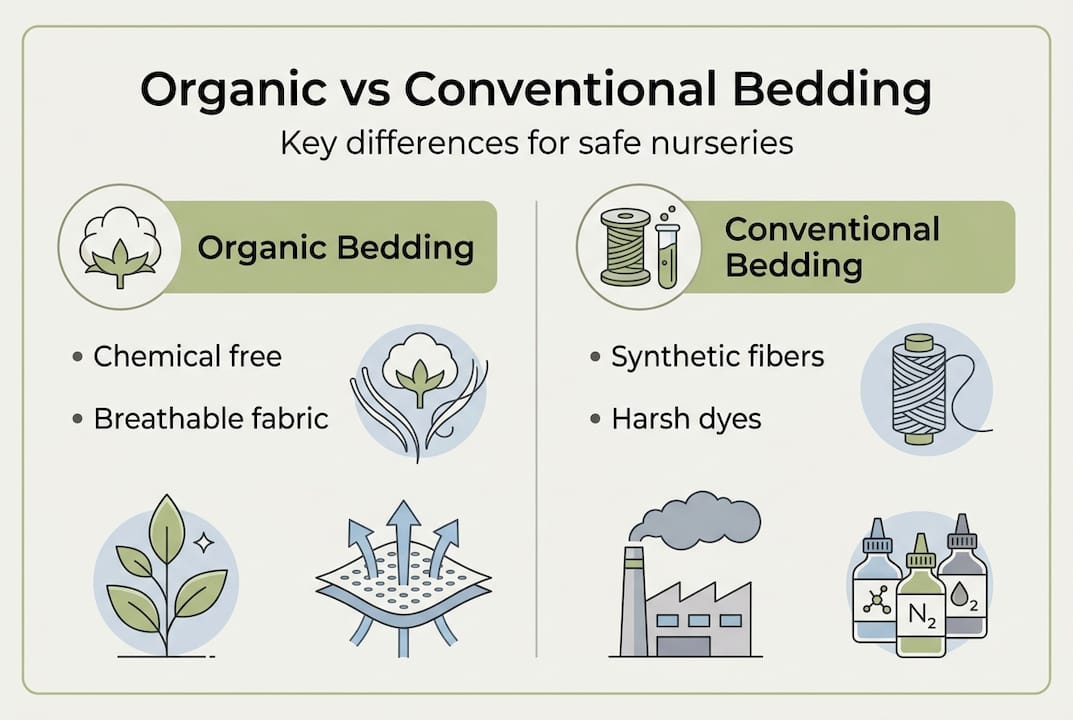
Atmungsaktivitätstests zeigen, dass Bio-Stoffe deutlich mehr Luftzirkulation ermöglichen. Dies ist für die Sicherheit und den Komfort von Säuglingen von enormer Bedeutung. Schlechte Belüftung in synthetischer Bettwäsche kann Kohlendioxid in der Nähe des Babygesichts einschließen und zur Überhitzung beitragen. Natürliche Bio-Fasern erzeugen winzige Luftkanäle, die einen kontinuierlichen Luftstrom fördern und gleichzeitig Weichheit bewahren.
| Merkmal | Bio-Kinderbettwäsche | Herkömmliche Kinderbettwäsche |
|---|---|---|
| Primärmaterialien | Zertifizierte Bio-Baumwolle, Bambus oder Naturfasern | Baumwoll-/Polyestergemische, synthetische Stoffe |
| Chemische Behandlungen | Keine; nur Naturfarbstoffe | Flammschutzmittel, Formaldehyd-Ausrüstungen, synthetische Farbstoffe |
| Allergiepotenzial | Minimal; hypoallergen | Höher aufgrund von Chemikalienrückständen |
| Atmungsaktivität | Hervorragende Luftzirkulation | Begrenzt bei synthetischen Mischungen |
| Anschaffungskosten | Höher (80-200 $ pro Set) | Niedriger (30-80 $ pro Set) |
| Haltbarkeit | Behält die Qualität über 50+ Wäschen | Kann nach 20-30 Wäschen dünner werden oder Pilling aufweisen |
| Umweltbelastung | Nachhaltige Landwirtschaft, biologisch abbaubar | Pestizideinsatz, synthetische Produktion |
Die Kostenanalyse erfordert einen Blick über den Aufkleberpreis hinaus. Bio-Kinderbettwäsche kostet in der Regel mehr, bietet aber erhebliche Sicherheits- und Umweltvorteile gegenüber herkömmlichen Alternativen. Ein hochwertiges Bio-Bettwäsche-Set kostet zwischen 80 und 200 US-Dollar, während herkömmliche Optionen ab etwa 30 US-Dollar erhältlich sind. Die überlegene Haltbarkeit von Bio-Bettwäsche bedeutet jedoch, dass sie zwei- bis dreimal länger hält, was die Ersatzkosten senkt. Die gesundheitlichen Vorteile der Vermeidung von Chemikalienexposition haben einen Wert, der schwer zu quantifizieren ist, aber potenziell medizinische Kosten im Zusammenhang mit Allergien oder Hauterkrankungen einspart.
Die Waschleistung unterscheidet sich dramatisch. Herkömmliche Bettwäsche erfordert oft besondere Pflege, um ein Einlaufen oder Ausbleichen der Farbe zu verhindern. Chemische Behandlungen zerfallen bei wiederholtem Waschen und können Substanzen ins Waschwasser oder auf die Babyhaut freisetzen. Bio-Bettwäsche wird mit jeder Wäsche weicher und behält ihre Farbintegrität ohne besondere Behandlung.
Eltern sollten ihre Prioritäten bei dieser Entscheidung berücksichtigen:
- Wählen Sie Bio, wenn Ihr Baby Anzeichen von Hautempfindlichkeit oder Allergien zeigt.
- Wählen Sie Bio, wenn die Schaffung der gesündesten Kinderzimmerumgebung am wichtigsten ist.
- Erwägen Sie konventionelle Produkte nur, wenn das Budget stark begrenzt ist und das Baby keine Empfindlichkeiten zeigt.
- Berücksichtigen Sie bei Preisvergleichen den langfristigen Wert.
Profi-Tipp: Wenn Budgetgrenzen den sofortigen Kauf von kompletter Bio-Bettwäsche verhindern, priorisieren Sie das Spannbetttuch, da es den direktesten Kontakt mit der Haut des Babys hat, und ersetzen Sie dann schrittweise andere Artikel, wenn die Finanzen es zulassen.
Praktische Tipps zur Auswahl und Pflege von Bio-Kinderbettwäsche
Eine authentische Bio-Zertifizierung unterscheidet echte Produkte von Greenwashing. Die GOTS-Zertifizierung stellt den Goldstandard dar und erfordert mindestens 70 % Bio-Fasern sowie das Verbot von giftigen Farbstoffen, Formaldehyd und anderen schädlichen Substanzen während der gesamten Herstellung. Der OEKO-TEX Standard 100 testet fertige Produkte auf über 300 schädliche Chemikalien und bietet zusätzliche Sicherheit. Eltern sollten Zertifizierungen wie GOTS suchen und Bio-Bettwäsche gemäß den Anweisungen des Herstellers pflegen, um Sicherheit und Qualität zu erhalten.
Die Faserauswahl beeinflusst sowohl die Leistung als auch die Nachhaltigkeit. Bio-Baumwolle bietet die atmungsaktivste und haltbarste Option für die meisten Klimazonen. Bambus bietet von Natur aus antimikrobielle Eigenschaften und außergewöhnliche Weichheit, erfordert jedoch mehr Verarbeitung als Baumwolle. Hanfmischungen bieten eine hervorragende Haltbarkeit, können sich aber anfangs etwas rauer anfühlen. Vermeiden Sie Produkte, die als „natürlich“ oder „umweltfreundlich“ bezeichnet werden, ohne spezifische Bio-Zertifizierungen, da diese Begriffe keine regulatorische Bedeutung haben.
Befolgen Sie diese Schritte beim Kauf von Bio-Kinderbettwäsche:
- Überprüfen Sie die GOTS-, OEKO-TEX- oder USDA Organic-Zertifizierung auf Produktetiketten oder Herstellerwebsites.
- Überprüfen Sie den Fasergehalt, um sicherzustellen, dass mindestens 95 % Bio-Materialien für maximale Vorteile enthalten sind.
- Untersuchen Sie die Stichqualität und Nahtfestigkeit, um die Haltbarkeit zu bestätigen.
- Wählen Sie neutrale oder natürlich gefärbte Farben, um die Chemikalienexposition zu minimieren.
- Kaufen Sie bei Spezialisten für Bio-Babybettwäsche, die die Herkunft und Zertifizierungen überprüfen können.
- Lesen Sie Kundenrezensionen, die sich auf Haltbarkeit und Waschleistung konzentrieren.
- Bestätigen Sie die Rückgaberichtlinien, falls die Bettwäsche die Erwartungen nicht erfüllt.
Die richtige Pflege verlängert die Lebensdauer von Bio-Bettwäsche und erhält ihre hypoallergenen Eigenschaften. Waschen Sie neue Bettwäsche vor dem ersten Gebrauch zweimal, um natürliche Öle zu entfernen und die Weichheit zu maximieren. Verwenden Sie nur milde, parfümfreie Waschmittel, die für Babyartikel formuliert sind. Vermeiden Sie Weichspüler vollständig, da sie Fasern beschichten und die Atmungsaktivität verringern können, während sie potenziell empfindliche Haut reizen. Verzichten Sie auf Bleichmittel, die Bio-Baumwolle abbauen und aggressive Rückstände hinterlassen können.
Die Waschhäufigkeit hängt von den Bedürfnissen Ihres Babys ab. Wechseln Sie die Laken unter normalen Umständen wöchentlich, öfter, wenn das Baby Windelunfälle oder Spucken erlebt. Waschen Sie in warmem Wasser (nicht heiß, da dies Naturfasern schrumpfen lassen kann) und trocknen Sie im Trockner bei niedriger Hitze oder auf der Leine, um die Stoffintegrität zu erhalten. Hohe Hitze schädigt die Struktur von Bio-Baumwolle im Laufe der Zeit.
Die Lagerung ist wichtig, um die Frische zu erhalten. Lagern Sie saubere Bettwäsche in einem trockenen, gut belüfteten Schrank statt in Plastikbehältern, die Feuchtigkeit einschließen. Wechseln Sie zwischen zwei oder drei Sets, um den Verschleiß eines einzelnen Stücks zu reduzieren. Überprüfen Sie die Bettwäsche regelmäßig auf Anzeichen von Ausdünnung oder Beschädigung und ersetzen Sie Artikel, die keine sicheren, bequemen Schlafunterlagen mehr bieten.
Profi-Tipp: Geben Sie monatlich eine halbe Tasse weißen Essig in den Spülgang, um Bio-Bettwäsche auf natürliche Weise weich zu machen und Waschmittelrückstände zu entfernen, ohne die hypoallergenen Eigenschaften oder die Stoffstruktur zu beeinträchtigen.
Entdecken Sie Kollektionen von Bio-Kinderbettwäsche für Ihr Kinderzimmer
Die Schaffung einer sicheren Kinderzimmerumgebung beginnt mit der Auswahl von Bettwäsche, die die Gesundheit Ihres Babys schützt, ohne Kompromisse bei Komfort oder Stil einzugehen. Unsere kuratierte Kollektion von Bio-Kinderbettwäsche-Sets besteht aus GOTS-zertifizierten Materialien, die speziell für die Sicherheit von Säuglingen gefertigt wurden. Jedes Stück kombiniert atmungsaktive Bio-Baumwolle mit durchdachtem Design und bietet personalisierte Stickoptionen, die Ihr Kinderzimmer einzigartig machen.
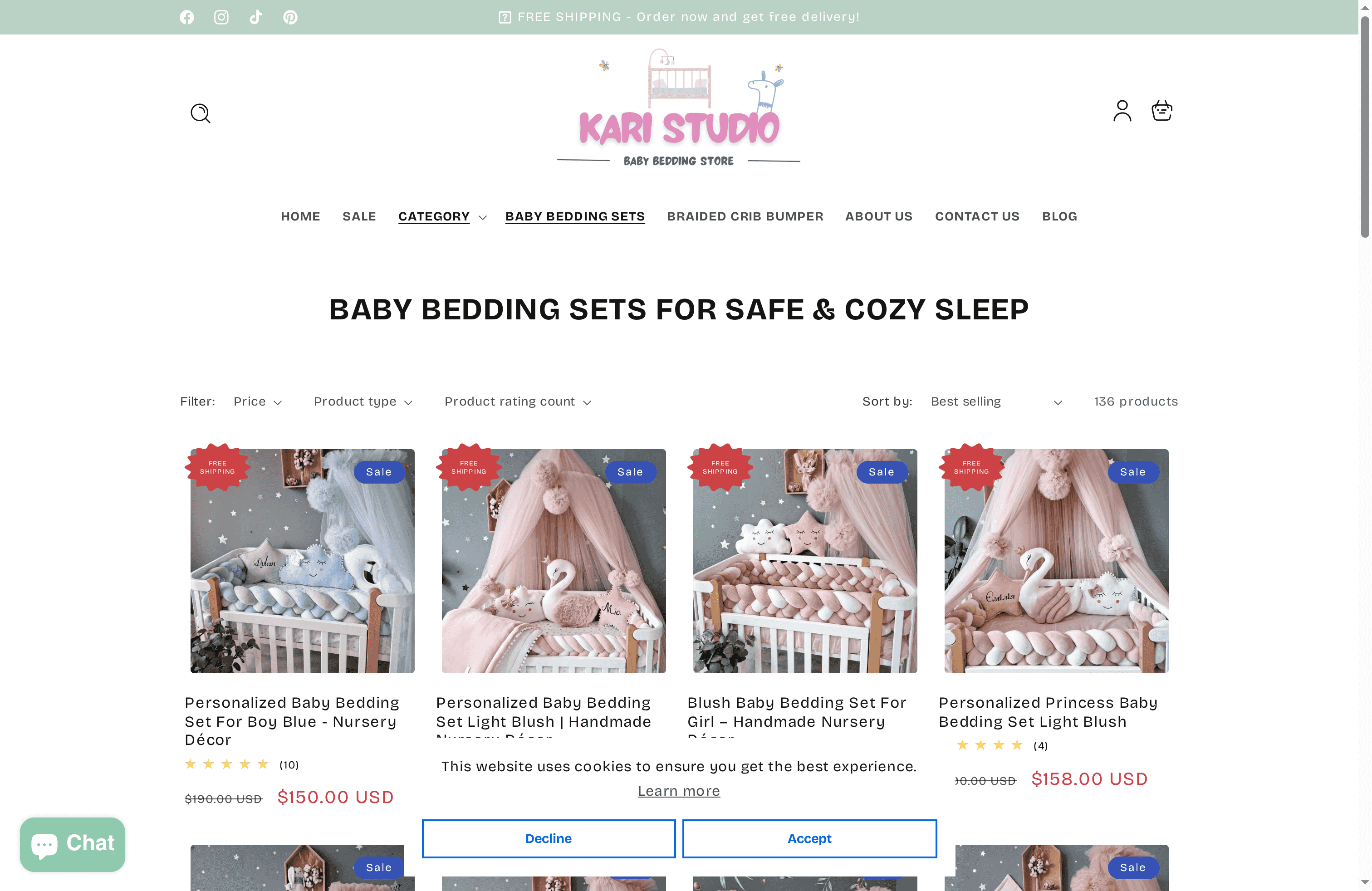
Jedes Bettwäsche-Set wird strengen Sicherheitstests unterzogen und ist bereit, den komfortablen, chemikalienfreien Schlafplatz zu schaffen, den Ihr Baby verdient. Entdecken Sie aktuelle Angebote für Bio-Kinderbettwäsche, um Premiumqualität zu erschwinglichen Preisen zu finden, unterstützt durch unser Engagement für handwerkliche Exzellenz und familienorientiertes Design.
FAQ
Woraus besteht Bio-Kinderbettwäsche?
Bio-Kinderbettwäsche verwendet zertifizierte Bio-Baumwolle, Bambus oder andere natürliche Pflanzenfasern, die ohne synthetische Pestizide, Herbizide oder gentechnisch veränderte Samen angebaut werden. Diese Materialien werden ohne aggressive Chemikalien, Flammschutzmittel oder synthetische Farbstoffe verarbeitet. Die GOTS-Zertifizierung bestätigt sowohl die ökologischen Anbaumethoden als auch den chemikalienfreien Herstellungsprozess. Das Ergebnis ist Bettwäsche, die von Natur aus hypoallergen und sicher für den direkten Kontakt mit der Haut des Säuglings ist.
Wie hilft Bio-Kinderbettwäsche, Allergien zu reduzieren?
Bio-Bettwäsche eliminiert die Exposition gegenüber Pestizidrückständen, synthetischen Farbstoffen und chemischen Behandlungen, die bei empfindlichen Säuglingen häufig allergische Reaktionen auslösen. Naturfasern bieten eine hervorragende Atmungsaktivität, die die Population von Hausstaubmilben und Feuchtigkeitsansammlungen reduziert, zwei wichtige Allergenquellen. Das Fehlen aggressiver Verarbeitungschemikalien bedeutet, dass weniger Hautreizstoffe während des Schlafs mit Ihrem Baby in Kontakt kommen. Viele Eltern berichten von spürbaren Verbesserungen bei Ekzemen und Atemwegssymptomen innerhalb weniger Wochen nach dem Wechsel zu Bio-Bettwäsche.
Ist Bio-Kinderbettwäsche teurer als herkömmliche Bettwäsche?
Bio-Kinderbettwäsche kostet in der Regel 80 bis 200 US-Dollar pro Set, verglichen mit 30 bis 80 US-Dollar für herkömmliche Optionen, was die Kosten für nachhaltige Landwirtschaft und Zertifizierung widerspiegelt. Bio-Bettwäsche hält jedoch aufgrund der überlegenen Faserqualität und Verarbeitung zwei- bis dreimal länger. Die gesundheitlichen Vorteile der Vermeidung von Chemikalienexposition und potenzielle Einsparungen bei Allergiebehandlungen gleichen die höheren Anfangsinvestitionen oft aus. Viele Eltern finden die Gewissheit und den verbesserten Babykomfort den zusätzlichen Kosten wert.
Wie pflege ich Bio-Kinderbettwäsche richtig?
Waschen Sie Bio-Bettwäsche in warmem Wasser mit einem sanften, parfümfreien Waschmittel, das für Babyartikel geeignet ist. Vermeiden Sie Weichspüler und Bleichmittel, die Naturfasern beschädigen. Trocknen Sie sie bei niedriger Temperatur im Wäschetrockner oder an der Luft, um die Gewebeintegrität zu erhalten und ein Einlaufen zu verhindern. Wechseln Sie die Bettwäsche unter normalen Umständen wöchentlich, bei Bedarf aus hygienischen Gründen häufiger. Das monatliche Hinzufügen von weißem Essig zum Spülgang hilft, die Weichheit auf natürliche Weise zu erhalten, ohne die hypoallergenen Eigenschaften zu beeinträchtigen.
Empfohlen
- Kinderbettwäsche-Materialien erklärt: Sichere, weiche Auswahl
- Kinderbettwäsche vs. Decken: 5x geringeres SIDS-Risiko mit sicheren Sets
- Fehler beim Aufbau des Kinderbetts vermeiden für ein sicheres Babyzimmer
- Wie moderne Sicherheitsstandards die Auswahl von Babybettwäsche und -accessoires beeinflussen - kari-studio.com