
Over half of American parents feel uncertain about when and how to start solid foods with their baby. This transition stands out as a crucial step in your child’s growth, laying the foundation for lifelong eating habits and health. By clarifying feeding milestones and highlighting signs of readiness, this guide makes it easier to support your infant’s nutritional journey with confidence.
Table of Contents
- Defining Solid Foods And Feeding Milestones
- Recognizing Signs Your Baby Is Ready
- Best First Foods For Infants Explained
- Safety Precautions And Allergy Prevention
- Common Mistakes And How To Avoid Them
Key Takeaways
| Point | Details |
|---|---|
| Introduction of Solid Foods | Solid foods should be introduced around 6 months when infants show readiness signs like head control and interest in food. |
| First Foods Selection | Prioritize nutrient-dense, single-ingredient foods like iron-fortified cereals and pureed vegetables for healthy growth. |
| Safety Precautions | Avoid potential allergens initially and ensure safe feeding practices to prevent choking and allergic reactions. |
| Monitoring Development | Track feeding milestones and reactions to new foods to accurately assess and support your infant’s nutritional readiness. |
Defining Solid Foods and Feeding Milestones
Understanding the transition to solid foods represents a significant milestone in an infant’s nutritional journey. Solid foods are defined as any nutritional substances beyond breast milk or infant formula, typically introduced around 6 months of age when babies demonstrate specific developmental readiness markers.
The key developmental milestones for introducing solid foods involve physical and neurological capabilities that ensure safe eating. According to pediatric experts, infants should exhibit three primary indicators of readiness: - Ability to sit upright with minimal support- Strong head and neck muscle control- Demonstrated interest in food during family mealtimes
Physiological preparedness goes beyond simple physical positioning. Babies must develop sufficient oral motor skills to manage different food textures, move food safely within their mouth, and coordinate swallowing mechanisms. The transition typically begins with soft, pureed foods that are easily digestible and minimize choking risks. Recommended first foods often include:
- Mashed banana
- Pureed sweet potato
- Rice cereal
- Soft cooked vegetables
- Smooth infant oatmeal
Parents should approach solid food introduction as a gradual, patient process that respects each infant’s unique developmental timeline. Careful observation and gentle encouragement help create positive eating experiences that support nutritional growth.
Pro Tip for New Parents: Introduce one new food at a time and wait 3-5 days between offerings to monitor potential allergic reactions, allowing you to identify specific food sensitivities quickly and safely.
Recognizing Signs Your Baby Is Ready
Identifying the precise moment for introducing solid foods requires careful observation of your infant’s developmental milestones. Pediatric experts emphasize that readiness goes far beyond simple age recommendations and involves multiple physical and neurological indicators.
The core physical signs of solid food readiness include: - Strong head and neck control- Ability to sit upright with minimal support- Demonstrated trunk stability- Decreased tongue-thrust reflex which previously protected against choking
Infant developmental specialists suggest watching for specific behavioral cues that signal nutritional preparedness. These behavioral markers typically manifest around 4-6 months and include:
- Active interest in family mealtimes
- Watching others eat with clear curiosity
- Opening mouth when food approaches
- Reaching for food or utensils
- Ability to transfer objects to mouth independently
Parents should understand that every infant develops differently, and these signs represent general guidelines rather than strict rules. Some babies might show readiness earlier or later than the typical 6-month window. Consulting with a pediatrician remains the most reliable approach to determining individual feeding readiness.
Here’s a quick reference to common solid food readiness signs and their significance:
| Readiness Sign | Why It Matters | Typical Age Observed |
|---|---|---|
| Strong head and neck control | Prevents choking and supports sitting | Around 4-6 months |
| Sits with minimal support | Allows safe swallowing and eating | Around 6 months |
| Decreased tongue-thrust reflex | Reduces push-out of new textures | Around 4-7 months |
| Shows curiosity at meals | Indicates cognitive and sensory readiness | 4-6 months |
| Transfers items to mouth | Shows hand-mouth coordination | 5-6 months |
Pro Tip for Careful Parents: Document your baby’s developmental milestones in a journal, tracking physical abilities and behavioral changes to help identify solid food readiness with confidence and precision.
Best First Foods for Infants Explained
Navigating the world of infant nutrition requires careful selection of first foods that support healthy development and nutritional needs. Pediatric nutrition experts recommend a strategic approach to introducing solid foods, focusing on nutrient-dense options that promote growth and minimize potential allergic reactions.
The foundational first foods for infants typically include:
- Iron-fortified infant cereals: Critical for supporting brain development
- Pureed single-ingredient vegetables
- Soft fruits with smooth textures
- Pureed lean meats rich in essential proteins
- Mild-flavored legumes and beans
Pediatric nutritionists emphasize the importance of single-ingredient introductions to help identify potential food sensitivities. This methodical approach allows parents to:
- Track potential allergic reactions
- Understand individual taste preferences
- Gradually expand dietary variety
- Build a comprehensive understanding of infant nutritional responses
Parents should prioritize nutrient-dense, minimally processed foods that support developmental milestones. Avoid added sugars, excessive salt, and complex combinations during initial solid food stages. Each infant’s nutritional journey is unique, requiring patience and careful observation.
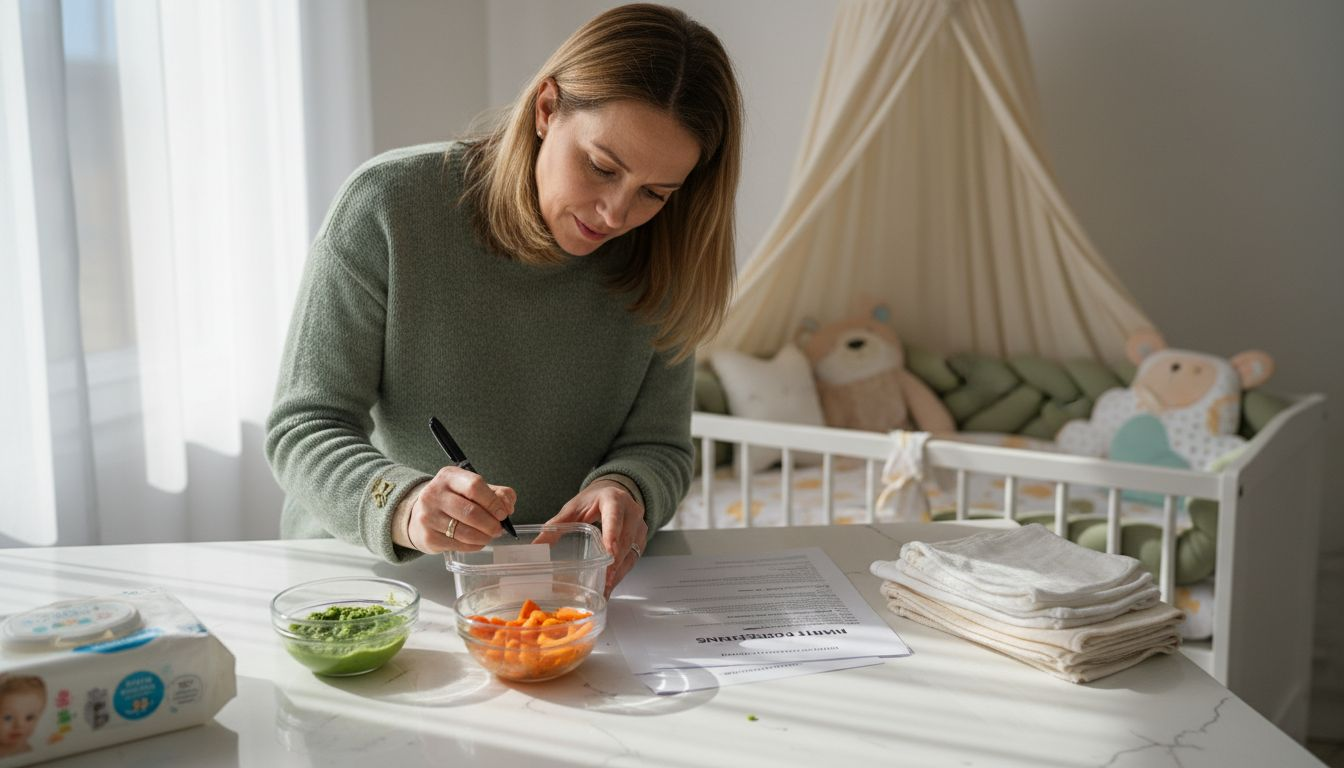
Pro Tip for Mindful Feeding: Introduce new foods during daytime hours when medical support is readily available, and wait 3-5 days between new food introductions to effectively monitor potential allergic responses.
Safety Precautions and Allergy Prevention
Understanding infant food safety demands a comprehensive approach that protects babies from potential health risks while supporting their nutritional development. Pediatric experts emphasize a systematic method of introducing new foods that minimizes allergic reactions and choking hazards.
Critical safety guidelines for infant feeding include:
- Avoid honey before 12 months due to botulism risk
- Never introduce cow’s milk as a primary drink before age 1
- Cut foods into small, manageable pieces
- Always supervise infant feeding
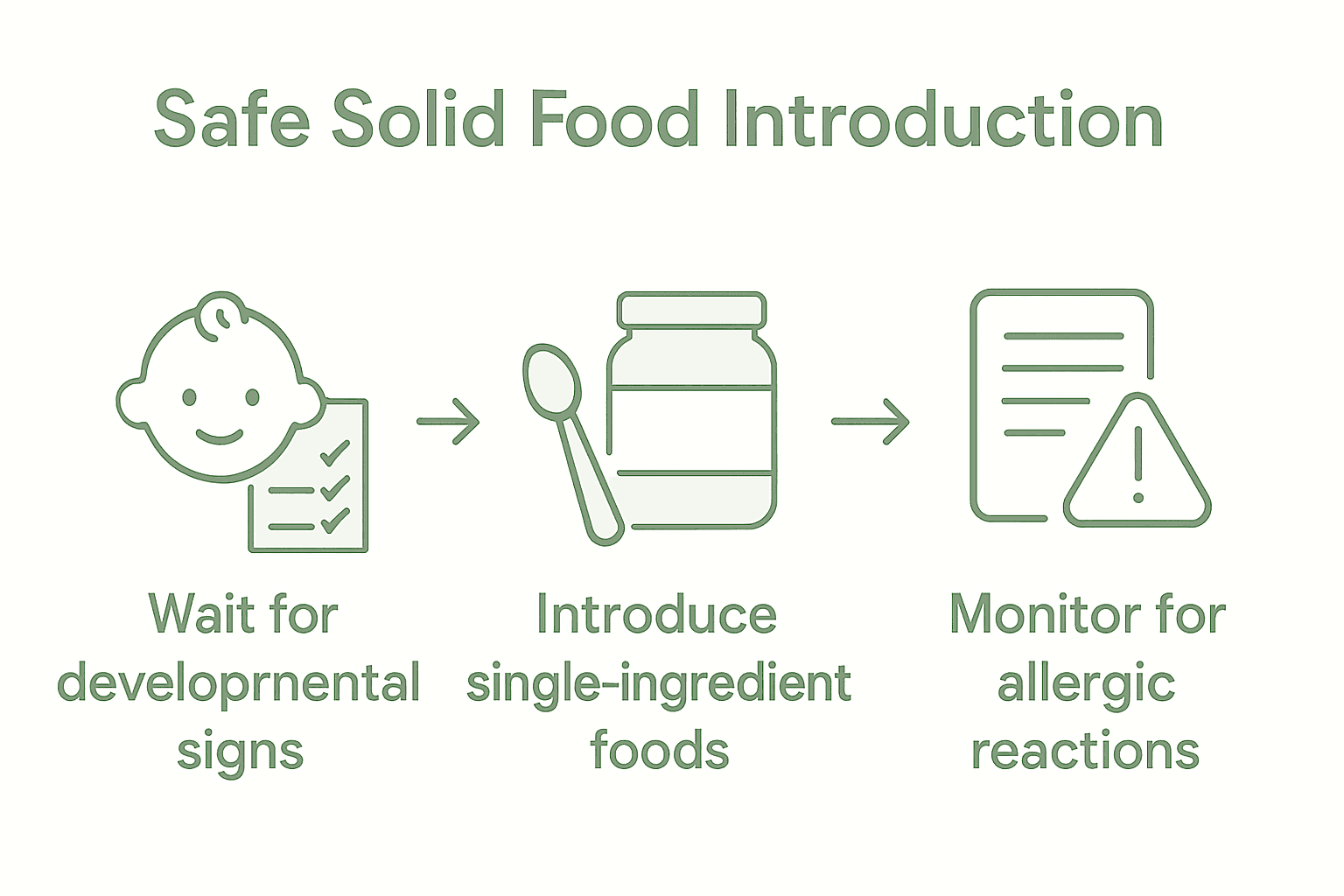
- Introduce potential allergens gradually and individually
Pediatric nutritionists recommend a strategic approach to allergy prevention that involves:
- Introducing potential allergens early (like peanuts and eggs)
- Waiting 3-5 days between new food introductions
- Watching carefully for allergic symptoms
- Keeping a detailed food introduction log
- Consulting pediatricians about family allergy history
Parents should remain vigilant about choking risks, ensuring foods are appropriately soft and cut into tiny pieces. Texture matters significantly. Purees, mashed foods, and finely chopped items reduce the likelihood of airway obstruction. Always prioritize infant safety by creating a calm, supervised eating environment.
Pro Tip for Careful Parents: Create a dedicated feeding space with good lighting and minimal distractions, allowing you to closely monitor your infant’s first solid food experiences and quickly respond to any potential issues.
Common Mistakes and How to Avoid Them
Understanding potential pitfalls in infant nutrition requires careful attention to detail and proactive parental education. Pediatric experts highlight several critical mistakes that can compromise infant health and nutritional development.
Common feeding mistakes parents should avoid include:
- Introducing solid foods before 4 months of age
- Feeding directly from storage jars (risking bacterial contamination)
- Offering foods with high choking potential
- Adding unnecessary sugars or salt to infant meals
- Ignoring potential allergic reaction signs
Nutritional safety guidelines emphasize systematic food introduction strategies to minimize risks. Specific precautions parents should implement:
- Always use clean feeding utensils
- Transfer small portions to separate dishes
- Cut foods into age-appropriate sizes
- Observe infant’s reaction to each new food
- Maintain a consistent feeding schedule
Parents must recognize that every infant develops differently. Patience, careful observation, and professional medical guidance are essential in navigating the complex landscape of infant nutrition. Avoiding rushed or assumptions can prevent potential health complications and support healthy developmental outcomes.
The following table summarizes key feeding mistakes vs. safer alternatives:
| Common Mistake | Safer Alternative | Benefit of Safer Choice |
|---|---|---|
| Feeding before 4 months | Wait until developmental readiness | Reduces allergy and choking risks |
| Feeding directly from storage jars | Use a separate dish for feeding | Prevents bacterial growth |
| Offering high-choking-risk foods | Serve pureed or finely chopped items | Lowers risk of airway obstruction |
| Adding salt or sugar | Use only natural flavors | Supports healthy taste preference |
| Ignoring allergic reaction signs | Document and track all new foods | Enables rapid allergy recognition |
Pro Tip for Mindful Parents: Create a dedicated food introduction journal to track new foods, timing, and any observed reactions, providing a comprehensive record for pediatric consultations.
Create a Safe and Cozy Nursery for Your Baby’s First Foods
Introducing solid foods is an exciting yet sometimes challenging milestone that calls for creating the safest and most comfortable environment for your infant. The article highlights how crucial it is to watch for your baby’s readiness signs and ensure safety throughout feeding. As you navigate these early feeding stages, your nursery should reflect the same care and attention with hypoallergenic, soft, and protective essentials.
Discover how Kari Studio’s baby bedding sets and handcrafted braided crib bumpers provide a cozy, germ-free space that supports your baby’s developmental milestones. Our products are designed to reduce allergens and provide gentle protection during mealtimes and play.

Start building a nurturing atmosphere today with our personalized nursery essentials that combine comfort and safety. Visit Kari Studio’s collection now to find unique designs that match your nursery style and meet your infant’s growing needs.
Frequently Asked Questions
When should I start introducing solid foods to my baby?
Solid foods are typically introduced around 6 months of age when babies show signs of developmental readiness, such as strong head and neck control and an ability to sit upright with minimal support.
What are the signs that my baby is ready for solid foods?
Look for signs like strong head and neck control, sitting with minimal support, decreased tongue-thrust reflex, and an active interest in family meals.
What are some recommended first foods to introduce to my infant?
Some recommended first foods for infants include iron-fortified infant cereals, pureed single-ingredient vegetables, soft fruits, pureed lean meats, and mild-flavored legumes.
How can I prevent allergic reactions when introducing new foods?
To minimize allergic reactions, introduce one new food at a time and wait 3-5 days before offering another. Monitor for any signs of allergies during this period.