Más de 1,400 bebés estadounidenses pierden la vida cada año a causa del Síndrome de Muerte Súbita del Lactante (SMSL), dejando a innumerables familias en busca de respuestas y tranquilidad. Para los padres primerizos y los que esperan un hijo en Estados Unidos, las preocupaciones sobre la prevención del SMSL definen cada decisión relacionada con la habitación del bebé, desde la elección de la ropa de cama hasta las rutinas de sueño. Esta guía le permitirá conocer los criterios médicos, desmentir mitos comunes y descubrir opciones de ropa de cama seguras y de primera calidad que favorecen un entorno de sueño seguro para su bebé.
Índice de contenidos
- Definición del SMSL: criterios médicos y conceptos erróneos
- Factores de riesgo clave relacionados con el SMSL
- Entornos de sueño seguros para bebés
- Últimas estadísticas y tendencias del SMSL en EE. UU.
- Mejores prácticas para reducir el riesgo de SMSL
- Elecciones de ropa de cama y habitación para la prevención del SMSL
Puntos clave
| Punto | Detalles |
|---|---|
| Definición del Síndrome de Muerte Súbita del Lactante (SMSL) | El SMSL se define como la muerte inexplicable de un lactante menor de un año, diagnosticada solo tras descartar otras causas. |
| Factores de riesgo principales | Los riesgos importantes incluyen una posición inadecuada al dormir, ropa de cama blanda y la exposición al humo del tabaco. |
| Prácticas de sueño seguro | Los bebés siempre deben dormir boca arriba, en una cuna firme y sin ropa de cama suelta para reducir el riesgo de SMSL. |
| Importancia de la educación continua | La educación y la concienciación continuas son cruciales, especialmente entre las poblaciones de mayor riesgo, para reducir eficazmente las tasas de SMSL. |
Definición del SMSL: criterios médicos y conceptos erróneos
El Síndrome de Muerte Súbita del Lactante (SMSL) representa uno de los fenómenos médicos más complejos y emocionalmente difíciles a los que se enfrentan los padres primerizos. Las definiciones médicas del SMSL lo describen como la muerte repentina e inexplicable de un bebé menor de un año, que permanece sin resolver incluso después de una investigación exhaustiva, que incluye una autopsia completa, el examen de la escena del fallecimiento y una revisión detallada del historial clínico.
La complejidad central del SMSL reside en su naturaleza misteriosa. A diferencia de otras causas de mortalidad infantil con vías médicas claras, el SMSL ocurre sin previo aviso y desafía toda explicación científica inmediata. Los profesionales médicos lo caracterizan como un diagnóstico por exclusión, lo que significa que todas las demás causas potenciales de muerte infantil deben descartarse sistemáticamente antes de que se pueda confirmar el SMSL. Este riguroso proceso de investigación distingue al SMSL de otras muertes infantiles súbitas inesperadas, lo que destaca la posición médica única de este síndrome.
Los conceptos erróneos comunes sobre el SMSL a menudo se derivan de la falta de comprensión de sus criterios médicos específicos. Los padres pueden creer erróneamente que el SMSL se puede prevenir mediante una monitorización constante o que está relacionado con factores ambientales específicos. Sin embargo, las investigaciones médicas actuales sugieren que el SMSL implica interacciones complejas entre las vulnerabilidades del desarrollo del bebé y las condiciones del entorno externo donde duerme. Estas interacciones pueden incluir desafíos fisiológicos en el control respiratorio del tronco encefálico, predisposiciones genéticas subyacentes y riesgos específicos relacionados con la posición al dormir.
Consejo profesional: Consulte a su pediatra sobre la creación de una estrategia integral de sueño seguro adaptada a las necesidades de desarrollo y a los factores de riesgo específicos de su bebé.
Factores de riesgo clave relacionados con el SMSL
Comprender los factores de riesgo asociados con el Síndrome de Muerte Súbita del Lactante (SMSL) es crucial para los padres que buscan proteger a sus bebés. Estudios epidemiológicos integrales han identificado múltiples factores de riesgo críticos que pueden aumentar la vulnerabilidad de un bebé a este devastador síndrome.
La posición al dormir surge como uno de los determinantes de riesgo más importantes. Los bebés colocados en posición prona (boca abajo) o de lado enfrentan riesgos de SMSL drásticamente mayores en comparación con dormir boca arriba. Los factores de riesgo ambientales adicionales incluyen la ropa de cama blanda, que puede obstruir la respiración, y compartir la cama, lo que aumenta potencialmente las posibilidades de asfixia. La exposición al humo del tabaco representa otro riesgo sustancial, ya que puede comprometer los sistemas respiratorio y cardiovascular del bebé, reduciendo su capacidad para responder ante posibles dificultades respiratorias.
Los factores genéticos y del desarrollo también desempeñan un papel complejo en la susceptibilidad al SMSL. Los bebés prematuros y aquellos con bajo peso al nacer demuestran una mayor vulnerabilidad, probablemente debido a sistemas neurológicos inmaduros que tienen dificultades para regular la respiración y el ritmo cardíaco de manera efectiva. Aunque algunos factores de riesgo no pueden eliminarse por completo, los padres pueden mitigar significativamente los peligros potenciales mediante prácticas de sueño informadas. Comprender que el SMSL implica interacciones complejas entre el desarrollo fisiológico del bebé y las condiciones ambientales puede ayudar a las familias a tomar decisiones proactivas basadas en evidencia.
Aquí hay un resumen de los principales factores de riesgo del SMSL y cómo interactúan:
| Factor de riesgo | Tipo | Cómo aumenta el riesgo |
|---|---|---|
| Posición al dormir | Ambiental | Dormir boca abajo/de lado aumenta la asfixia |
| Ropa de cama blanda | Ambiental | Puede obstruir la respiración |
| Exposición al humo del tabaco | Ambiental | Daña el sistema respiratorio |
| Nacimiento prematuro | Genético/Desarrollo | Control respiratorio inmaduro |
| Bajo peso al nacer | Genético/Desarrollo | Corazón/pulmones subdesarrollados |
| Predisposiciones genéticas | Genético | Vulnerabilidad potencial al SMSL |
Consejo profesional: Cree un entorno de sueño constante y seguro colocando siempre a su bebé boca arriba, usando un colchón firme y evitando ropa de cama suelta u objetos blandos en la cuna.
Entornos de sueño seguros para bebés
Crear un entorno de sueño seguro es fundamental para reducir el riesgo de Síndrome de Muerte Súbita del Lactante (SMSL). Las recomendaciones integrales para un sueño seguro brindan una orientación crítica para que los padres protejan a sus bebés vulnerables durante el sueño.
La base de un entorno de sueño seguro comienza con la posición adecuada para dormir y la selección de la superficie. Los bebés siempre deben colocarse boca arriba sobre un colchón firme con una sábana ajustable, eliminando cualquier ropa de cama blanda, almohadas, juguetes o protectores de cuna que puedan obstruir potencialmente la respiración. Se recomienda encarecidamente compartir la habitación pero no la cama, ya que permite a los cuidadores vigilar al bebé de cerca mientras se evitan escenarios peligrosos de colecho que aumentan los riesgos de asfixia.
La temperatura y la calidad del aire desempeñan un papel importante en la creación de un espacio para dormir seguro. Los padres deben mantener una temperatura ambiente fresca y vestir a los bebés con ropa de dormir ligera y transpirable para evitar el sobrecalentamiento. Garantizar un entorno completamente libre de humo es crucial, ya que la exposición al humo de segunda mano puede aumentar drásticamente el riesgo de SMSL. La ventilación, el mantenimiento de niveles de humedad adecuados y el uso de un ventilador para mejorar la circulación del aire pueden contribuir aún más a un entorno de sueño más seguro que apoye la salud respiratoria del bebé.
Consejo profesional: Invierta en un termómetro para la habitación e intente mantenerla entre 20 y 22 grados Celsius (68 a 72 grados Fahrenheit), usando sacos de dormir ligeros en lugar de mantas para regular la temperatura corporal de su bebé.
Últimas estadísticas y tendencias del SMSL en EE. UU.
El Síndrome de Muerte Súbita del Lactante (SMSL) sigue siendo una preocupación crítica de salud pública en los Estados Unidos, con datos epidemiológicos recientes que revelan aproximadamente 1,400 muertes específicas por SMSL al año, lo que contribuye a un panorama más amplio de casi 3,400 muertes infantiles súbitas e inesperadas a nivel nacional.
La trayectoria de las tasas de SMSL ha estado marcada por un progreso significativo y desafíos continuos. La emblemática campaña "Back to Sleep" (Dormir boca arriba) de la década de 1990 redujo drásticamente las tasas de mortalidad infantil al promover la posición boca arriba y aumentar la concienciación sobre las prácticas de sueño seguro. Sin embargo, las tendencias recientes indican una preocupante estabilización en el progreso, lo que sugiere que la educación continua y las intervenciones específicas son esenciales para reducir aún más los riesgos de mortalidad infantil.
Las disparidades demográficas siguen siendo pronunciadas en las estadísticas de SMSL. Los bebés afroamericanos y nativos americanos siguen experimentando tasas de SMSL desproporcionadamente más altas en comparación con otros grupos de población, lo que destaca la necesidad de una educación sobre sueño seguro culturalmente sensible y estrategias de salud pública específicas. Los factores socioeconómicos, el acceso a la atención médica y los factores de riesgo específicos de la comunidad desempeñan papeles cruciales en estas disparidades persistentes, lo que subraya la importancia de enfoques de prevención integrales y centrados en la comunidad.
Consejo profesional: Manténgase informado sobre los recursos locales de salud infantil y participe en programas de salud comunitaria que brinden educación gratuita sobre el sueño seguro y apoyo para las familias en riesgo.
Mejores prácticas para reducir el riesgo de SMSL
Reducir el riesgo de Síndrome de Muerte Súbita del Lactante (SMSL) requiere un enfoque integral que integre múltiples estrategias basadas en evidencia. Las mejores prácticas de la investigación médica proporcionan una hoja de ruta clara para que los padres creen un entorno de sueño más seguro para sus bebés.
Las medidas preventivas críticas se centran en la posición al dormir y el entorno. Los bebés siempre deben colocarse boca arriba durante el sueño, utilizando una superficie de sueño firme y separada con una sábana ajustable. Se recomienda compartir la habitación sin compartir la cama, lo que permite una supervisión estrecha mientras se evitan escenarios peligrosos de colecho. Las estrategias de protección adicionales incluyen la lactancia materna constante, el uso de chupetes durante las siestas y la noche, y garantizar esquemas de vacunación completos. Los padres también deben crear un entorno libre de humo y evitar exponer a los bebés al alcohol o sustancias ilícitas que puedan comprometer su desarrollo respiratorio y neurológico.
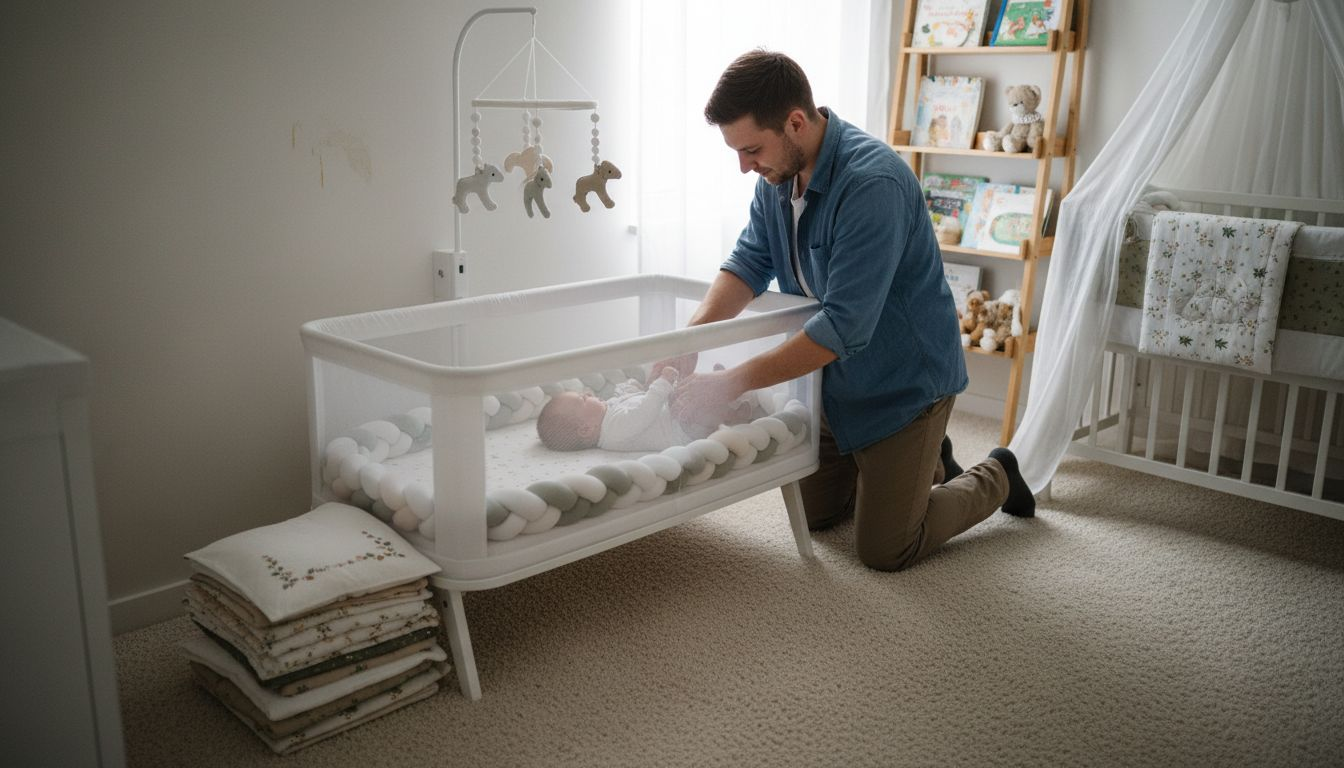
El envolver al bebé (swaddling) y el control de la temperatura requieren una atención cuidadosa. Aunque envolver al bebé puede proporcionar comodidad, debe hacerse con precaución, considerando la edad y la movilidad del bebé. El sobrecalentamiento aumenta el riesgo de SMSL, por lo que los padres deben vestir a los bebés con ropa ligera y mantener una temperatura ambiente cómoda. La atención prenatal regular, mantener un embarazo saludable y evitar que la madre fume durante el embarazo pueden reducir aún más la vulnerabilidad del bebé al SMSL.
Consejo profesional: Cree una rutina constante antes de acostarse que priorice las prácticas de sueño seguro e invierta en un termómetro para la habitación para ayudar a mantener las condiciones óptimas para el sueño del bebé.
Elecciones de ropa de cama y habitación para la prevención del SMSL
Crear un entorno de sueño seguro requiere seleccionar cuidadosamente los elementos de la habitación del bebé que minimicen los riesgos asociados con el Síndrome de Muerte Súbita del Lactante (SMSL). Las pautas pediátricas integrales brindan información crucial sobre las elecciones de ropa de cama y de habitación que pueden reducir significativamente los riesgos de mortalidad infantil.
La base de un espacio de sueño seguro para bebés comienza con la selección del colchón y la ropa de cama adecuados. Los padres deben usar un colchón firme cubierto solo con una sábana ajustable, evitando por completo la ropa de cama blanda, almohadas, edredones, protectores de cuna y juguetes de peluche que pueden crear riesgos de asfixia. Las mantas portátiles y los sacos de dormir ofrecen una alternativa más segura a las mantas tradicionales, proporcionando calor sin el riesgo de cubrir la cara del bebé o crear peligros de enredo. La regulación de la temperatura es igualmente crítica, y el entorno de la habitación del bebé requiere un control cuidadoso para evitar el sobrecalentamiento, que es un factor de riesgo conocido del SMSL.
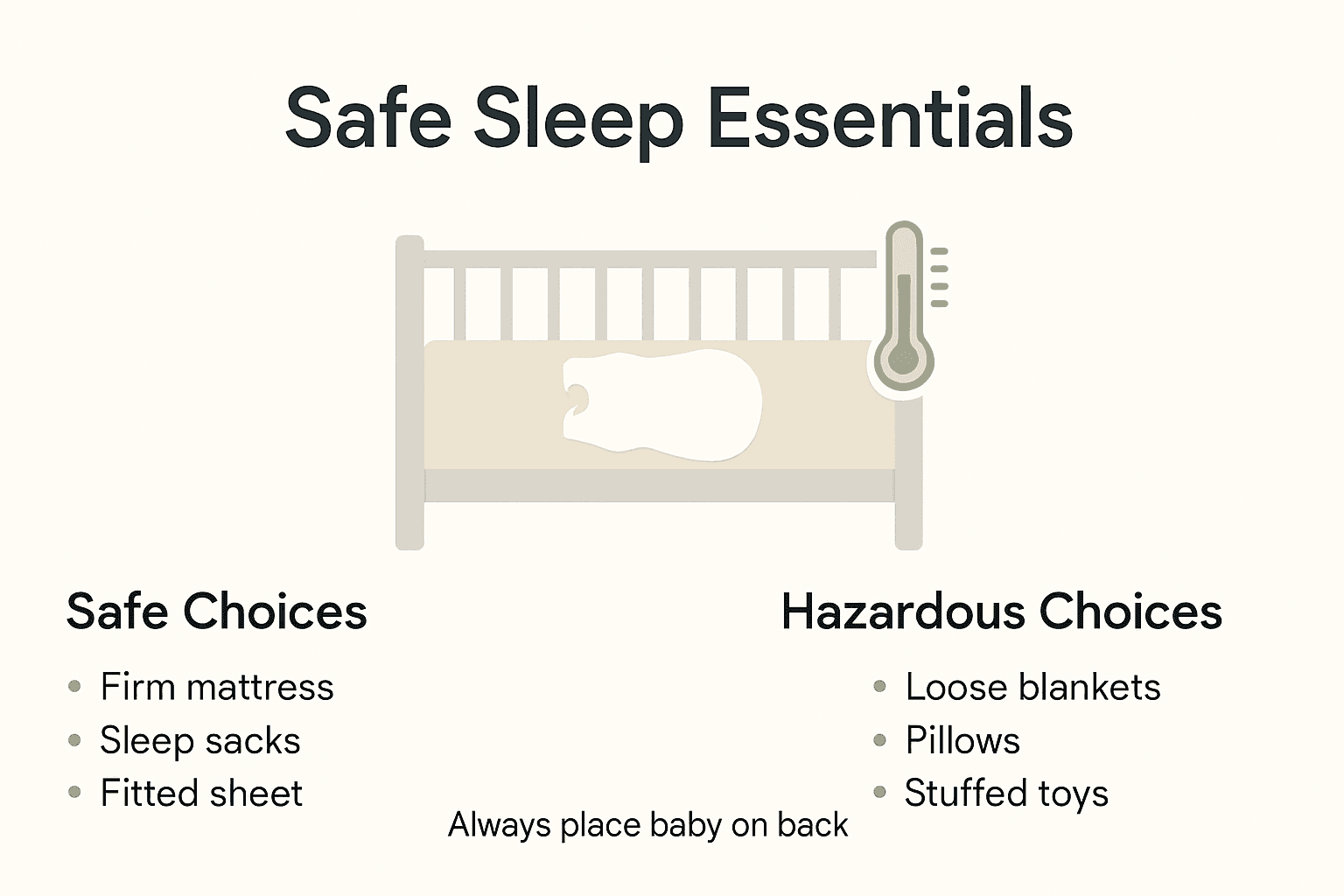
Como contexto, aquí hay una comparación de las elecciones típicas para la habitación del bebé entre opciones seguras y opciones peligrosas:
| Elemento de la habitación | Opción segura | Opción peligrosa |
|---|---|---|
| Colchón | Firme, solo con sábana ajustable | Blando, con cubierta de almohada, fundas sueltas |
| Ropa de cama | Saco de dormir, manta portátil | Edredones sueltos, mantas |
| Accesorios de cuna | Sin juguetes, sin protectores | Juguetes de peluche, protectores de cuna |
| Temperatura de la habitación | 20-22°C, telas transpirables | Sobrecalentada, capas pesadas |
Las elecciones de materiales y diseño también juegan un papel importante en la seguridad de la habitación. Las telas transpirables e hipoalergénicas pueden ayudar a mantener una temperatura óptima y reducir los irritantes respiratorios. Colocar la cuna lejos de ventanas, cables eléctricos y otros peligros potenciales minimiza aún más los riesgos. Además, mantener un entorno libre de humo y garantizar una circulación de aire adecuada son componentes esenciales para crear un espacio de sueño seguro que respalde la salud del bebé y reduzca la vulnerabilidad al SMSL.
Consejo profesional: Invierta en un termómetro para la habitación y varios sacos de dormir ligeros para mantener temperaturas constantes y seguras para el sueño de su bebé.
Cree una habitación segura y acogedora con Kari Studio
Comprender la importancia crítica de un entorno de sueño seguro para su bebé es el primer paso para reducir el riesgo de SMSL. Este artículo destaca factores clave como colchones firmes, ropa de cama transpirable y la eliminación de objetos blandos que pueden obstruir la respiración del bebé. Si desea transformar la habitación de su bebé en un espacio enriquecedor que respalde estas prácticas de sueño seguro, Kari Studio ofrece conjuntos de ropa de cama para bebés hechos a mano, diseñados pensando en la seguridad y la comodidad. Nuestras telas hipoalergénicas y opciones personalizables le permiten personalizar la habitación de su bebé mientras se asegura de que cumpla con los más altos estándares de seguridad.
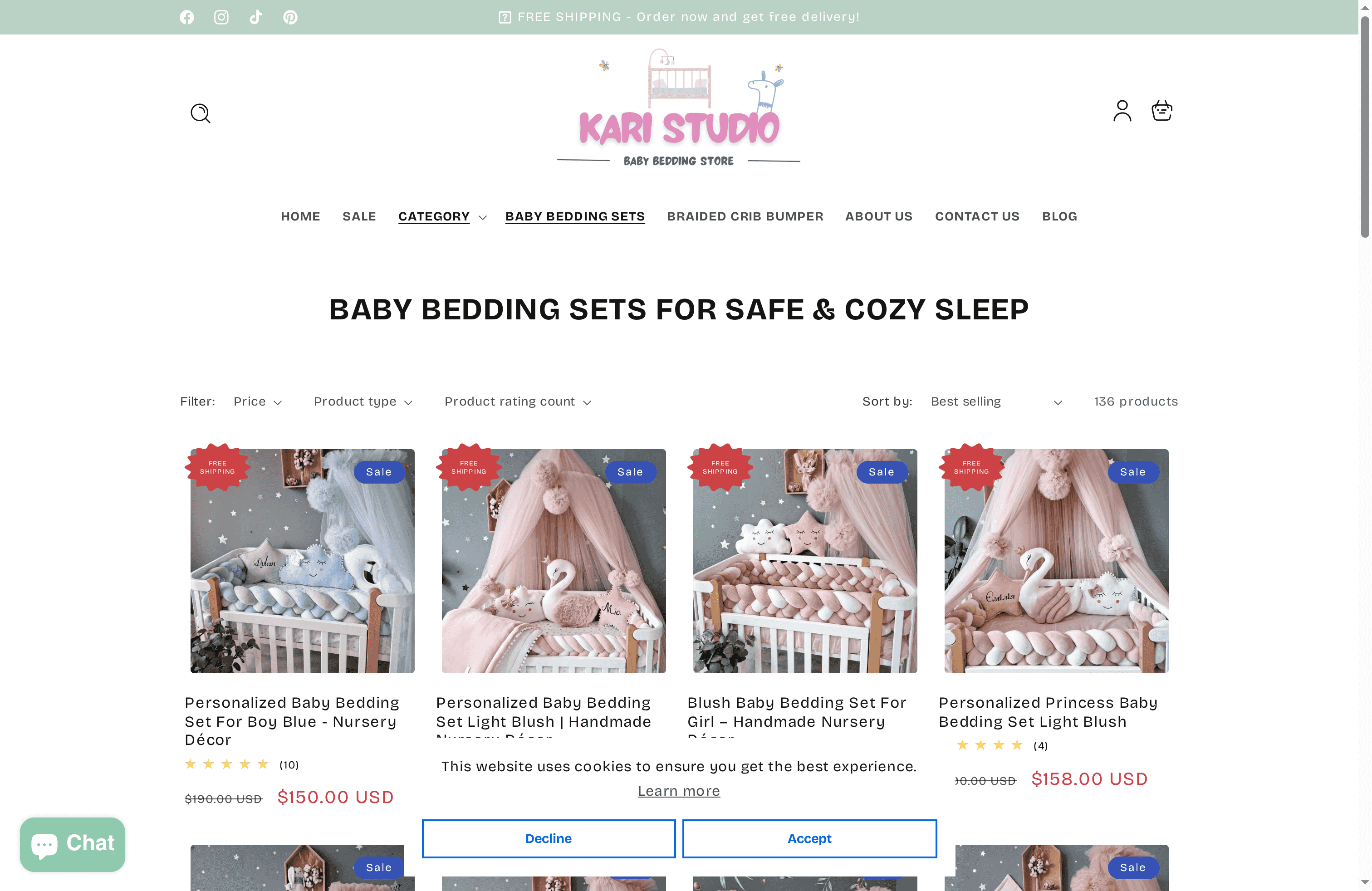
Explore nuestra colección premium y descubra cómo nuestros protectores de cuna trenzados, protectores de rieles y sacos de dormir pueden ayudar a crear un área de sueño segura y pacífica para su bebé. Visite la colección de conjuntos de ropa de cama para bebés para comenzar a personalizar su habitación hoy mismo. Actúe ahora para invertir en el bienestar de su hijo y disfrute de envío internacional en nuestros artículos esenciales para la habitación del bebé, bellamente elaborados.
Preguntas frecuentes
¿Qué es el Síndrome de Muerte Súbita del Lactante (SMSL)?
El SMSL es la muerte repentina e inexplicable de un bebé menor de un año, que ocurre típicamente durante el sueño. Se caracteriza como un diagnóstico por exclusión, lo que significa que todas las demás causas potenciales deben descartarse antes de que se pueda confirmar el SMSL.
¿Cuáles son algunos factores de riesgo clave para el SMSL?
Los factores de riesgo clave incluyen la posición al dormir (colocar a los bebés boca abajo o de lado), ropa de cama blanda, exposición al humo del tabaco, nacimiento prematuro, bajo peso al nacer y predisposiciones genéticas.
¿Cómo puedo crear un entorno de sueño seguro para mi bebé?
Para crear un entorno de sueño seguro, coloque a su bebé boca arriba sobre un colchón firme con una sábana ajustable, evite la ropa de cama blanda y los juguetes en la cuna, y garantice un entorno libre de humo. También se recomienda compartir la habitación sin compartir la cama.
¿Cuáles son las mejores prácticas para reducir el riesgo de SMSL?
Las mejores prácticas incluyen colocar siempre al bebé boca arriba para dormir, usar ropa de cama firme, evitar el colecho, mantener un entorno libre de humo y seguir las pautas de sueño seguro, como envolver al bebé correctamente y controlar la temperatura de la habitación.