Jede Mutter und jeder Vater kennt diesen Moment, in dem die Auswahl der Bettwäsche für das Kinderbett gleichermaßen aufregend wie verunsichernd ist. Die richtigen Materialien bedeuten mehr als nur Komfort – sie schützen Ihr Neugeborenes vor vermeidbarer chemischer Belastung und reduzieren gemäß den Empfehlungen der American Academy of Pediatrics das Erstickungsrisiko. Bei der Vielzahl an verfügbaren Optionen hilft Ihnen das Wissen darüber, welche Stoffe hypoallergenen Schutz und optische Attraktivität am besten vereinen, ein stilvolles Kinderzimmer zu gestalten, das gleichzeitig sicher für den zarten Start Ihres Babys ist.
Inhaltsverzeichnis
- Was macht Materialien für Kinderbettwäsche sicher?
- Vergleich der Stoffarten für Kinderbettwäsche
- Hauptmerkmale: Atmungsaktivität, Hypoallergenität und Pflege
- US-Sicherheitsgesetze und AAP-Empfehlungen
- Kinderzimmer-Stil mit sicheren Materialien in Einklang bringen
Wichtige Erkenntnisse
| Punkt | Details |
|---|---|
| Sichere Materialien wählen | Entscheiden Sie sich für Bio-Stoffe wie Baumwolle und Wolle, um die Belastung Ihres Babys durch schädliche Chemikalien zu minimieren. |
| Festigkeit und Passform priorisieren | Stellen Sie sicher, dass die Matratze fest, flach und passgenau im Bett liegt, um Erstickungsgefahren zu vermeiden. |
| Bettwäsche minimieren | Befolgen Sie das Prinzip „Weniger ist mehr“ und verwenden Sie im Kinderbett nur ein Spannbettlaken und eine feste Matratze. |
| Zertifizierungen prüfen | Achten Sie auf GOTS- und OEKO-TEX-Zertifizierungen, um sicherzustellen, dass die Bettwäsche Sicherheitsstandards erfüllt. |
Was macht Materialien für Kinderbettwäsche sicher?
Sicherheit beginnt damit, zu verstehen, woraus die Bettwäsche Ihres Babys besteht. Die von Ihnen gewählten Materialien wirken sich direkt auf die Gesundheit, den Komfort und das Risiko von Erstickung oder chemischer Belastung aus. Lassen Sie uns aufschlüsseln, worauf es wirklich ankommt.
Festigkeit und Passform sind am wichtigsten
Eine feste, flache Matratze ist die Grundlage für sicheren Schlaf. Die Matratze muss passgenau im Kinderbett liegen, ohne Lücken, in denen ein Säugling hängen bleiben könnte. Sicherheitsstandards für Kindermatratzen erfordern spezifische Maße, um Einklemmgefahren zu vermeiden.
Eine zu weiche oder nicht richtig sitzende Matratze schafft Vertiefungen und Zwischenräume, die das Erstickungsrisiko erhöhen. Ihr Spannbettlaken sollte so straff sitzen, dass Sie es nicht von den Ecken der Matratze abziehen können.
Chemische Sicherheit: Was zu vermeiden ist
Viele herkömmliche Kindermatratzen enthalten schädliche Chemikalien, die nicht immer sichtbar sind. Flammschutzmittel, Klebstoffe und wasserabweisende Behandlungen können ausgasen und in den Atemraum Ihres Babys gelangen.
Achten Sie darauf, dass die Kinderbettwäsche frei ist von:
- Chemischen Flammschutzmitteln (insbesondere Organophosphor-Verbindungen)
- Giftigen Klebstoffen und synthetischen Leimen
- PFAS (per- und polyfluorierte Chemikalien) in der Imprägnierung
- Schwermetallen oder Farbstoffen, die nicht farbecht sind
Natürliche Materialien wie Bio-Baumwolle und Wolle bieten sicherere Alternativen, ohne bei Leistung oder Haltbarkeit Kompromisse einzugehen.
Naturfasern als die bessere Wahl
Bio-Baumwolle ist von Natur aus atmungsaktiv und wirkt ohne chemische Behandlungen gegen Hausstaubmilben. Wolle bietet natürlichen Flammschutz ohne synthetische Zusätze. Diese Materialien regulieren Temperatur und Feuchtigkeit und sorgen dafür, dass Ihr Baby die ganze Nacht über komfortabel liegt.
Die Babyhaut nimmt auf, womit sie in Berührung kommt. Die Wahl unbehandelter, zertifizierter Bio-Stoffe reduziert die Belastung Ihres Säuglings durch potenziell schädliche Substanzen in den entscheidenden ersten Monaten, in denen sich sein System noch entwickelt.
Atmungsaktivität verhindert Erstickungsrisiko
Atmungsaktive Bettwäsche lässt Luft zirkulieren und reduziert das erneute Einatmen von ausgeatmetem Kohlendioxid. Dichte, kunststoffbeschichtete oder nicht poröse Materialien stauen Luft und erhöhen die Erstickungsgefahr.
Die American Academy of Pediatrics empfiehlt minimalistische Schlafumgebungen – nur eine feste Matratze und ein Spannbettlaken. Weiche Bettwäsche, Kissen, Nestchen und Spielzeuge sollten komplett aus dem Kinderbett verbannt werden.
Praktischer Materialvergleich
| Material | Atmungsaktivität | Haltbarkeit | Hypoallergen | Am besten geeignet für |
|---|---|---|---|---|
| Bio-Baumwolle | Ausgezeichnet | Hoch | Ja | Täglicher Gebrauch |
| Wolle | Ausgezeichnet | Sehr hoch | Ja | Temperaturregulierung |
| Bambus-Viskose | Gut | Mäßig | Ja | Weichheit und umweltbewusste Eltern |
| Synthetische Mischgewebe | Mäßig | Mäßig | Nein | Geringere Kosten (nicht empfohlen) |
Zertifizierungen, die Sicherheit bestätigen
Achten Sie auf Zertifizierungen, die Prüfungen durch Dritte belegen. Der GOTS (Global Organic Textile Standard) bestätigt die Bio-Zertifizierung und die Einschränkung von Chemikalien. OEKO-TEX Standard 100 testet auf schädliche Substanzen und stellt sicher, dass das Material für empfindliche Haut sicher ist.
Diese Zertifizierungen bedeuten, dass unabhängige Labore die Bettwäsche geprüft haben – man muss sich nicht nur auf das Wort des Herstellers verlassen. Fragen Sie beim Kauf immer nach Unterlagen oder suchen Sie nach diesen Etiketten auf den Produktanhängern.
Profi-Tipp: Überprüfen Sie vor dem Kauf die Etiketten Ihrer Kinderbettwäsche sowohl auf Bio-Zertifizierungen als auch auf hypoallergene Eigenschaften; Produkte mit mehreren Zertifizierungen bieten den stärksten Nachweis für Sicherheit und Qualität.
Vergleich der Stoffarten für Kinderbettwäsche
Nicht alle Stoffe für Kinderbetten sind gleich. Das gewählte Material beeinflusst, wie gut Ihr Baby schläft, wie einfach die Pflege der Bettwäsche ist und ob sie für empfindliche Haut sicher ist. Lassen Sie uns die wichtigsten Optionen vergleichen.
Baumwolle: Der Goldstandard
Baumwolle bleibt die beliebteste Wahl für Kinderbettwäsche, da sie weich, atmungsaktiv und langlebig ist. Sie ermöglicht Luftzirkulation, was das Erstickungsrisiko senkt, und hält häufigem Waschen stand, ohne an Qualität zu verlieren.
Normale Baumwolle funktioniert gut, aber Bio-Baumwolle bietet erhebliche Vorteile. Bio-Baumwolle verzichtet auf synthetische Pestizide und Chemikalien, die beim konventionellen Anbau verwendet werden, was sie sanfter zur Neugeborenenhaut macht.
Baumwolle ist ganzjährig einsetzbar und passt sich den meisten Klimazonen an. Viele Eltern entscheiden sich für den täglichen Gebrauch für Baumwolle, weil sie erschwinglich und zuverlässig ist.
Flanell: Wärme, wenn Sie sie brauchen
Flanell-Baumwolle sorgt für zusätzliche Wärme und Gemütlichkeit, was sie ideal für kühlere Monate oder kalte Klimazonen macht. Die aufgeraute Oberfläche schließt Luft ein und erzeugt Isolierung, ohne zu überhitzen.
Flanell ist schwerer als normale Baumwolle, heben Sie es sich also für Herbst und Winter auf. In warmen Monaten könnte es dazu führen, dass Ihr Baby zu heiß schläft. Die angeraute Textur erfordert eine sanftere Wäsche, um die Weichheit über die Zeit zu erhalten.
Jersey-Strick: Komfort und Dehnbarkeit
Jersey-Strick fühlt sich an wie weiches T-Shirt-Material und bietet eine leichte Dehnbarkeit für eine bequeme Passform. Dieser Stoff schmiegt sich ohne Einschränkungen an die Matratze an, und Babys lieben oft das kuschelige Gefühl.
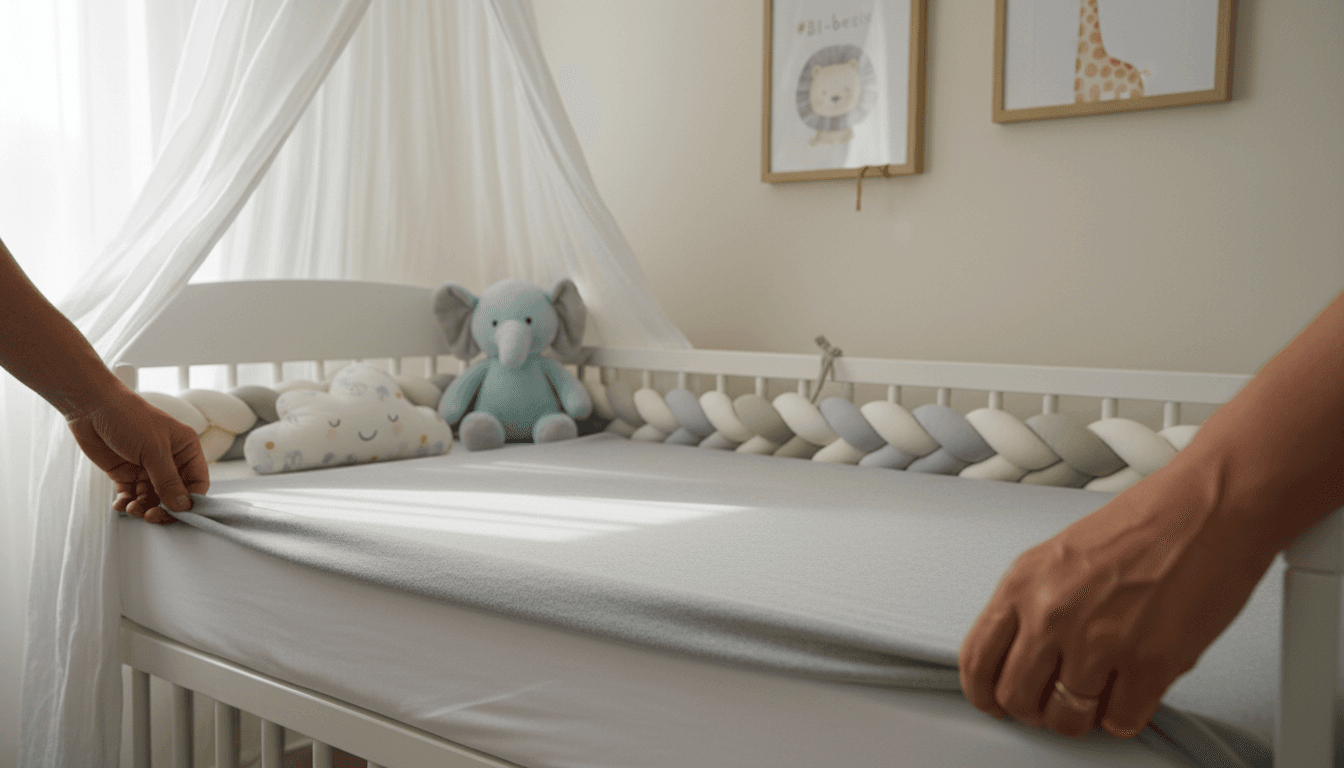
Jersey-Strick ist langlebig und pflegeleicht. Er verträgt häufiges Waschen gut und trocknet schnell, was den Waschtag beschleunigt. Dieser Stoff eignet sich gut für Familien, die die Bettwäsche mehrmals pro Woche waschen.
Musselin: Leicht und atmungsaktiv
Musselin ist eine leichte Baumwolle in Leinwandbindung, die die Atmungsaktivität maximiert. Es ist luftig und kühl, was es perfekt für warme Klimazonen oder das Schlafen im Sommer macht.
Musselin ist weniger gepolstert als andere Optionen und speichert daher keine Hitze. Die locker gewebte Struktur ermöglicht eine hervorragende Luftzirkulation, was das Risiko des erneuten Einatmens reduziert.
Bambus: Die umweltfreundliche Option
Bambus-Viskose bietet eine Weichheit ähnlich wie Seide mit natürlichen hypoallergenen Eigenschaften. GOTS-zertifizierte Bio-Stoffe wie Bambus sind chemiefrei und sanft zu reaktiver Haut.
Bambus erfordert besondere Pflege – Waschen mit kaltem Wasser und Trocknen bei niedriger Hitze bewahren den Stoff. Es ist empfindlicher als Baumwolle, aber die Mühe wert, wenn Ihr Baby empfindliche Haut hat.
Kurzer Stoffvergleich
| Stoff | Atmungsaktivität | Haltbarkeit | Bestes Klima | Pflegeaufwand |
|---|---|---|---|---|
| Baumwolle | Ausgezeichnet | Hoch | Alle Jahreszeiten | Einfach |
| Bio-Baumwolle | Ausgezeichnet | Hoch | Alle Jahreszeiten | Einfach |
| Flanell | Gut | Hoch | Kühl/Winter | Mäßig |
| Jersey-Strick | Sehr gut | Sehr hoch | Alle Jahreszeiten | Einfach |
| Musselin | Ausgezeichnet | Mäßig | Warm/Sommer | Einfach |
| Bambus | Gut | Mäßig | Alle Jahreszeiten | Mäßig |
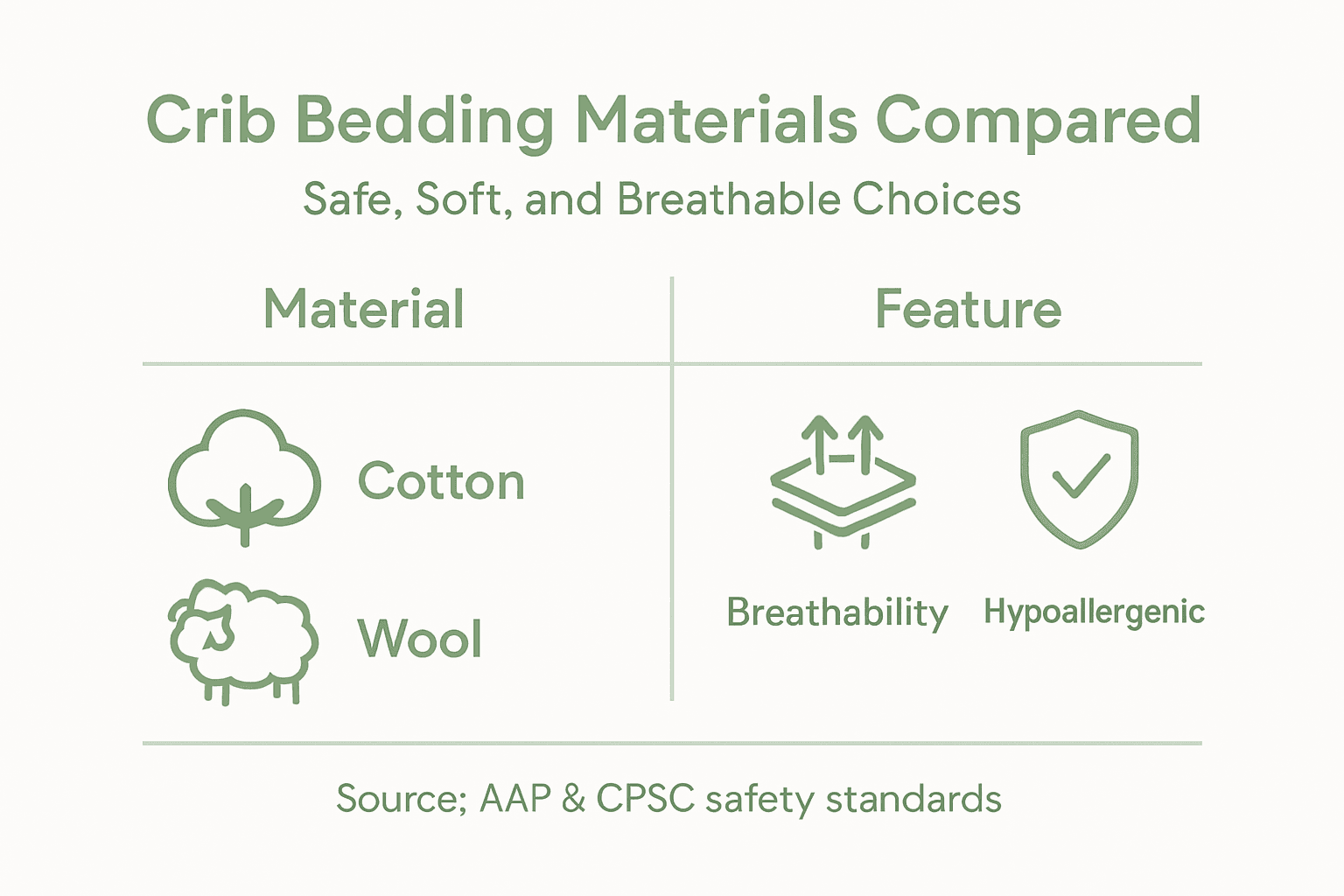
Profi-Tipp: Kaufen Sie ein oder zwei Bettlaken-Sets aus verschiedenen Stoffen, um sie je nach Jahreszeit zu wechseln; Bio-Baumwolle für Frühling und Herbst, Flanell für den Winter und Musselin für den Sommer hält Ihr Baby das ganze Jahr über angenehm warm oder kühl.
Hauptmerkmale: Atmungsaktivität, Hypoallergenität und Pflege
Drei Eigenschaften unterscheiden exzellente Kinderbettwäsche von durchschnittlichen Optionen: Atmungsaktivität, hypoallergene Eigenschaften und praktische Pflege. Das Verständnis der einzelnen Punkte hilft Ihnen bei der Wahl von Bettwäsche, die Ihr Baby sicher und bequem hält und gleichzeitig in Ihren Tagesablauf passt.
Atmungsaktivität: Ihre erste Verteidigungslinie
Atmungsaktivität ist entscheidend, um das erneute Einatmen von ausgeatmetem Kohlendioxid zu verhindern. Wenn Bettwäsche keine Luftzirkulation zulässt, können Nase und Mund Ihres Babys durch den Stoff blockiert werden, wodurch gefährliche Mengen an CO₂ eingeschlossen werden.
Atmungsaktive Stoffe helfen, das erneute Einatmen zu verhindern und verringern das Erstickungsrisiko während des Schlafs. Baumwolle, Musselin und Jersey-Strick lassen alle eine ausreichende Luftzirkulation zu.
Zu vermeidende Stoffe sind Vinyl, kunststoffbeschichtete Materialien und stark gepolsterte Optionen. Diese stauen Hitze und blockieren den Luftstrom, was eine gefährliche Schlafumgebung schafft. Fahren Sie immer mit der Hand über die Bettwäsche – Sie sollten fühlen können, wie Luft durch das Gewebe strömt.
Warum Hypoallergenität wichtig ist
Hypoallergene Bettwäsche minimiert Allergene, die bei empfindlichen Babys Reaktionen auslösen. Hausstaubmilben gedeihen in synthetischen Fasern und unbehandelten Stoffen und verursachen Verstopfungen, Hautausschläge und Schlafstörungen.
Bio-Stoffe und speziell behandelte Materialien reduzieren die Allergenbelastung erheblich. Wenn Ihr Baby Ekzeme, Asthma oder empfindliche Haut hat, wird hypoallergene Bettwäsche noch wichtiger.
Achten Sie auf diese Eigenschaften:
- Zertifizierte Bio-Materialien (GOTS-Zertifizierung)
- Naturfasern wie Baumwolle, Wolle oder Bambus
- Chemiefreie Farbstoffe und Veredelungen
- Resistenz gegen Hausstaubmilben
Hypoallergene Bettwäsche heilt keine Allergien, aber sie reduziert drastisch die Auslöser, die den Schlaf und das Wohlbefinden beeinträchtigen.
Einfache Pflege hält die Bettwäsche sauber
Maschinenwaschbare Bettwäsche ist wichtig, da Sie Kinderspannbettlaken häufig waschen werden – manchmal mehrmals pro Woche. Ein Stoff, der nach dem Waschen an Qualität verliert, verfehlt den Zweck von sicherer, langlebiger Bettwäsche.
Hochwertige Materialien behalten ihre Eigenschaften über Dutzende von Waschzyklen bei. Sie bilden keine Knötchen (Pilling), verblassen nicht und verlieren nicht an Weichheit. Waschen mit kaltem Wasser und Trocknen bei niedriger Hitze verlängern die Lebensdauer des Stoffes sogar noch.
Checkliste für einfache Pflege:
- Maschinenwaschbar in kaltem oder warmem Wasser
- Trocknet schnell bei niedriger Hitze
- Keine speziellen Waschmittel erforderlich
- Resistent gegen Einlaufen und Verblassen
- Bleibt auch nach mehrmaligem Waschen weich
Alle drei Eigenschaften in Einklang bringen
Die beste Kinderbettwäsche vereint alle drei Eigenschaften ohne Kompromisse. Bio-Baumwolle erreicht dies perfekt – sie ist atmungsaktiv, hypoallergen und langlebig über unzählige Waschzyklen hinweg.
Einige Premium-Optionen fügen Wolle oder Bambus für verbesserte hypoallergene Eigenschaften hinzu. Diese kosten mehr, bieten aber außergewöhnlichen Komfort für Babys mit reaktiver Haut. Die Bettwäsche-Sets von Kari Studio priorisieren alle drei Eigenschaften mit anpassbaren Bio-Optionen, die zu Ihrer Kinderzimmer-Ästhetik passen.
Profi-Tipp: Waschen Sie neue Kinderbettwäsche drei- bis viermal, bevor Ihr Baby darauf schläft, um Produktionsrückstände zu entfernen und die Weichheit zu maximieren, während alle Sicherheitsmerkmale erhalten bleiben.
US-Sicherheitsgesetze und AAP-Empfehlungen
Wenn Sie in den Vereinigten Staaten Kinderbettwäsche kaufen, schützen Bundesgesetze und pädiatrische Richtlinien Ihr Baby. Das Verständnis dieser Anforderungen stellt sicher, dass Sie sichere Entscheidungen treffen, die offiziellen Standards entsprechen.
Bundesweite Sicherheitsstandards für Kindermatratzen
Die Consumer Product Safety Commission (CPSC) setzt verbindliche Sicherheitsstandards für alle in den USA verkauften Kindermatratzen durch. Diese Regeln stammen aus dem Consumer Product Safety Improvement Act von 2008 und konzentrieren sich auf drei kritische Bereiche.
Standards für die Festigkeit und Haltbarkeit von Kindermatratzen reduzieren Erstickungs- und Einklemmrisiken. Die Matratze muss über ihre gesamte Oberfläche eine gleichbleibende Festigkeit beibehalten, ohne durchzuhängen oder weiche Stellen aufzuweisen.
Beschränkungen für giftige Chemikalien schützen Ihr Baby vor schädlichen Substanzen. Die CPSC verbietet oder begrenzt Flammschutzmittel, Schwermetalle und andere gefährliche Chemikalien in Matratzen. Jede Matratze, die legal in den USA verkauft wird, muss diese bundesstaatlichen Tests bestehen.
AAP-Leitlinien 2022 der American Academy of Pediatrics
Die AAP hat ihre Empfehlungen im Jahr 2022 auf der Grundlage jahrzehntelanger Schlafforschung aktualisiert. Ihre Leitlinien adressieren direkt, was in ein sicheres Kinderbett gehört und was nicht.
Die Empfehlungen der AAP umfassen:
- Legen Sie Säuglinge für jeden Schlaf auf den Rücken
- Verwenden Sie eine feste, flache, nicht geneigte Schlaffläche
- Halten Sie das Kinderbett frei von Kissen, Decken, Nestchen und Spielzeug
- Zimmer-Teilen ohne Bett-Teilen für mindestens 6 Monate
- Vermeiden Sie geneigte Schlafsysteme und weiche Bettwäsche vollständig
Die AAP empfiehlt ausdrücklich nur eine feste Matratze mit einem Spannbettlaken – sonst nichts im Kinderbett.
The Safe Sleep for Babies Act
Kürzliche Bundesgesetzgebung verbietet die Herstellung und den Verkauf von Kinderbett-Nestchen und geneigten Schlafsystemen. Der „Safe Sleep for Babies Act“ befasst sich mit Produkten, die das Risiko für schlafbezogene Todesfälle, insbesondere SIDS, erhöhen.
Dieses Verbot gilt sowohl für traditionelle gepolsterte Nestchen als auch für Mesh-Nestchen. Hersteller dürfen diese Produkte in den Vereinigten Staaten nicht mehr legal verkaufen, obwohl ältere Bestände möglicherweise noch gebraucht erhältlich sind.
Warum das Verbot? Die Forschung zeigt, dass diese Produkte Einklemmgefahren schaffen und den Luftstrom um das Gesicht Ihres Babys einschränken.
Was dies für Ihre Kinderbetteinrichtung bedeutet
Die Einhaltung der US-Gesetze und AAP-Leitlinien ist unkompliziert. Kaufen Sie eine CPSC-zertifizierte Matratze und Spannbettlaken aus Bio-Baumwolle. Lassen Sie alles andere weg.
Zu vermeidende Produkte:
- Traditionelle gepolsterte Kinderbett-Nestchen (jetzt illegal)
- Mesh-Kinderbett-Nestchen (jetzt illegal)
- Kissen und Kissenbezüge
- Decken oder Steppdecken
- Nestchen, die als „atmungsaktive“ Alternativen vermarktet werden
- Geneigte Schlafflächen
Zertifizierungen belegen die Einhaltung von Sicherheitsstandards
Achten Sie bei Ihrer Matratze auf Siegel, die die Konformität mit CPSC-Vorgaben und ASTM-Standardzertifizierungen bestätigen. Diese Labels beweisen, dass das Produkt die gesetzlichen Anforderungen erfüllt. Bettwaren von renommierten Herstellern wie Kari Studio enthalten Dokumentationen zu Sicherheitsstandards und Zertifizierungen.
Fragen Sie beim Kauf den Verkäufer nach einem Konformitätsnachweis. Gehen Sie nicht davon aus, dass ältere Bettwaren den aktuellen Standards entsprechen – die Vorschriften wurden im letzten Jahrzehnt deutlich verschärft.
Profi-Tipp: Bewahren Sie das Zertifizierungslabel und die Unterlagen Ihrer Matratze auf. Sie benötigen den Nachweis über die CPSC-Konformität, falls Sie die Matratze später spenden oder weiterverkaufen, und es sorgt während der gesamten Zeit, in der Ihr Baby im Kinderbett schläft, für ein beruhigtes Gefühl.
Hier ist eine Zusammenfassung der wichtigsten US-Sicherheitsstandards und Richtlinien für Bettwaren in Kinderbetten:
| Vorschrift oder Richtlinie | Kernanforderung | Praktische Auswirkung |
|---|---|---|
| CPSC-Standards für Kindermatratzen | Festigkeit, chemische Grenzwerte | Nur zertifizierte Matratzen zulässig |
| AAP 2022 Sicherer Schlaf | Leeres Bett, Rückenlage | Keine zusätzliche Bettwäsche oder Spielzeuge |
| Safe Sleep for Babies Act | Keine Nestchen oder Schrägschläfer | Verkauf bestimmter Produkte ist illegal |
| ASTM-Zertifizierung | Zusätzliche Sicherheitsprüfungen | Stellt Produktbeständigkeit sicher |
Kinderzimmer-Design und sichere Materialien im Einklang
Sie müssen sich nicht zwischen einem schönen und einem sicheren Kinderzimmer entscheiden. Der Schlüssel liegt darin, zu verstehen, wo Stil seinen Platz hat und wo Sicherheit an erster Stelle stehen muss. Das Kinderbett selbst sollte minimalistisch bleiben, aber das gesamte Kinderzimmer kann atemberaubend gestaltet werden.
Das „Weniger ist mehr“-Prinzip für das Kinderbett
Sicherheitsexperten empfehlen den Ansatz „Weniger ist mehr“ („Bare Is Best“) für das Innere des Kinderbetts. Das bedeutet: nur eine feste Matratze mit einem Spannbettlaken – sonst nichts. Keine Zierkissen, Decken, Nestchen oder Spielzeuge im Schlafbereich.
Die CPSC rät dazu, nur Spannbettlaken zu verwenden, um Erstickungsgefahren zu vermeiden und das Bett funktional und sauber zu halten. Dies ist keine Einschränkung, sondern ein Schutz. Ihr Baby schläft sicher, während Sie den Stil im Rest des Kinderzimmers frei gestalten können.
Ein leeres Bett verhindert das Einklemmen, reduziert das Risiko der Rückatmung und ermöglicht eine einfache Reinigung. Ihre gestalterische Energie sollte dem restlichen Raum zugutekommen, nicht dem Matratzenbereich.
Stil findet außerhalb des Kinderbetts statt
Sicheres Kinderzimmer-Dekor ist vielfältig, sobald Sie den Fokus Ihrer Gestaltung nach außen verlagern. Streichen Sie die Wände in Ihrer Wunschfarbe, fügen Sie Kunstwerke hinzu und personalisieren Sie den Raum nach Belieben.
Stilvolle Alternativen zu Bettwaren im Kinderbett:
- Wandkunst und gerahmte Drucke über dem Wickeltisch
- Ein passender Betthimmel oder Volant, der vom Rahmen herabhängt (unterhalb der Matratzenebene)
- Zierkissen auf einem Sessel oder Schaukelstuhl
- Thematische Wandaufkleber oder Wandmalereien
- Personalisierte Namensschilder oder bestickte Stücke
- Weiche Teppiche und Vorhänge in Ihrer Designpalette
- Dekorative Körbe zur Aufbewahrung in passenden Farben
Schaffen Sie eine harmonische Ästhetik durch Wandfarben, Möbeloberflächen und Accessoires – nicht durch das, was sich im Kinderbett befindet.
Sichere und schöne Materialien auswählen
Spannbettlaken aus Bio-Baumwolle gibt es in dutzenden Farben und Mustern. Sie können weiche Pastelltöne, kräftige Drucke oder klassische Unifarben wählen, die perfekt zu Ihrem Kinderzimmer-Thema passen.
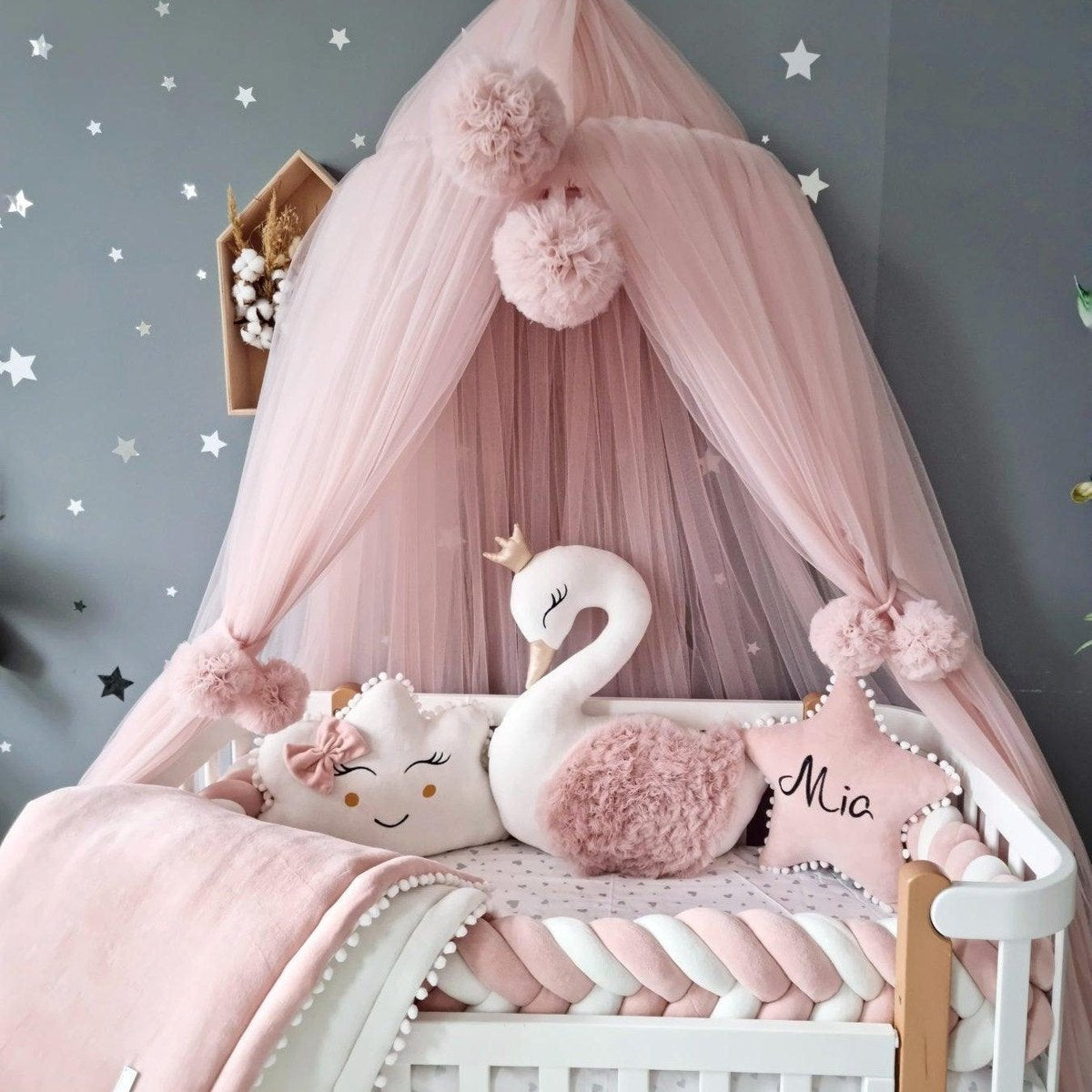
Kari Studio bietet anpassbare Bettwäsche-Sets mit eingestickten Namen, geflochtene Nestchen zur Dekoration und passende Betthimmel, die visuelles Interesse wecken und gleichzeitig Sicherheitsstandards wahren. Diese Premium-Optionen werten das Design des Kinderzimmers auf, ohne die Materialqualität oder die Sicherheit Ihres Kindes zu beeinträchtigen.
Ihre Wahl des Bettlakens ist sowohl ästhetisch als auch funktionell von Bedeutung. Hochwertige Bio-Baumwolle in Ihren Lieblingsfarben fügt sich in das Design des Raumes ein und bleibt dabei vollkommen sicher.
Verwenden Sie diese Tabelle, um den Stil Ihres Kinderzimmers mit sicheren Bettwaren abzustimmen:
| Kinderzimmer-Stil | Empfohlene Lakenfarbe/-muster | Materialvorschlag |
|---|---|---|
| Modern | Einfarbiges Grau oder geometrisch | Bio-Baumwoll-Jersey |
| Boho | Erdtöne, dezentes Muster | Bambus-Viskose oder Musselin |
| Klassisch | Zarte Pastelltöne, Streifen | Bio-Baumwoll-Satin |
| Kräftig/Verspielt | Helle Farbblöcke | Baumwoll-Perkal |
Sicher visuelle Akzente setzen
Das Kombinieren verschiedener Texturen und Farben verleiht jedem Kinderzimmer Raffinesse. Dies erreichen Sie durch strategische Platzierung und eine durchdachte Materialwahl.
Strategien für sicheres Dekorieren:
- Fügen Sie eine hochwertige Kindermatratze mit schadstofffreiem Bezug hinzu
- Wählen Sie Spannbettlaken in Farben, die mit Ihrem Raum harmonieren
- Verwenden Sie ein passendes Betthimmel-Set für visuelle Fülle
- Legen Sie einen weichen Teppich für Wärme und Farbe neben das Bett
- Hängen Sie dazu passende Vorhänge und Wandbilder auf
- Nutzen Sie einen Wickeltisch mit abgestimmten Accessoires
- Verwenden Sie sichere Aufbewahrungslösungen, die zu Ihrer Farbpalette passen
Premium-Materialien erfüllen beide Ziele
Bio-Materialien ohne Schadstoffe sind kein Kompromiss – sie sind ein Upgrade, das Sicherheit und Ästhetik verbindet. GOTS-zertifizierte Bio-Baumwolle überzeugt durch wunderschöne Farben, die nicht verblassen.
Hypoallergene, sichere Stoffe fördern sowohl das Wohlbefinden des Kindes als auch die Ästhetik des Kinderzimmers. Sie investieren in eine gesunde Schlafumgebung, verpackt in ein Design, das Ihnen gefällt.
Wenn Sie sich für hochwertige Materialien entscheiden, wirkt Ihr Kinderzimmer durchdacht und koordiniert. Die Sicherheitsaspekte verschmelzen mit einem ansprechenden Design.
Profi-Tipp: Wählen Sie zuerst eine Hauptfarbe oder ein Muster für Ihre Spannbettlaken und bauen Sie das gesamte Design Ihres Kinderzimmers darum herum auf. Dies sorgt für Kohärenz zwischen dem sicheren Bettinneren und der restlichen Dekoration und hält Ihre Investitionen fokussiert und überschaubar.
Entdecken Sie sichere und stilvolle Bettwaren für Ihr Baby
Die Auswahl von Bettwaren, die Sicherheit, Atmungsaktivität und hypoallergene Materialien in den Vordergrund stellen, kann sich überwältigend anfühlen. Dieser Artikel hebt zentrale Herausforderungen hervor, wie das Vermeiden schädlicher Chemikalien, das Sicherstellen einer passgenauen Form und die Auswahl natürlicher Fasern, die die Gesundheit und den Komfort Ihres Babys wirklich unterstützen. Bei Kari Studio verstehen wir diese Sorgen genau und fertigen jedes Stück mit Blick auf das Wohlbefinden Ihrer Familie.
Wir bieten hochwertige, handgefertigte Babybettwäsche-Sets aus Bio-Stoffen an, die auf die Einhaltung höchster Sicherheitsstandards geprüft wurden. Jedes Set kann personalisiert werden, um den Stil Ihres Kinderzimmers widerzuspiegeln, und bietet gleichzeitig die feste, atmungsaktive Schlaffläche, die Ihr Baby verdient. Entdecken Sie unsere Kollektion an Babybettwäsche-Sets, die mit durchdachten Details für Komfort und Sicherheit entwickelt wurden.
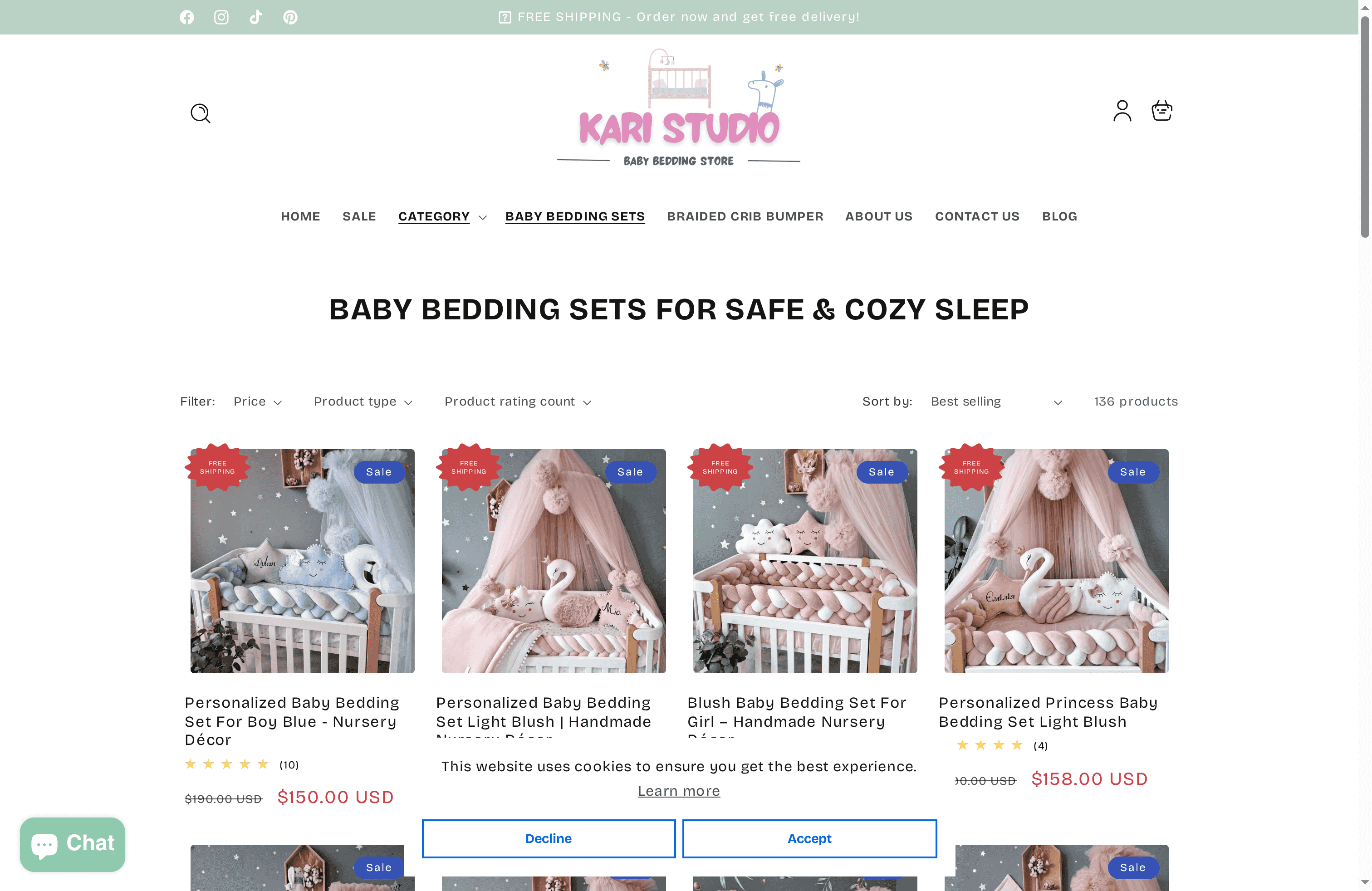
Beginnen Sie noch heute mit Kari Studio, eine gemütliche und sichere Kinderzimmerumgebung zu schaffen. Besuchen Sie unsere Website, um hochwertige, hypoallergene Bettwarenoptionen zu finden, die Schönheit und Funktionalität vereinen. Treffen Sie jetzt die sichere Wahl und schenken Sie Ihrem Kind den besten Start. Stöbern Sie durch unser gesamtes Sortiment an Kari Studio Babybettwäsche-Sets und genießen Sie ein sicheres Gefühl bei jedem Schlaf.
Häufig gestellte Fragen
Welche Materialien sind am sichersten für Bettwaren im Kinderbett?
Natürliche Materialien wie Bio-Baumwolle, Wolle und Bambus-Viskose gelten als einige der sichersten Optionen. Sie sind atmungsaktiv, hypoallergen und frei von schädlichen Chemikalien, die die Gesundheit Ihres Babys beeinträchtigen könnten.
Wie stelle ich sicher, dass die Matratze fest und sicher für das Kinderbett ist?
Wählen Sie eine Kindermatratze, die eng und ohne Lücken in das Bett passt. Sie sollte fest und flach sein, da lockere oder weiche Matratzen Erstickungsgefahren bergen können. Achten Sie immer auf die CPSC-Zertifizierung, um sicherzustellen, dass die Sicherheitsstandards erfüllt sind.
Warum ist Atmungsaktivität bei Bettwaren wichtig?
Atmungsaktivität ist entscheidend, da sie Erstickungsgefahren verhindert, indem sie eine Luftzirkulation ermöglicht. Stoffe wie Baumwolle, Musselin und Jersey-Strick unterstützen den Luftstrom und reduzieren so das Risiko der Rückatmung von ausgeatmetem Kohlendioxid, was während des Schlafs gefährlich sein kann.
Was sollte ich bei Materialien für Bettwaren vermeiden?
Vermeiden Sie Bettwaren aus synthetischen Materialien, chemischen Flammschutzmitteln oder nicht atmungsaktiven Stoffen wie Vinyl- oder Kunststoffbeschichtungen. Diese können Wärme stauen und den Luftstrom einschränken, was potenzielle Sicherheitsrisiken für Ihr Baby darstellt.
Empfehlungen
- Wie man Babybettwäsche auswählt: Ein kompletter Ratgeber für Eltern
- Grundausstattung für das Kinderbett: Sicherheit, Komfort und Stil
- 7 wichtige Tipps für die Auswahl der besten Bettwaren
- Fehler beim Aufbau des Kinderbetts, die Sie für ein sicheres Zimmer vermeiden sollten
- Bestes orthopädisches Kissen gegen Schnarchen und Nackenschmerzen - Stoppt Schnarchen - Hilfe bei Apnoe – Armageddon Sports