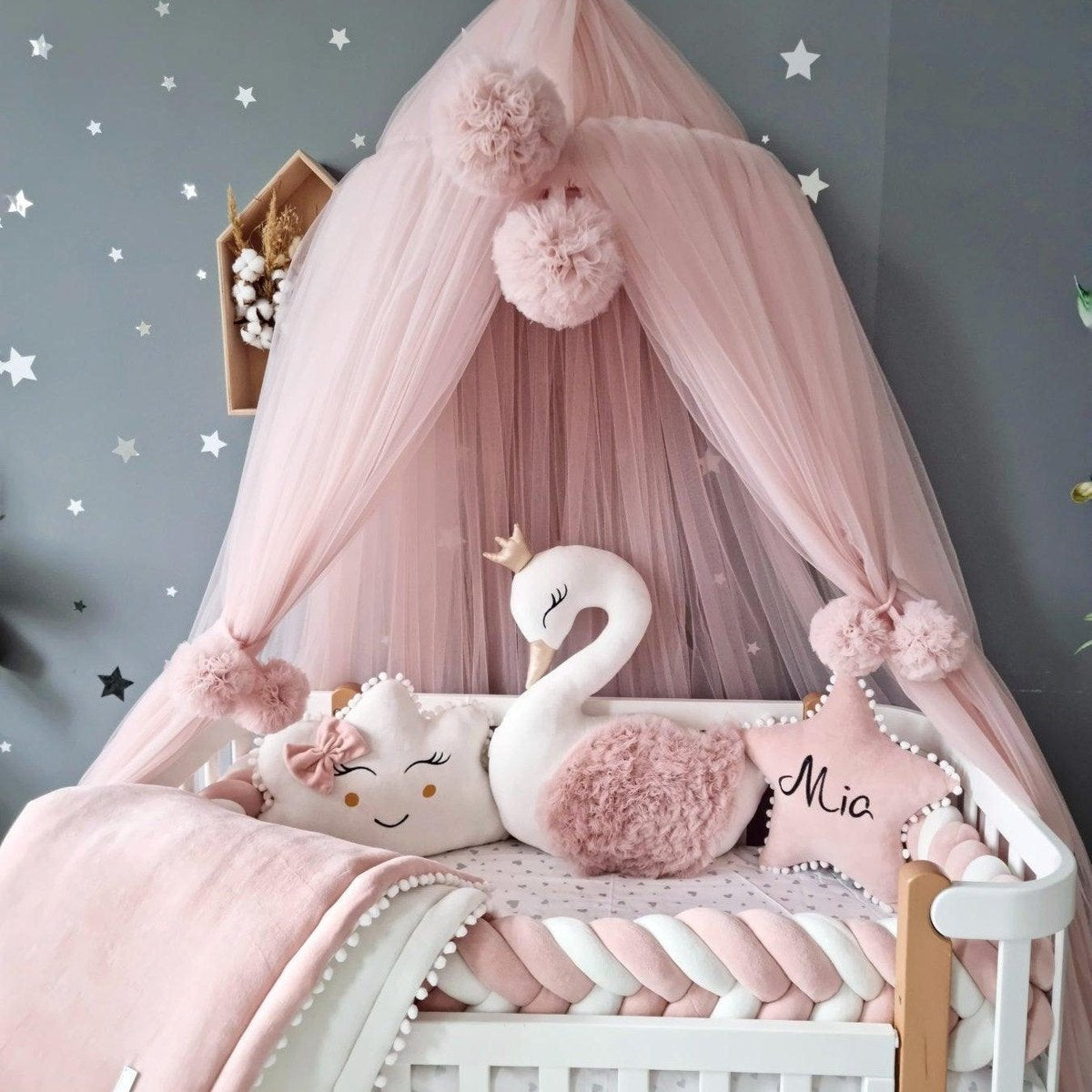

Jeder Elternteil kennt diesen Moment, wenn ein verirrter Lichtstrahl den friedlichen Schlaf des Babys unterbricht. Ein erholsames Kinderzimmer in Ihrem Zuhause zu schaffen, bedeutet mehr, als nur schöne Vorhänge auszusuchen. Die Wahl von personalisierten Verdunkelungsvorhängen, die auf die individuellen Licht- und Sicherheitsbedürfnisse Ihres Raumes zugeschnitten sind, kann für das Wohlbefinden Ihres Säuglings den entscheidenden Unterschied machen. Erfahren Sie, wie eine bewusste Wahl der Vorhänge zu besserem Schlaf, einer gemütlichen Atmosphäre und mehr Gelassenheit für Sie und Ihre wachsende Familie beiträgt.
Inhaltsverzeichnis
- Schritt 1: Lichtbedarf des Kinderzimmers ermitteln
- Schritt 2: Sichere und hypoallergene Stoffe auswählen
- Schritt 3: Vorhänge auf den Stil des Kinderzimmers abstimmen
- Schritt 4: Installation und Lichtabschirmung überprüfen
Kurzzusammenfassung
| Wichtige Erkenntnis | Erklärung |
|---|---|
| 1. Lichtbedarf des Kinderzimmers ermitteln | Beobachten Sie natürliches und künstliches Licht, um zu bestimmen, wie viel Abschirmung für optimalen Schlaf notwendig ist. |
| 2. Sichere, hypoallergene Stoffe wählen | Wählen Sie Materialien, die frei von Allergenen und schädlichen Chemikalien sind, um die Umgebung Ihres Babys sicher zu halten. |
| 3. Vorhänge auf den Stil abstimmen | Stellen Sie sicher, dass Farben und Muster der Vorhänge das Gesamtdesign des Kinderzimmers für eine beruhigende Atmosphäre ergänzen. |
| 4. Korrekte Installation überprüfen | Installieren Sie die Vorhänge sicher, um das Licht vollständig abzuschirmen und sicherzustellen, dass keine Lücken den Schlaf stören. |
| 5. Lichtquellen und Muster dokumentieren | Führen Sie eine Liste der Lichtquellen und Fensterrichtungen, um den Auswahlprozess der Vorhänge zu unterstützen. |
Schritt 1: Lichtbedarf des Kinderzimmers ermitteln
Bevor Sie Verdunkelungsvorhänge auswählen, sollten Sie genau verstehen, welchem Licht Ihr Kinderzimmer den ganzen Tag über ausgesetzt ist. Ihr Ziel ist es, zu messen und zu dokumentieren, wie viel Licht zu verschiedenen Zeiten in den Raum fällt, damit Sie Vorhänge wählen können, die Ihren tatsächlichen Bedürfnissen entsprechen.
Beginnen Sie damit, die natürlichen Lichtverhältnisse in Ihrem Kinderzimmer über einige Tage zu beobachten. Verbringen Sie Zeit im Raum während der Morgen-, Nachmittags- und Abendstunden. Achten Sie darauf, welche Fenster direktes Sonnenlicht erhalten und wie lange. Beachten Sie Lichtreflexionen von benachbarten Gebäuden oder Bäumen. Diese Beobachtung zeigt Ihnen die grundlegende Lichtsituation ohne komplizierte Messungen oder Hilfsmittel.
Berücksichtigen Sie als Nächstes Lichtquellen jenseits der Fenster. Künstliche Beleuchtung durch Flurleuchten, Nachtlichter oder einen Monitorbildschirm kann den Schlaf Ihres Babys unterbrechen. Lichtverschmutzung durch künstliche Quellen kann natürliche Schlafzyklen stören und es Ihrem Säugling erschweren, durchzuschlafen. Dokumentieren Sie, wo sich diese Lichtquellen befinden und wie hell sie nachts wirken.
Berücksichtigen Sie die Ausrichtung Ihres Zimmers. Fenster nach Norden erhalten den Tag über weniger intensives Licht. Fenster nach Süden bekommen stärkeres, konstanteres Sonnenlicht. Fenster nach Osten bringen helles Morgenlicht. Fenster nach Westen erzeugen intensive Nachmittagshitze und Helligkeit. Auch der geografische Standort Ihres Hauses spielt eine Rolle – verschiedene Jahreszeiten beeinflussen Lichtintensität und -dauer.
So beeinflusst die Fensterrichtung die Beleuchtung im Kinderzimmer:
| Fensterrichtung | Typisches Lichtmuster | Auswirkung auf den Schlaf |
|---|---|---|
| Nordausrichtung | Weiches, indirektes Licht | Geringeres Risiko der Überhitzung |
| Südausrichtung | Helles, beständiges Licht | Potenzial für Blendung und Wärme |
| Ostausrichtung | Intensives Morgenlicht | Frühe Sonnenaufgänge stören Mittagsschlaf |
| Westausrichtung | Starkes Nachmittagslicht | Wärmeentwicklung, Helligkeit am späten Tag |
Denken Sie über Ihre spezifischen Schlafziele nach. Möchten Sie für den Mittagsschlaf alles Licht eliminieren oder bevorzugen Sie etwas gefiltertes natürliches Licht? Gehen Sie mit jahreszeitlichen Lichtveränderungen um oder haben Sie mit frühen Sommer-Sonnenaufgängen zu kämpfen? Das Verständnis von Expertenempfehlungen für Fensterdekoration im Kinderzimmer kann Ihnen helfen, die Wahl der Vorhänge an Ihre spezifische Situation anzupassen.
Dokumentieren Sie die Lichtmuster Ihres Zimmers vor dem Einkauf, damit Sie selbstbewusst Verdunkelungsvorhänge wählen können, die Ihr tatsächliches Problem lösen.
Erstellen Sie eine einfache Checkliste zur Lichtbewertung, auf die Sie beim Einkauf zurückgreifen können:
- Intensität des natürlichen Lichts (hell, mäßig, gedimmt oder wechselhaft)
- Tageszeit, zu der das Licht am stärksten ist
- Künstliche Lichtquellen im oder in der Nähe des Kinderzimmers
- Fensterrichtung und -größe
- Ihr primäres Schlafziel (Mittagsschlaf, Nachtschlaf oder beides)
- Jahreszeitliche Lichtschwankungen, die Sie erleben
Profi-Tipp: Machen Sie Fotos Ihres Kinderzimmers zu verschiedenen Tageszeiten und vergleichen Sie diese nebeneinander, um Lichtmuster zu erkennen, die Ihnen bei einem schnellen Blick sonst entgehen könnten.
Schritt 2: Sichere und hypoallergene Stoffe auswählen
Der Stoff Ihrer Verdunkelungsvorhänge berührt direkt die Umgebung Ihres Babys, daher ist die Wahl des richtigen Materials wichtiger als die Ästhetik. Das Ziel ist es, Stoffe zu wählen, die Licht effektiv blockieren und gleichzeitig Ihr Kind vor Allergenen und schädlichen Chemikalien schützen.
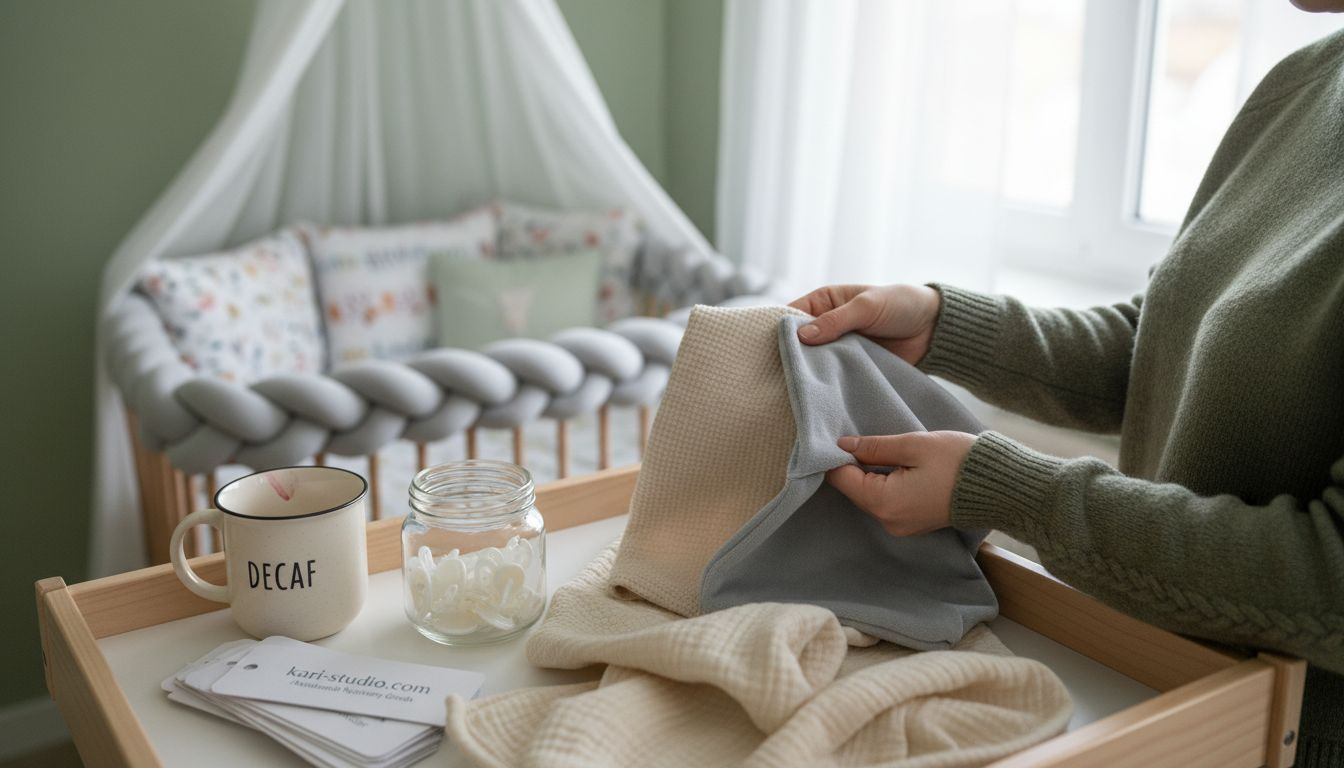
Beginnen Sie damit zu verstehen, was einen Stoff hypoallergen macht. Hypoallergene Materialien reduzieren allergische Reaktionen, indem sie Reizstoffe minimieren und schädliche chemische Zusätze vermeiden. Suchen Sie nach Stoffen, die als hypoallergen gekennzeichnet sind oder für empfindliche Haut entwickelt wurden. Diese Textilien durchlaufen dermatologische Tests, um sicherzustellen, dass sie bei kleinen Kindern keine Allergien oder Hautreizungen auslösen.
Prüfen Sie Sicherheitszertifikate bei jedem Vorhang, den Sie in Betracht ziehen. Die U.S. Consumer Product Safety Commission empfiehlt, Produkte für das Kinderzimmer zu wählen, die frei von schädlichen Chemikalien und Allergenen sind. Achten Sie auf Zertifizierungen wie OEKO-TEX Standard 100, die bestätigen, dass Textilien auf Schadstoffe geprüft wurden. Zertifizierungen bestätigen, dass der Stoff strenge Sicherheitsstandards erfüllt und für die Verwendung bei Säuglingen bewertet wurde.
Vermeiden Sie Stoffe, die mit schweren chemischen Ausrüstungen behandelt wurden. Einige Verdunkelungsvorhänge verwenden synthetische Beschichtungen, die ausdünsten oder empfindliche Haut reizen können. Natürliche oder biologisch angebaute Stoffe mit minimaler chemischer Verarbeitung sind sicherere Wahlen. Fragen Sie Hersteller nach ihrem Stoffbehandlungsprozess und welche Chemikalien, falls vorhanden, bei der Produktion verwendet wurden.
Berücksichtigen Sie Haltbarkeit und Reinigungsfähigkeit des Stoffes. Ihre Vorhänge benötigen häufige Wäschen, um Staub, Allergene und Bakterien zu entfernen. Wählen Sie Stoffe, die regelmäßigem Waschen standhalten, ohne sich zu verschlechtern oder Fasern zu verlieren. Maschinenwaschbare Optionen sparen Zeit und stellen sicher, dass Sie eine saubere Umgebung im Kinderzimmer aufrechterhalten können.
Die Bettwäsche-Sets und Zubehörteile für das Kinderzimmer von Kari Studio priorisieren hypoallergene Materialien und eine sichere Konstruktion, was dieselbe Sorgfalt widerspiegelt, die Sie bei der Auswahl von Fensterdekorationen anwenden sollten.
Wählen Sie Stoffe, die Sicherheitsprüfungen bestehen und klare Informationen zu chemischen Behandlungen während der Herstellung liefern.
Priorisieren Sie bei der Bewertung von Stoffoptionen diese Qualitäten:
Verwenden Sie diese Referenz, um wichtige Stofftypen für Verdunkelungsvorhänge zu vergleichen:
| Stofftyp | Lichtabschirmung | Hypoallergenes Potenzial | Reinigungsaufwand |
|---|---|---|---|
| Polyester | Exzellent | Mäßig, abhängig von Behandlung | Meist maschinenwaschbar |
| Baumwolle (Bio) | Gut | Hoch, wenn unbehandelt | Maschinenwaschbar, Schonwaschgang |
| Leinen | Mäßig | Hoch, wenn natürlich | Oft Handwäsche oder chemische Reinigung |
| Samt | Sehr gut | Mäßig, Zertifikate prüfen | Maschinenwaschbar, variiert je nach Mischung |
- Hypoallergene Zertifizierung oder Testergebnisse
- Frei von schweren chemischen Beschichtungen oder Behandlungen
- Maschinenwaschbar und langlebig
- Weiche Textur, die die Haut nicht reizt
- Verdunkelungsfähigkeit ohne Einbußen bei der Sicherheit
Profi-Tipp: Fordern Sie Stoffmuster von Herstellern an und testen Sie diese zu Hause, um zu prüfen, wie sie sich auf der Haut anfühlen und ob sie Reaktionen auslösen, bevor Sie sich für den Kauf der gesamten Vorhänge entscheiden.
Schritt 3: Vorhänge auf den Stil des Kinderzimmers abstimmen
Ihre Verdunkelungsvorhänge sind ein wichtiges visuelles Element im Kinderzimmer, daher schafft die Auswahl eines Stils, der Ihre Einrichtung ergänzt, einen stimmigen Raum. Das Ziel ist es, Vorhänge zu finden, die Ihrer Ästhetik entsprechen und gleichzeitig die nötige Lichtabschirmung bieten.
Beginnen Sie damit, die dominierende Farbpalette und das Designthema Ihres Kinderzimmers zu identifizieren. Arbeiten Sie mit sanften Pastelltönen, kräftigen Primärfarben oder neutralen Tönen? Neigt Ihr Kinderzimmer zum modernen, traditionellen, verspielten oder minimalistischen Stil? Ihre Vorhänge sollten mit Bettwäsche, Wandfarben und Accessoires harmonieren, anstatt mit ihnen zu konkurrieren.
Denken Sie darüber nach, wie Farbschemata und Texturen das Design des Kinderzimmers beeinflussen. Ein gut abgestimmtes Kinderzimmer unterstützt das Wohlbefinden Ihres Babys und schafft eine ruhige Umgebung. Wenn Vorhänge mit anderen Elementen kollidieren, wirkt der Raum unruhig und überstimulierend. Farben und Texturen, die zusammenarbeiten, lassen den Raum durchdacht und erholsam wirken.
Überlegen Sie, wie Ihre Vorhänge mit anderen Heimtextilien harmonieren. Wenn Sie Bettwäsche mit spezifischen Farben oder Mustern ausgewählt haben, wählen Sie Vorhangschattierungen, die entweder dazu passen oder diese ergänzen. Neutrale Vorhänge passen gut zu gemusterter Bettwäsche, während unifarbene Vorhänge einen Raum mit vielen bedruckten Elementen erden können. Suchen Sie nach Wegen, um Vorhänge, geflochtene Bettumrandungen, Bettwäsche und Betthimmel-Design für ein einheitliches Erscheinungsbild zu verbinden.
Testen Sie, wie Vorhangfarben bei unterschiedlichen Lichtverhältnissen wirken. Natürliches Licht, künstliche Deckenbeleuchtung und Nachtlichter beeinflussen alle, wie Farben erscheinen. Betrachten Sie Stoffmuster zu verschiedenen Tageszeiten in Ihrem tatsächlichen Kinderzimmer, bevor Sie eine endgültige Entscheidung treffen.
Ihre Vorhangwahl sollte die gesamte Ästhetik des Kinderzimmers aufwerten und gleichzeitig ihre Hauptfunktion erfüllen, das Licht für einen besseren Schlaf abzuschirmen.
Beachten Sie bei der Auswahl von Farben und Stilen diese Faktoren:
- Abstimmung mit vorhandenen Farben und Mustern der Bettwäsche
- Passend zum gesamten Designthema Ihres Kinderzimmers
- Testen Sie Stoffmuster bei der Beleuchtung Ihres Zimmers
- Wählen Sie neutrale Töne, wenn Sie sich bei kräftigen Farben unsicher sind
- Überlegen Sie, wie Vorhänge Ihr Fenster als visuelles Element einrahmen
Profi-Tipp: Wählen Sie Verdunkelungsvorhänge in einem neutralen Farbton wie sanftem Grau oder warmem Weiß, wenn sich die Einrichtung Ihres Kinderzimmers häufig ändert, damit Ihre Fensterdekoration auch bei Stil-Updates vielseitig bleibt.
Schritt 4: Installation und Lichtabschirmung überprüfen
Die richtige Installation macht den Unterschied zwischen Vorhängen, die gut aussehen, und Vorhängen, die tatsächlich Licht blockieren. Ihr Ziel ist es sicherzustellen, dass die Vorhänge sicher montiert sind und das Fenster vollständig abdichten, um Lichtlecks zu vermeiden.
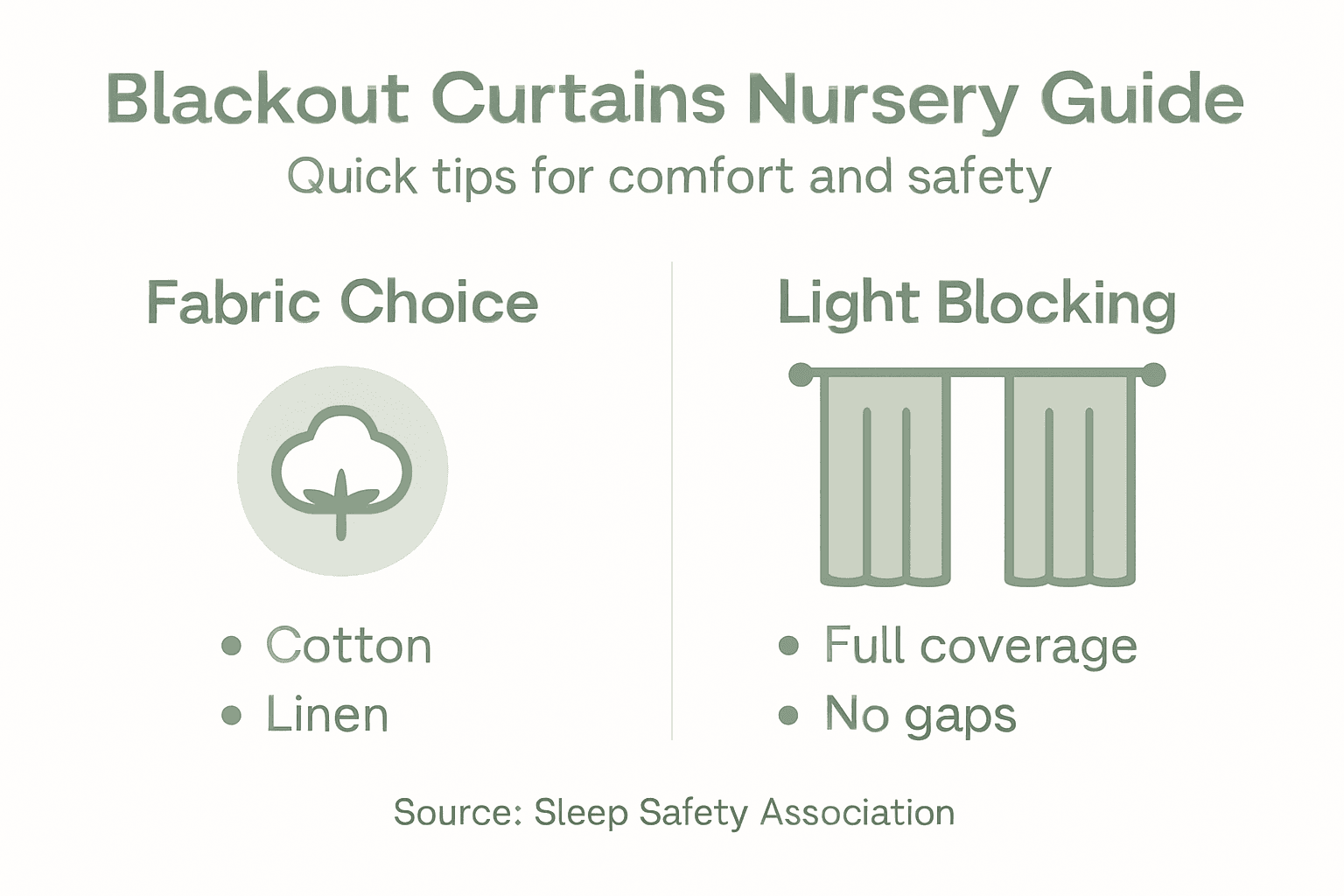
Beginnen Sie damit zu prüfen, ob Ihre Vorhänge den gesamten Fensterbereich abdecken. Messen Sie Fensterbreite und -höhe und geben Sie dann auf allen Seiten einige Zentimeter hinzu. Die Vorhänge sollten links und rechts über den Fensterrahmen hinausgehen, um zu verhindern, dass Licht an den Rändern hindurchdringt. Die obere Abdeckung sollte den Decken- oder Wandbereich oberhalb des Fensters erreichen. Die untere Abdeckung sollte den Boden berühren oder leicht darauf aufliegen, um eine maximale Lichtabschirmung zu gewährleisten.
Stellen Sie sicher, dass Ihre Montagehalterungen sicher und korrekt positioniert sind. Verwenden Sie geeignete Halterungen und Stangen, die für das Gewicht Ihres Vorhangs ausgelegt sind. Die ordnungsgemäße Installation von Vorhängen maximiert die Lichtabschirmung und erhält die Stoffintegrität. Die Halterungen sollten direkt in Wandständer befestigt werden oder mit Hochleistungsdübeln versehen sein. Testen Sie die Stange durch sanften Druck nach unten, um zu bestätigen, dass sie sich nicht verschiebt oder durchhängt.
Prüfen Sie auf Lücken und Lichtlecks um Ihre Vorhänge herum. Schalten Sie alle Lichter aus und schließen Sie die Vorhänge vollständig. Achten Sie auf Licht, das an den Rändern, oben oder an den Seiten eindringt. Jedes sichtbare Licht bedeutet, dass Ihre Verdunkelungsvorhänge nicht wie beabsichtigt funktionieren. Passen Sie die Position der Vorhänge an, fügen Sie Seitenpaneele hinzu oder installieren Sie zusätzliche Hardware, um Lücken vollständig abzudichten.
Testen Sie die Lichtabschirmung unter verschiedenen Bedingungen. Überprüfen Sie, wie die Vorhänge bei hellem Nachmittagssonnenlicht, frühem Morgenlicht und nachts bei Straßenlaternen funktionieren. Ihre Vorhänge sollten in allen Szenarien für konsistente Mittagsschlaf- und Schlafpläne Dunkelheit bewahren.
Stellen Sie sicher, dass Ihre Installation sicher und fest ist. Vermeiden Sie Kordeln oder lose Beschläge, die Gefahren darstellen könnten. Halten Sie Vorhangstangen und Halterungen fest angebracht, um versehentliches Herunterfallen oder Verletzungen zu vermeiden.
Ordnungsgemäß installierte Verdunkelungsvorhänge sollten im geschlossenen Zustand sichtbares Licht vollständig eliminieren und so die Dunkelheit schaffen, die Ihr Baby für einen guten Schlaf benötigt.
Testen Sie bei der Überprüfung der Installation diese wichtigen Punkte: