
Nearly half of american parents report feeling sleep deprived during their child’s first year, according to recent studies. Establishing healthy sleep patterns can feel confusing with so many conflicting opinions and methods. Understanding the fundamentals of sleep training gives families the tools to create restful nights and smoother routines. This guide breaks down proven strategies and practical insights that help both you and your baby find your best rhythm.
Table of Contents
- Defining Sleep Training And Core Concepts
- Popular Methods And Key Differences
- When To Start: Readiness And Signs
- Best Practices For Safe Sleep Training
- Common Pitfalls And How To Avoid Them
Key Takeaways
| Point | Details |
|---|---|
| Understanding Sleep Training | Sleep training helps infants develop independent sleep habits, focusing on self-soothing and consistent sleep patterns. |
| Key Methods Available | Popular methods include Cry It Out, the Ferber Method, and Chair Method, each catering to different preferences and baby temperaments. |
| Readiness for Training | Babies are generally ready for sleep training around 4-6 months, exhibiting consistent sleep patterns and reduced nighttime feedings. |
| Best Practices for Safety | Ensure a safe sleep environment, meet basic needs before training, and maintain a calming bedtime routine to promote successful sleep training. |
Defining Sleep Training and Core Concepts
Sleep training represents a structured approach to helping infants and young children develop independent and healthy sleep habits. At its core, sleep training focuses on teaching babies how to self-soothe, fall asleep independently, and return to sleep without parental intervention during nighttime awakenings. According to research from OHSU, behavioral approaches are preferred over medication for managing pediatric sleep challenges.
The fundamental goal of sleep training is establishing consistent sleep patterns that support both child and parent wellness. Core sleep concepts involve understanding natural sleep cycles, recognizing sleep associations, and creating predictable bedtime routines. As outlined by UMass Medical School, individuals can maintain performance with approximately five and a half hours of essential deep and dream sleep stages, which underscores the importance of quality rest.
Key components of effective sleep training include:
- Establishing consistent bedtime schedules
- Creating calm, predictable pre-sleep environments
- Teaching self-soothing techniques
- Gradually reducing sleep associations
- Maintaining patience and realistic expectations
Different sleep training methods exist, ranging from gradual approaches like the “fade” technique to more structured interventions. Parents should choose methods aligned with their comfort level, baby’s temperament, and pediatric recommendations. For a comprehensive understanding of gentle sleep training techniques, check out our understanding gentle sleep training for your baby guide.
Popular Methods and Key Differences
Sleep training offers multiple approaches to help babies develop independent sleep skills, each with unique strategies and philosophies. Cleveland Clinic outlines several prominent methods that parents can consider based on their comfort level and their baby’s temperament.
The Ferber Method, also known as progressive waiting, is a structured approach recommended by Sleep Foundation. This technique involves gradually increasing intervals between parental interventions during nighttime crying, allowing babies to learn self-soothing skills. Parents start with short waiting periods and progressively extend the time before comforting their child, teaching them to fall asleep independently.
Common sleep training methods include:
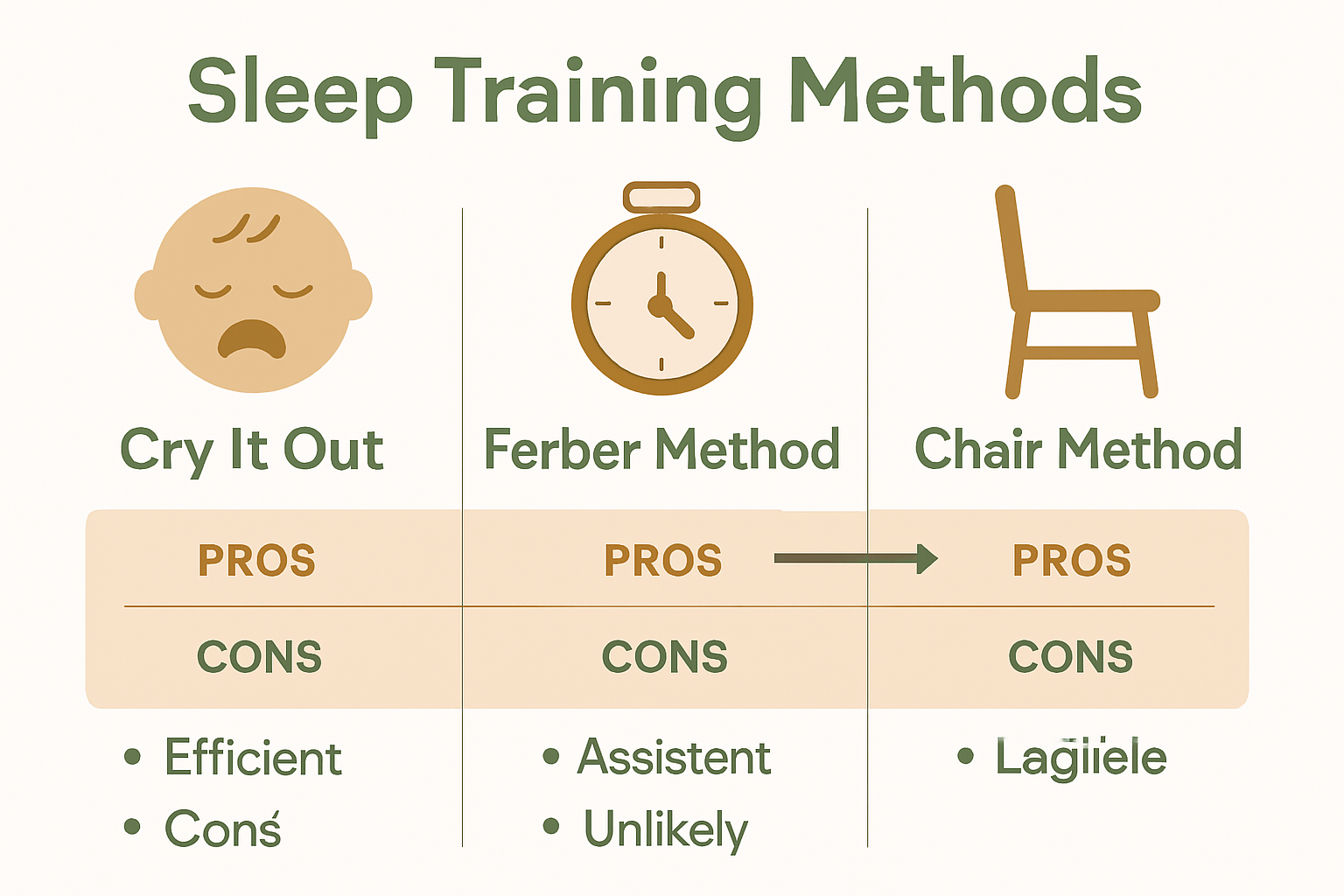
- Cry It Out (CIO): A direct method where parents allow babies to cry without immediate intervention
- Ferber Method: Gradual approach with increasing wait times
- Chair Method: Parents sit near the crib, moving further away each night
- Pick Up, Put Down: Briefly comforting the baby when crying, then returning them to bed
- Bedtime Fading: Adjusting bedtime based on the baby’s natural sleep patterns
Choosing the right method requires understanding your baby’s unique needs and your family’s dynamics.
 Some babies respond better to gentle approaches, while others adapt quickly to more structured techniques.
VIDEO:video_content] For a deeper exploration of gentle sleep training strategies, review our [understanding gentle sleep training for your baby guide.
When to Start: Readiness and Signs
Determining the right time to begin sleep training is crucial for successful outcomes. Cleveland Clinic recommends that babies are typically ready around 4 months old, when they start developing more mature sleep cycles and self-soothing capabilities. However, every baby develops differently, making individual assessment essential.
According to University of Chicago Medicine, the readiness window can vary, with some infants being prepared as early as 4 months while others might benefit from waiting until 6 months. Key developmental readiness signs include the ability to sleep for longer stretches, reduced nighttime feedings, and emerging self-regulation skills.
Important indicators that your baby might be ready for sleep training include:
- Consistent sleep patterns emerging
- Ability to fall asleep independently for naps
- Reduced frequency of nighttime feedings
- Developing predictable circadian rhythms
- Physical growth and weight milestones achieved
Before starting any sleep training method, consult with your pediatrician to ensure your baby’s individual health and developmental needs are considered.
IMAGE:descriptive_key_1] For more insights into gentle approaches, explore our [understanding gentle sleep training for your baby guide.
Best Practices for Safe Sleep Training
Safe sleep training requires a thoughtful and comprehensive approach that prioritizes the infant’s physical and emotional well-being. Cleveland Clinic emphasizes ensuring the baby’s basic needs are fully met before beginning any sleep training method, which means addressing hunger, comfort, and potential underlying health concerns.
University of Chicago Medicine highlights the critical importance of creating a safe sleep environment that minimizes potential risks and supports healthy sleep development. This involves maintaining consistent room temperature, using appropriate bedding, and following recommended safe sleeping guidelines to reduce potential hazards.
Key best practices for safe sleep training include:
- Ensure baby is well-fed and comfortable before bedtime
- Create a consistent, calming bedtime routine
- Maintain a comfortable sleep environment
- Use breathable, safe bedding materials
- Monitor room temperature (ideally between 68-72 degrees)
- Place baby on back in an empty crib
- Avoid loose blankets or excessive soft items
- Be emotionally prepared and consistent
Before implementing any sleep training method, consult with your pediatrician to address individual health considerations. For more comprehensive insights into infant sleep safety, review our understanding safe sleep recommendations for infants guide.
Common Pitfalls and How to Avoid Them
Sleep Foundation highlights the emotional complexities of sleep training, noting that parents often struggle with the challenges of helping their babies develop independent sleep skills. The process can be emotionally taxing, requiring patience, consistency, and a deep understanding of individual baby temperaments.
University of Chicago Medicine warns against initiating sleep training during periods of significant life changes or stress. Critical pitfalls in sleep training can derail progress and create additional challenges for both parents and infants, making it essential to approach the process strategically and with careful preparation.
Common sleep training pitfalls to avoid include:
- Starting during major life transitions
- Inconsistent approach or frequent method changes
- Ignoring individual baby’s unique temperament
- Unrealistic expectations about progress
- Emotional exhaustion and parental burnout
- Neglecting to establish a consistent bedtime routine
- Failing to create a conducive sleep environment
- Responding inconsistently to nighttime wakings
Successful sleep training requires adaptability, patience, and a commitment to understanding your baby’s unique needs. For parents seeking a gentler approach to helping their babies develop healthy sleep habits, our understanding gentle sleep training for your baby guide offers comprehensive insights and supportive strategies.
Create a Safe and Cozy Sleep Space for Your Baby
Achieving successful sleep training means more than just teaching your baby to fall asleep independently. It starts with creating a calm, comfortable, and safe environment that supports your baby’s natural sleep cycles and self-soothing abilities. The challenges of maintaining consistent bedtime routines and ensuring a secure sleep setting can feel overwhelming, especially when parents want the best for their little ones. That is why investing in premium nursery essentials plays a crucial role in your baby’s sleep success.

Discover how our handmade, hypoallergenic baby bedding sets and braided crib bumpers can help you provide the gentle comfort and safety your baby needs as they learn to sleep peacefully. Designed with love and customizable to fit your nursery style, our products help establish a predictable bedtime routine while also protecting your child during sleep. Begin your journey to healthier sleep habits today by exploring our baby bedding collection and experience the difference that quality and care can make. Visit Kari Studio to find the perfect blend of comfort, safety, and style that supports both you and your baby through every sleep training milestone.
Frequently Asked Questions
What is sleep training?
Sleep training is a structured approach aimed at teaching infants and young children how to self-soothe and fall asleep independently, which involves establishing consistent sleep patterns and healthy sleep habits.
When is the best time to start sleep training?
Most experts recommend starting sleep training around 4 to 6 months of age, when infants begin to develop more mature sleep cycles and can self-soothe more effectively.
What are some popular methods of sleep training?
Popular sleep training methods include the Ferber Method (progressive waiting), Cry It Out (CIO), Chair Method, Pick Up, Put Down, and Bedtime Fading. Each method varies in strategy and can be chosen based on the baby’s temperament and the parents’ comfort level.
How can I create a safe sleep environment for my baby?
To create a safe sleep environment, ensure the baby’s basic needs are met before bedtime, maintain a comfortable room temperature, use breathable bedding, and always place the baby on their back in an empty crib without loose items.