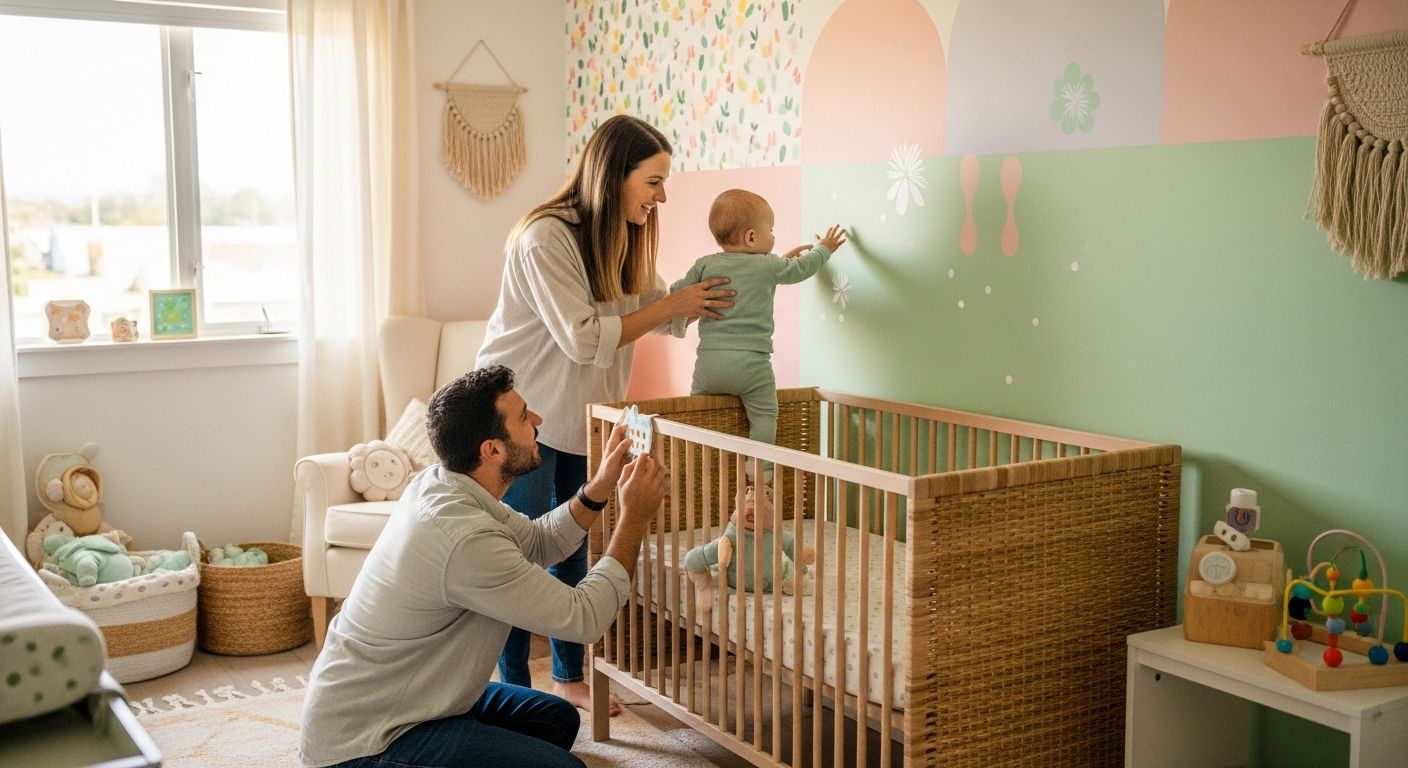
A nursery accent wall can turn an ordinary baby room into a wonderland of color and imagination. Surprisingly, research shows that strategic wall designs can actually support your child’s early sensory and emotional development. Most people think an accent wall is just about decoration, but the right one can shape how your baby grows and feels in the space.
Table of Contents
- Introduction To Nursery Accent Walls
- Choosing The Right Color Palette
- Fun And Playful Wallpaper Options
- Creative Use Of Stencils And Wall Art
- DIY Painted Murals For A Personal Touch
- Textured Accent Walls Using Wood Or Fabric
- Adding Wall Decals For Easy Changes
Quick Summary
| Takeaway | Explanation |
|---|---|
| Choose colors wisely for emotional impact | Colors can significantly affect a child’s mood and comfort, so select tones that evoke calmness and security. |
| Incorporate playful wallpaper for engagement | Modern wallpapers can create enchanting environments, sparking imagination and curiosity in young children. |
| Customize with stencils for interaction | Stencils offer creative ways to enhance visual complexity, stimulating children’s imaginations in a non-overwhelming manner. |
| Consider DIY murals for personal expression | Custom murals enable unique storytelling and emotional connections, making the nursery reflect family values and interests. |
| Use removable wall decals for flexibility | Decals allow for easy updates to the nursery decor, adapting to your child’s changing preferences without damaging walls. |
1: Introduction to Nursery Accent Walls
Transforming a nursery from a simple room into a magical sanctuary begins with understanding the power of an accent wall. These specialized wall designs serve more than just aesthetic purposes they create emotional landscapes that nurture and inspire your child’s earliest experiences. When done thoughtfully, nursery accent wall ideas can dramatically reshape the entire atmosphere of a baby’s room.
Accent walls represent a strategic design approach that introduces visual interest, depth, and personality into a space. According to research from the Architectural Foundation, these specialized walls can significantly impact an infant’s sensory development and emotional comfort. By carefully selecting colors, patterns, and design elements, parents can create environments that stimulate creativity and provide a sense of security.
Key considerations for designing nursery accent walls include:
-
Color Psychology: Choose colors that promote calmness and emotional well-being
-
Visual Stimulation: Select patterns and designs that encourage cognitive development
-
Versatility: Design the wall to grow with your child, potentially lasting through multiple developmental stages
While accent walls might seem like purely decorative elements, they represent a nuanced approach to infant space design. The goal is not just visual appeal but creating an environment that supports your child’s early sensory and emotional experiences. Whether you prefer minimalist geometric patterns, whimsical nature-inspired scenes, or soft gradient backgrounds, the right accent wall can transform an ordinary nursery into an extraordinary space.
For more comprehensive design inspiration, check out our guide on nursery decor ideas that can complement your accent wall strategy and help you create a truly enchanting room for your little one.
2: Choosing the Right Color Palette
Selecting the perfect color palette for a nursery accent wall requires thoughtful consideration beyond mere aesthetic preferences. Colors possess profound psychological impacts that can significantly influence an infant’s emotional and cognitive development. Understanding these nuanced color dynamics becomes crucial when designing a nurturing environment.
According to scientific research in color psychology, different colors evoke distinct emotional and physiological responses. The color palette you choose can subtly shape your child’s sensory experiences and mood regulation.
Essential color selection considerations include:
-
Emotional Resonance: Select colors that create a sense of calm and security
-
Developmental Stimulation: Choose hues that encourage cognitive engagement and curiosity
-
Long-Term Adaptability: Pick color schemes that can evolve with your child’s growing personality
Neutral tones like soft grays, warm beiges, and muted whites provide versatile backdrops that can easily transition as your child grows. These colors create serene environments while offering flexibility for future room transformations. Pastel shades such as mint green, light lavender, and pale blue introduce gentle visual interest without overwhelming the sensory landscape.
Bolder accent colors can be strategically incorporated through smaller design elements like geometric shapes, subtle patterns, or themed illustrations. These targeted color interventions stimulate visual exploration without creating sensory overload. The key is balanced visual complexity that nurtures curiosity while maintaining a sense of tranquility.
For additional insights into creating harmonious nursery spaces, explore our comprehensive nursery design guide that offers expert recommendations on color selection and room optimization.
3: Fun and Playful Wallpaper Options
Wallpaper transforms nursery accent walls from simple backgrounds into magical storytelling canvases that captivate and inspire young imaginations. Modern wallpaper designs offer parents unprecedented opportunities to create immersive environments that stimulate creativity and emotional connection.
According to historical design research, decorative wall treatments have long been recognized as powerful tools for childhood development. Wallpapers can serve multiple functions beyond aesthetic appeal they become interactive learning landscapes that engage children’s curiosity.
Key considerations for selecting nursery wallpaper include:
-
Visual Complexity: Choose designs that offer gentle visual stimulation
-
Thematic Coherence: Select patterns that complement the room’s overall design aesthetic
-
Age Appropriateness: Ensure the wallpaper can grow with your child’s developmental stages
Whimsical animal themes remain perennially popular, with designs featuring gentle forest creatures, playful safari animals, or underwater marine life creating enchanting narrative environments. Geometric patterns offer another sophisticated option, introducing mathematical concepts through subtle, engaging visual arrangements. Watercolor-style wallpapers provide soft, dreamy backdrops that maintain visual interest without overwhelming sensory experiences.
Contemporary wallpaper technologies now offer removable and repositionable options, allowing parents to update designs as children grow. Textured wallpapers with subtle raised elements can provide additional sensory experiences, supporting early tactile exploration.
For parents seeking creative inspiration, our DIY nursery decor guide offers innovative approaches to personalizing your child’s space beyond traditional wallpaper selections. Ultimately, the perfect wallpaper should spark joy, curiosity, and a sense of wonder in both children and parents.
4: Creative Use of Stencils and Wall Art
Stencils and wall art transform nursery accent walls from simple surfaces into interactive storytelling canvases that stimulate imagination and creativity. These design elements offer parents an opportunity to craft personalized spaces that grow alongside their children’s developmental stages.
According to research on childhood creativity, carefully designed wall art can significantly impact a child’s emotional and cognitive development. Stencils provide a unique method to introduce visual complexity without overwhelming sensory experiences.
Key considerations for selecting and applying stencils include:
-
Design Complexity: Choose patterns that offer gentle visual stimulation
-
Color Coordination: Select stencil colors that complement the room’s overall palette
-
Positioning: Place designs at appropriate heights to engage your child’s visual perspective
Geometric stencils create structured visual landscapes that subtly introduce mathematical concepts. Nature-inspired designs like woodland creatures, subtle floral patterns, or minimalist constellation maps offer gentle visual narratives that spark curiosity. Metallic and textured stencil techniques can add depth and intrigue to accent walls, creating sophisticated visual experiences.
Modern stenciling techniques allow for remarkable precision and creativity. Removable stencils enable parents to update designs as children grow, ensuring the wall remains a dynamic, evolving space. Combining multiple stencil techniques like layering, gradient effects, and strategic color blocking can produce unique, personalized results.
For additional inspiration on personalizing nursery spaces, explore our DIY nursery decor guide that offers innovative approaches to creating memorable, engaging environments for your little one.
5: DIY Painted Murals for a Personal Touch
DIY painted murals represent an extraordinary opportunity to transform nursery accent walls into deeply personal artistic expressions that capture your family’s unique spirit. These custom wall designs go beyond mere decoration, becoming cherished visual narratives that grow alongside your child.
According to research on collaborative art projects, creating personalized murals can profoundly impact childhood development, fostering creativity, emotional connection, and a sense of belonging.
Essential considerations for creating nursery murals include:
-
Theme Selection: Choose meaningful designs that resonate with your family’s story
-
Technical Preparation: Invest in quality materials and plan your design carefully
-
Child-Friendly Techniques: Use safe, non-toxic paints and gentle application methods
Storytelling themes work beautifully in nursery murals. Imagine gentle landscapes featuring your child’s favorite animals, whimsical fairy tale scenes, or abstract representations of family memories. Soft watercolor techniques can create dreamy, ethereal backgrounds that provide visual interest without overwhelming the space. Minimalist designs with clean lines and subtle color gradients offer sophisticated alternatives to more elaborate illustrations.
Technical execution matters as much as creative vision. Use painter’s tape for crisp lines, invest in high-quality, low-VOC paints, and consider projector techniques for precise image transfer. Removable wall paint allows for future modifications, ensuring the mural can evolve with your child’s changing interests.
For parents seeking additional inspiration on personalizing nursery spaces, our guide on personalized nursery elements offers creative strategies to make your baby’s room truly unique. Remember, the most memorable murals are those created with love, imagination, and a deep understanding of your child’s emerging personality.
6: Textured Accent Walls Using Wood or Fabric
Textured accent walls elevate nursery design from simple visual experiences to multisensory environments that engage touch, sight, and emotional perception. Wood and fabric treatments offer sophisticated alternatives to traditional flat wall surfaces, creating depth and visual intrigue that stimulate infant sensory development.
According to scientific research on environmental textures, wall textures significantly impact spatial perception and emotional comfort. Carefully selected materials can transform a nursery from a basic room into a nurturing, sensory-rich landscape.
Key considerations for textured accent walls include:
-
Material Safety: Select non-toxic, hypoallergenic materials
-
Tactile Diversity: Incorporate varied textures that encourage sensory exploration
-
Aesthetic Harmony: Ensure texture complements overall room design
Wooden accent walls provide warmth and natural elegance. Reclaimed wood planks create rustic charm, while smooth, whitewashed panels offer modern minimalist aesthetics. Geometric wood arrangements can introduce subtle mathematical patterns, stimulating early cognitive development. Light-colored woods like birch or maple reflect natural light, creating an airy, expansive feel.
Fabric treatments offer another compelling textural approach. Soft, quilted fabric panels can dampen room acoustics while providing visual softness. Neutral linen or cotton fabrics in muted tones create serene backdrops, while subtle textural weaves add sophisticated visual interest without overwhelming sensory experiences.
For parents seeking additional inspiration on personalizing nursery spaces, our guide on nursery design elements offers innovative strategies for creating memorable, engaging environments. Remember that the most effective textured walls blend aesthetic beauty with sensory functionality, supporting your child’s developmental journey.
7: Adding Wall Decals for Easy Changes
Wall decals represent a revolutionary approach to nursery accent walls, offering parents unprecedented flexibility in room design. These removable art pieces transform spaces with minimal effort, allowing for rapid visual transformations as children grow and develop.
According to research from the Center for Environmental Health, selecting high-quality, PVC-free decals ensures a safe and healthy environment for your child. The right decals can introduce visual storytelling without permanently altering wall surfaces.
Key considerations for selecting wall decals include:
-
Material Safety: Choose non-toxic, phthalate-free decals
-
Design Adaptability: Select themes that can evolve with your child’s interests
-
Application Ease: Opt for repositionable designs that minimize wall damage
Thematic decal collections offer incredible versatility. Woodland creature silhouettes create whimsical narratives, while educational decals featuring alphabets, numbers, or world maps introduce learning elements subtly. Minimalist geometric decals provide clean, modern aesthetics that grow seamlessly with your child’s changing room design.
Technical application matters as much as design selection. Ensure walls are clean, smooth, and free from texture that might compromise decal adhesion. Use gentle application techniques, smoothing from center to edges to prevent air bubbles. Many contemporary decals feature repositionable adhesives, allowing easy adjustments without wall damage.
For parents seeking additional inspiration on personalizing nursery spaces, our guide on nursery decor ideas offers innovative strategies for creating memorable, engaging environments. Remember that the most effective wall decals blend artistic expression with developmental sensitivity, supporting your child’s visual and emotional growth.
Below is a comprehensive summarization table highlighting the key ideas, benefits, and approaches presented in the article to help you create an engaging and nurturing nursery accent wall.
| Main Idea | Key Points & Approaches | Benefits for Nursery & Child |
|---|---|---|
| Purpose of Accent Walls | Goes beyond decoration to shape sensory and emotional experiences; introduces personality, depth, and visual interest to the nursery | Supports child development, emotional comfort, creativity |
| Choosing Color Palettes | Focus on calming, adaptable, emotionally supportive colors; use neutrals/pastels as bases with bolder accents sparingly | Promotes calm, security, and cognitive engagement |
| Playful Wallpaper Options | Select age-appropriate, visually stimulating themes like animals, nature, or geometric patterns; opt for removable wallpaper for flexibility | Sparks imagination, adapts as child grows, easy to update |
| Creative Stencils & Wall Art | Apply geometric, nature-inspired, or personalized stencils at child-friendly heights; use color coordination and layering for visual complexity | Stimulates creativity, enables personalization, non-overwhelming |
| DIY Painted Murals | Hand-paint custom stories or memories using safe, non-toxic paints; plan designs and techniques suitable for future updates | Emotional connection, unique storytelling, supports belonging |
| Textured Walls with Wood or Fabric | Utilize non-toxic wood planks/panels or soft fabric panels; mix tactile textures while complementing overall design | Enhances sensory development, warmth, and visual depth |
| Removable Wall Decals | Pick safe, repositionable decals with evolving themes (e.g., animals, alphabets, maps); apply to smooth, clean surfaces | Easy decor updates, encourages learning, protects wall finish |
| Overall Outcome | Blend style, safety, and sensory development with adaptable, engaging wall features tailored to your child and family story | Creates a magical, nurturing, and flexible nursery space |
Complete Your Dream Nursery With Safe, Beautiful Essentials
You have explored how nursery accent walls can transform your baby’s room into a comforting, creative space. Yet, a truly nurturing environment is not just about color and decoration. Your goal is to create a place where style meets safety, especially when your little one is spending so much time resting and playing. Many parents struggle to find nursery accessories that are both visually stunning and gentle for sensitive skin, especially when seeking products that remain beautiful as their baby grows.
Handmade braided crib bumpers provide the perfect finishing touch for your accent wall, offering comfort, protection, and a seamless match for thoughtful nursery themes. Each piece is meticulously crafted to harmonize with playful wallpapers, custom murals, or textured wall designs so you never compromise on safety or style. Explore our selection and elevate every detail of your nursery.
Ready to create a space where every corner inspires both joy and peace of mind? Discover our unique nursery products designed with your family’s needs at heart. Shop now and let us help you build a magical haven your child will cherish.
Frequently Asked Questions
What is an accent wall in a nursery?
An accent wall is a specially designed wall that adds visual interest, depth, and personality to a nursery. It helps create an emotional landscape that nurtures and inspires a child’s experiences.
How do I choose the right colors for a nursery accent wall?
Selecting colors involves considering color psychology. Choose calming and secure colors for emotional resonance, developmentally stimulating hues for cognitive engagement, and adaptable palettes that can grow with your child.
What are some safe materials to use for textured accent walls in a nursery?
Use non-toxic, hypoallergenic materials such as reclaimed wood, plywood, or safe fabric options. Ensure that the textures incorporated enhance visual appeal while being safe for infants.
How can I easily change the decor of a nursery accent wall?
Utilize wall decals which are removable and repositionable. These allow for easy transformations and can depict various themes or characters that evolve with your child’s interests.